What should you look for on the pack?
When shopping locally, start with the sugar content per 100 g, then decide between a drink you make to your own recipe and an already-sweetened cocoa powder. France’s Directorate-General for Competition Policy, Consumer Affairs and Fraud Control says that nutrition information for prepacked foods is given per 100 g or 100 ml.
| Criteria |
What to check |
Who is it for? |
| ‘Sugar-free’ claim |
Check ‘of which sugars’ per 100 g: for a powder to carry this claim, the limit is 0.5 g per 100 g. Check the ingredients too. |
If I’m specifically looking for a ‘sugar-free’ powder, a simple ‘unsweetened’ claim isn’t enough to be sure. Around 42% of consumers would put this strict criterion first. |
| Reduced sugar |
Compare the sugar content per 100 g and check what product the claimed reduction is being compared with. |
If I want to keep using an already-sweetened powder, I need to know what ‘lower in sugar’ means before choosing. This compromise would be the main priority for around 33% of consumers. |
| A mix-your-own recipe |
Check the ingredients in pure cocoa and any warnings about traces of allergens. Also take account of any milk and sweetener you add. |
When I make each mug to suit my taste, I prefer to decide what goes into it myself. Around 25% of consumers would put this control over the recipe first. |
A selection of drinking chocolate on Joybuy
This selection features individually sacheted hot chocolate. If you’re choosing based on a specific sugar content, compare the claim in the product name with the nutrition information and ingredients on the pack you buy.
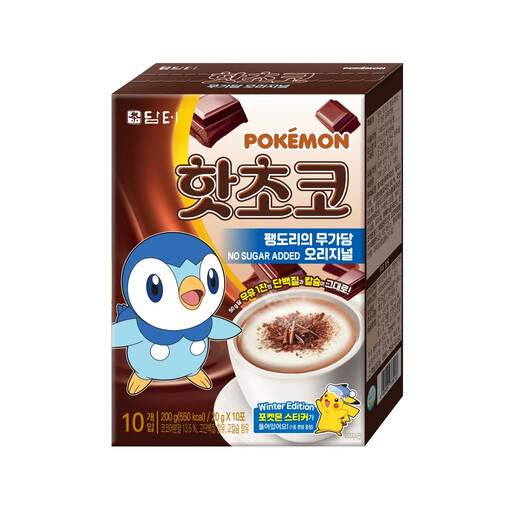 Image unavailable
DAMTUH Pokemon hot chocolate, 10 sachets of 20 g
The sachets are handy if you want to make one drink at a time. Before choosing this product for a ‘sugar-free’ diet, check the ‘of which sugars’ value on the pack. Also check the ingredients list, including any mention of maltitol and starch syrup, as well as the warnings about milk and soya.
View on Joybuy
Frequently asked questions
Are ‘sugar-free’ and ‘no added sugars’ the same thing?
No. For a solid powder, ‘sugar-free’ means it contains no more than 0.5 g of sugars per 100 g. As the French Agency for Food, Environmental and Occupational Health & Safety explains, a product with no added sugars can still contain naturally occurring sugars.
Is Nutri-Score compulsory on drinking chocolate powder?
No. According to France’s Ministry of the Economy, displaying it is optional in France. Even without the logo, you can check the nutrition information per 100 g and the ingredients list on prepacked powder.
Does 100% pure cocoa make a sugar-free drink?
Not necessarily. Auchan’s product details for its pure cocoa show 1.9 g of sugars per 100 g of powder, and the contents of your mug also depend on the milk and any extras you add. Check the powder and your recipe separately.
Which allergens should you look for on the pack?
Read the warnings for the specific product and batch you buy. For example, Auchan’s product details for its 100% pure cocoa warn that it may contain traces of gluten, milk, eggs, soya and nuts. Don’t assume the same list applies to another powder.
Does the ‘soda tax’ automatically apply to cocoa powder?
No. You shouldn’t automatically treat a dry powder as a drink that is subject to the tax. The rates published in France’s Official Public Finance Bulletin apply in particular to non-alcoholic drinks containing added sugars. When choosing your powder, it’s more useful to check its declared sugar content.


