People who chew gum after breakfast
You have jam on toast and would like to chew sugar-free gum after eating, as well as following your usual brushing routine.


After having jam on toast, choose a chewing gum labelled ‘sugar-free’, then check the sweeteners and warnings for the specific variant. The flavour, pack size or a preference for xylitol may help you decide between products, but chewing gum does not remove the sugars from your breakfast or replace brushing your teeth.
You have jam on toast and would like to chew sugar-free gum after eating, as well as following your usual brushing routine.
You prefer to compare the ingredients in each variant rather than relying on the ‘sugar-free’ claim on the front of the pack.
You’re looking for a mint or fruit flavour and a pack that suits your after-meal routine.
Start by thinking about what you want from the gum: choosing something to chew after a meal won’t reduce the sugars in your jam. Then compare the ingredients, followed by the flavour and pack size.
| What to consider | What to check | Who it matters to |
|---|---|---|
| Use after a meal | The ‘sugar-free’ claim on your chosen variant and when you plan to chew it. | After my toast, I want sugar-free gum without mistaking it for a way to change what I eat for breakfast; around 45 % of consumers prioritise this after-meal use. |
| Sweeteners and warnings | The ingredients in the exact variant, including polyols and aspartame, as well as any warnings on the pack. | If I prefer or want to avoid a particular sweetener, the exact recipe matters more to me than the flavour; around 36 % of consumers prioritise this. |
| Flavour and pack size | The flavour, number of pieces and pack format. | I want a flavour I enjoy and a pack that’s easy to take with me after a meal; around 19 % of consumers put flavour and pack size first when choosing. |
Chewing gum after having toast doesn’t change the jam or the amount you’ve already eaten.
If you’re concerned about the sugars in your breakfast, consider the foods and portion sizes separately from your choice of gum.
Two sugar-free variants may contain different combinations of polyols and other sweeteners.
Compare the ingredients and read the warnings on the pack, especially if a particular sweetener is a factor in your choice.
The French Union for Oral Health (Union Française pour la Santé Bucco-Dentaire) says that sugar-free gum is not a replacement for brushing.
Use chewing gum as an optional extra after a meal, without changing your brushing routine as a result.
Carrefour’s product listing for Hollywood Blancheur states that xylitol makes up 99.3 % of the sweeteners, but also lists aspartame and acesulfame K.
If you have a preference for a particular ingredient, check the full ingredients list for the product you’re buying.
The range includes sugar-free mint chewing gums, as well as a Blancheur product that highlights xylitol.
The sugar-free products listed by Auchan include mild mint and strawberry flavours, in a range of pack sizes.
Carrefour’s range includes a sugar-free mint and eucalyptus product.
These products are a selection of chewing gums to consider after breakfast, with different flavours and pack sizes. Check the ‘sugar-free’ claim and the ingredients for the variant before choosing: no chewing gum changes the sugars in jam on toast.
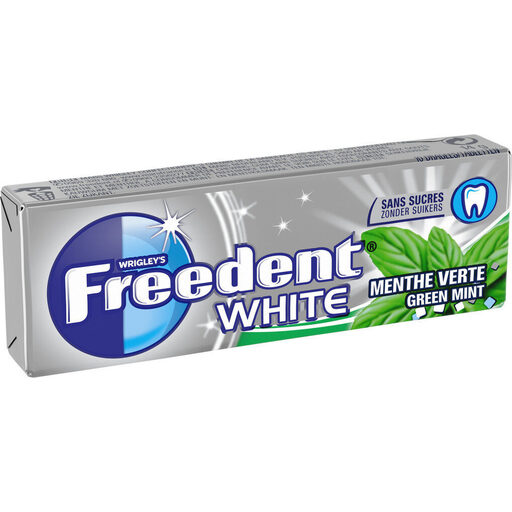 Image unavailable
A pack of 10 pieces to consider if you’d like to take some gum with you after breakfast.
Check the sweeteners and details for this variant before choosing it.
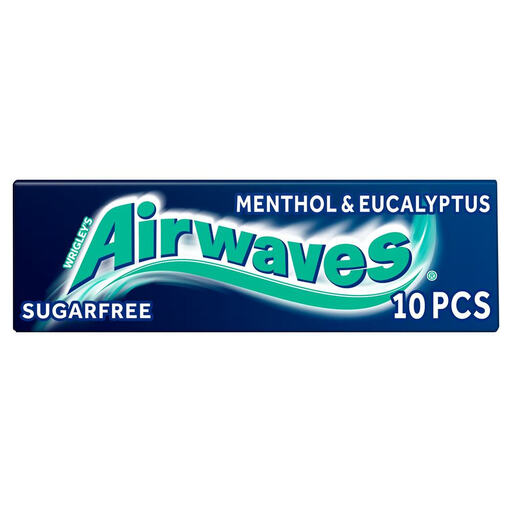 Image unavailable
Worth considering if mint and eucalyptus is the flavour you’re after following a meal.
Check the ingredients for this variant if you’re choosing gum based on its sweeteners.
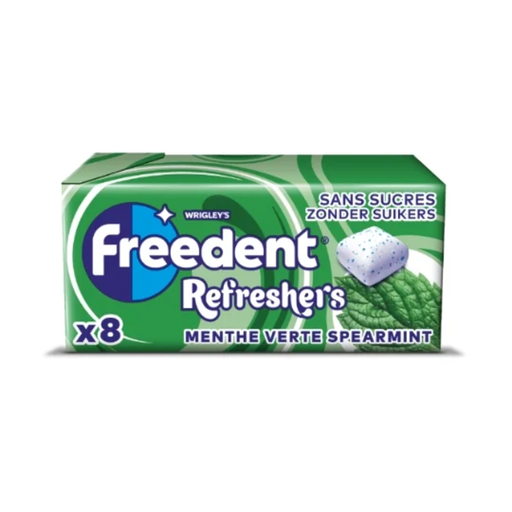 Image unavailable
The spearmint flavour and 18 g pack size may help you choose gum to chew after a meal.
If you’re comparing packs of dragées, check the contents and ingredients list too.
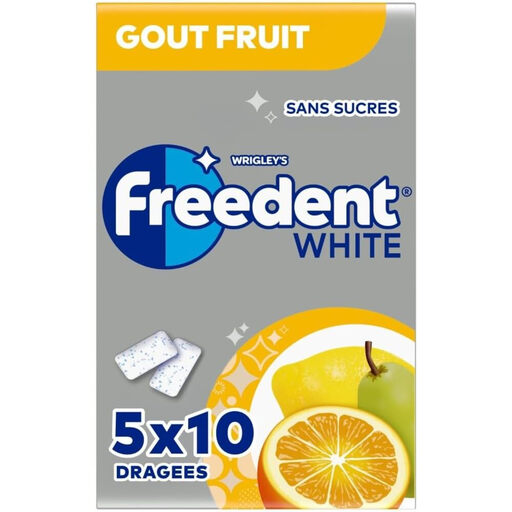 Image unavailable
A fruity option if you’d prefer several packs rather than just one.
The multipack contains 5 packs of 10 pieces, 70 g in total. The name Whitening doesn’t mean you can skip checking the ingredients, and it’s no substitute for brushing.
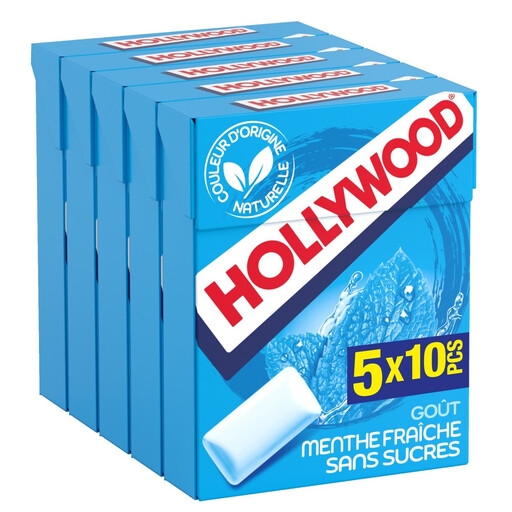 Image unavailable
Worth a look if you’re after a multipack of mint-flavoured gum to chew after breakfast.
To compare this multipack with other sizes, check the number of pieces and the weight of each pack, as well as the product labelling.
No. It doesn’t change the sugars in the jam or the amount you’ve already eaten. If you’d like to change the sugars in your breakfast, look at the foods and portion sizes themselves.
You can chew it after eating. The EFSA opinion on neutralising plaque acids refers to chewing 2 to 3 g of sugar-free gum for 20 minutes, at least three times a day after meals. These conditions don’t describe the effect of every occasional use.
No. Recipes listed by Carrefour and Auchan include ingredients such as xylitol, sorbitol, maltitols, sucralose, aspartame or acesulfame K, depending on the variant. Check the ingredients list and warnings on the pack if any of these affect your choice.
No. The French Union for Oral Health (Union Française pour la Santé Bucco-Dentaire) describes it as an extra, not a substitute for brushing. French Health Insurance (Assurance Maladie) recommends brushing your teeth at least twice a day, including after breakfast and before bed.