For a mid-morning break, choose a chewing gum whose product name and nutritional information confirm that it is “sugar-free”, then check the list of polyols and other sweeteners. Flavour and packaging matter for everyday use, but “sugar-free” does not mean “sweetener-free”. If you’re hungry, chewing gum is no substitute for a snack; after eating, it doesn’t replace brushing your teeth either.
Who is this choice for?
Anyone looking for a sugar-free fresh feeling
After a coffee or a small bite to eat, you might want a stick of gum that’s easy to take with you. Look for the “sugar-free” claim, then choose a flavour and pack size that suit you. Don’t rely on the promise of freshness alone.
Anyone mindful of ingredients and how they affect them
If certain sweeteners or polyols matter to you, check the ingredients for each product. Recipes can vary, even when every pack carries the “sugar-free” claim.
Anyone looking for an occasional option on the go
If you can’t brush your teeth straight after eating, sugar-free gum can be part of your break. However, Assurance Maladie and the French Union for Oral Health remind us that it’s no substitute for brushing.
What should you check?
Start with the “sugar-free” claim and the ingredients for the specific product. Then compare flavours and pack sizes based on how you plan to use the chewing gum during the morning.
| Criteria |
What to check |
Who is it for? |
| Freshness and convenience |
The “sugar-free” claim, the “of which sugars” line, the flavour and the number of pieces. |
For a break after coffee, I want a gum I enjoy and can take with me easily; around 44% of consumers would put this kind of convenient freshness first. |
| Ingredients and tolerance |
The list of sweeteners, the polyols and any pack warnings. |
If certain ingredients don’t agree with me, I want to choose the recipe rather than rely on the “sugar-free” claim alone; around 33% of consumers would make this their priority. |
| Use after eating |
The instructions and directions for use if the product makes a particular oral health claim. |
When I can’t brush straight away, I’m looking for an occasional addition to my routine, not a reason to give up good oral hygiene; around 23% of consumers would make this their main need. |
Common misconceptions to avoid
-
Assuming “sugar-free” means “sweetener-free”
These claims don’t mean the same thing. A Hollywood product listed by Auchan contains 0 g of sugars, but 67 g of polyols per 100 g.
Check the product name, ingredients and nutritional information for the gum you’re thinking of buying.
-
Overlooking polyols if you chew several pieces
Consuming too many polyols can have a laxative effect. The amount varies from one recipe to another.
Check the warnings on the pack and bear your own tolerance in mind when deciding how often to chew it.
-
Chewing gum instead of brushing
According to Assurance Maladie, chewing sugar-free gum for a few minutes increases saliva production. The French Union for Oral Health points out that this is no substitute for brushing.
Use gum as an occasional extra after eating, and keep up your usual oral hygiene routine.
-
Assuming a claim applies to an entire range
A flavour, whitening claim or specific directions for use won’t tell you about the ingredients or directions for other gums from the same brand.
Check the product listing and pack for the specific gum, including its ingredients, warnings and, where relevant, the age guidance.
Brands to know
Hollywood
Carrefour lists Hollywood sugar-free chewing gum in several flavours and pack sizes, including mint and fruit.
- The choice of flavours and pack sizes makes it easy to find an option to suit your taste and how you plan to carry it.
- Recipes aren’t interchangeable: the strong mint product listed by Auchan contains 67 g of polyols per 100 g. Check the ingredients for the one you choose.
Freedent
Carrefour and Auchan list Freedent sugar-free gum in mint and fruit flavours, in a range of pack sizes.
- The flavour and number of pieces give you practical points to compare when choosing gum to take with you.
- The 84 g strawberry-flavour pack listed by Auchan contains 0 g of sugars and 68 g of polyols per 100 g. These figures apply to this product, not the entire range.
Elgydium
E.Leclerc Parapharmacie lists an Elgydium sugar-free gum with product-specific directions for use.
- Its product listing specifies use up to three times a day and says it is suitable from age 6. These are useful details to check if you’re looking for clear directions.
- Marketing it as an occasional substitute for brushing doesn’t change the recommendation to brush regularly.
Chewing gum for your mid-morning break
These products are suitable for a break with sugar-free chewing gum. They come in different flavours and pack sizes, so compare them and check the ingredients and warnings for the product you choose.
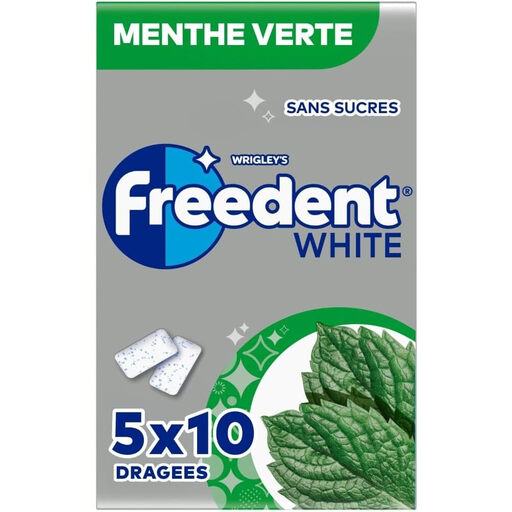 Image unavailable
Freedent Whitening Mint, 5 Pieces
Worth considering if you prefer a minty flavour for your break. Check the pack for the ingredients and exact pack contents before comparing it with other sizes.
View on Joybuy
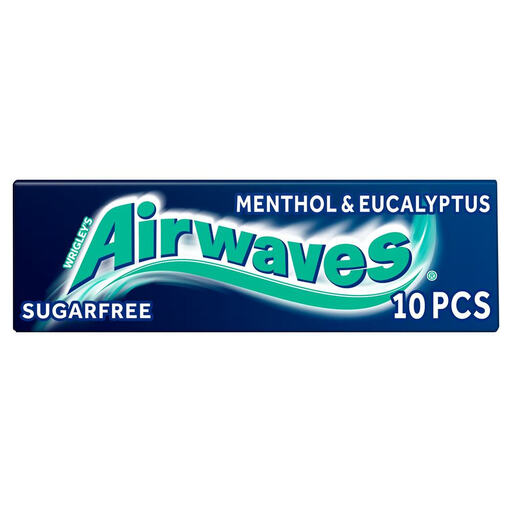 Image unavailable
Airwaves Mint Eucalyptus x1
An option if you prefer mint and eucalyptus to a fruit flavour. If your tolerance is a factor in your choice, check the polyols and warnings for this product.
View on Joybuy
 Image unavailable
Freedent Spearmint, 10 pieces, 14 g
Worth a look if you want to take a pack of 10 Spearmint-flavoured pieces with you. When comparing two recipes, check their sweeteners and warnings rather than relying on flavour alone.
View on Joybuy
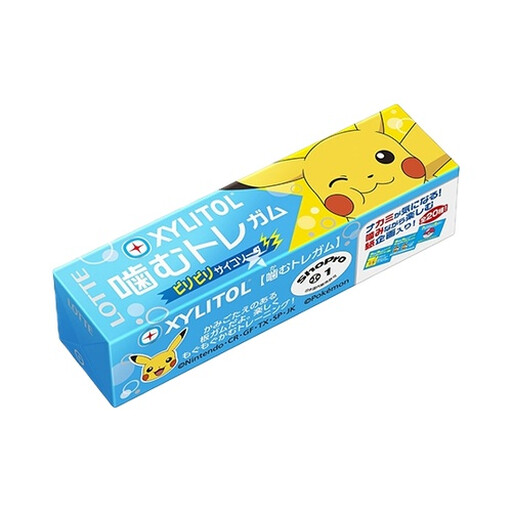 Image unavailable
Lotte Xylitol Bubble Gum Pokemon Strong Soda, 26 g
Worth a look if you prefer a minty Strong Soda flavour for your break. The name alone doesn’t tell you everything about the recipe, so check the list of sweeteners and the warnings on the pack.
View on Joybuy
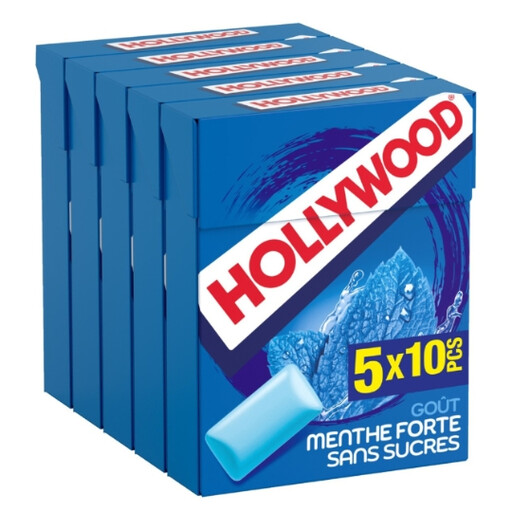 Image unavailable
Hollywood Strong Mint x5
An option to consider if you’re looking for a strong mint flavour. The title says x5: check what this refers to, along with the product ingredients, before comparing pack sizes.
View on Joybuy
Frequently asked questions
Does “sugar-free” mean “sweetener-free”?
No. Sugar-free chewing gum can contain polyols and other sweeteners. For example, a Hollywood product listed by Auchan contains 0 g of sugars and 67 g of polyols per 100 g. Check the ingredients for the product you’re interested in.
Can you chew sugar-free gum after eating?
Yes, as an occasional extra. Assurance Maladie says that chewing sugar-free gum for a few minutes increases saliva production; it doesn’t replace brushing or cleaning between your teeth.
Why should you check the warning about polyols?
Because consuming too many polyols can have a laxative effect. Check the ingredients and warning for each gum, especially if you know you’re sensitive to these ingredients.
Is chewing gum enough if I’m hungry mid-morning?
No: choose something to eat if you need to satisfy genuine hunger. Chewing gum is an option here for chewing, flavour or as an occasional extra after eating, not as a replacement for a snack.


