Toast lovers keeping an eye on sugar
You’re looking for a topping that spreads on bread. First, consider the product’s format; then, check exactly what the terms ‘sugar-free’ and ‘no added sugar’ mean.


For toast, rule out caramels sold as sweets: their format isn’t suited to spreading. A no added sugar spread could work if you’re happy with a flavour other than caramel and check the ingredients. A no added sugar fruit preparation is closer to jam in how you’d use it. In both cases, ‘no added sugar’ does not mean ‘sugar-free’.
You’re looking for a topping that spreads on bread. First, consider the product’s format; then, check exactly what the terms ‘sugar-free’ and ‘no added sugar’ mean.
A no added sugar fruit preparation is used much like jam, but it won’t satisfy a craving for caramel. Check the sugars per 100 g for the recipe you choose.
If you’re considering a sweetener-containing spread, check the polyols, any warnings on the packaging and the allergens. The Karéléa product described by Auchan contains maltitol, milk and hazelnuts.
For toast, start with the product description, then check the sugar claim and the ingredients in the specific recipe you’re planning to buy.
| What matters | What to check | Who is it for? |
|---|---|---|
| Spreadable texture | Look for a spread, jam or fruit preparation rather than caramel sweets. | If I’m replacing jam on bread, I first need a topping that spreads. Around 40% of consumers prioritise this use. |
| Sugar claim | Compare the wording ‘sugar-free’ or ‘no added sugar’ with the ‘of which sugars’ line per 100 g. | If the difference between sugar-free and no added sugar determines my choice, taste comes after checking the label. This distinction is the top priority for around 30% of consumers. |
| Ingredients | Check the ingredients, allergens, polyols and any related warnings, as well as the nutritional values per 100 g. | Before choosing a sweetener-containing recipe, I want to know what’s in it and take any consumption advice into account. Around 30% of consumers put ingredients first. |
Under European Regulation No 1924/2006, the claim ‘sugar-free’ is reserved for products containing no more than 0.5 g of sugars per 100 g or 100 ml. A ‘no added sugar’ recipe may still contain naturally occurring sugars, particularly from fruit. In France, the Ministry of the Economy says that displaying the Nutri-Score is voluntary. If it appears on the packaging, use it as an additional guide, not as a substitute for checking the ingredients and nutritional values.
‘Sugar-free’ sweets are still confectionery, not a spreadable topping. So the caramel aisle alone won’t help you identify a product that’s suitable for toast.
Check the product description and stated use: spread, jam or fruit preparation.
A no added sugar fruit preparation or spread may still list sugars in its nutritional information.
Check the exact claim, then look at the ‘of which sugars’ value per 100 g for the product you’ve chosen.
The Nutri-Score is voluntary in France, according to the Ministry of the Economy. Its absence alone doesn’t tell you what a product contains.
Compare the nutritional values per 100 g and the ingredients, whether or not the logo is present.
According to Auchan’s product information, the Karéléa spread contains maltitol, milk and hazelnuts. It also carries a warning that excessive consumption may have laxative effects.
Check these details on the packaging of the product you’re considering before choosing your topping.
The products below represent different categories: a spread made with sweeteners, a fruit preparation and a classic caramel spread.
The product described by Auchan is a no added sugar cocoa and hazelnut spread, suited to anyone who would rather have something spreadable than a caramel sweet.
The citrus fruit preparation described by Carrefour is suited to a use similar to jam on toast.
The salted butter caramel spread described by Carrefour is a good fit if you’re looking for caramel flavour in a spreadable format.
These Lucien Georgelin products are options if you’re looking for a no added sugar fruit topping instead of jam. They don’t have a caramel flavour; for each one, compare the sugar claim with the nutritional information for that recipe.
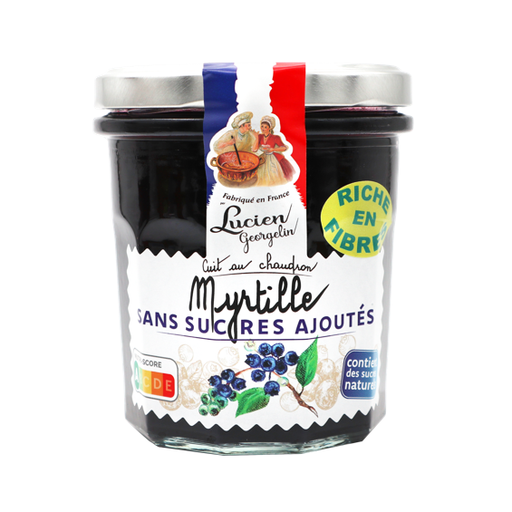 Image unavailable
A fruity option for topping bread or toast if you’re not looking for caramel flavour. ‘No added sugar’ doesn’t mean the preparation is sugar-free: check the ‘of which sugars’ value per 100 g before buying.
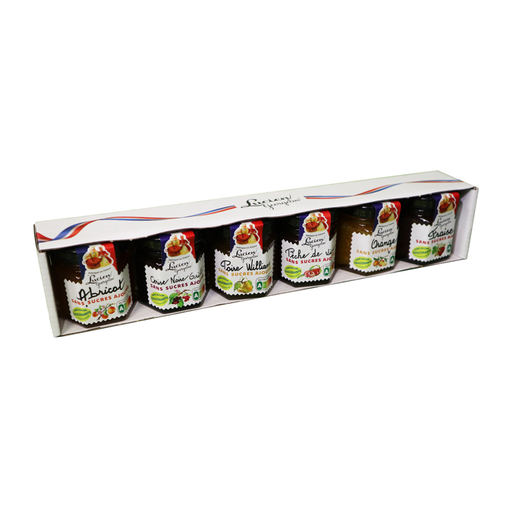 Image unavailable
An assortment to consider if you’d like to vary the fruit toppings on your toast. The recipes differ by flavour, so check the nutritional information for each one rather than assuming they all have the same sugar content. None of the jars is caramel.
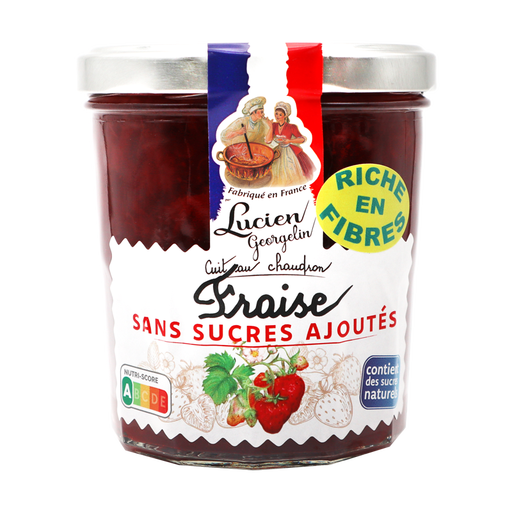 Image unavailable
A fruit preparation to consider for toast if you prefer strawberry to caramel. It’s labelled ‘no added sugar’, which isn’t the same as ‘sugar-free’: check the ‘of which sugars’ line per 100 g.
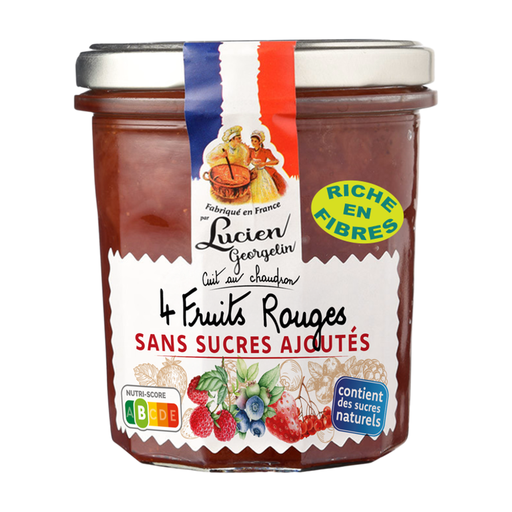 Image unavailable
If you’re looking for a red fruit topping, check the label to make sure its texture and suggested uses suit your toast. This isn’t caramel; despite the ‘no added sugar’ claim, also check its sugar content per 100 g.
No. The Ministry of the Economy says that displaying the Nutri-Score remains voluntary in France. The DGCCRF distinguishes this logo from the nutrition declaration, which is compulsory for the relevant prepacked foods. If there’s no logo, check the values per 100 g and the ingredients.
No. Under European Regulation No 1924/2006, ‘sugar-free’ means a product must contain no more than 0.5 g of sugars per 100 g or 100 ml. A ‘no added sugar’ preparation may contain naturally occurring sugars, so check the exact claim and the ‘of which sugars’ line.
Check the ingredients, allergens, polyols and any warnings on the product. According to Auchan’s product information, the Karéléa product contains milk and hazelnuts, lists 44 g of polyols per 100 g and warns that excessive consumption may have laxative effects.
Not as a spread for bread: caramel sweets from the confectionery aisle aren’t meant to be used like jam. For a fruity topping, look for jam or a fruit preparation. If you’d prefer a different flavour in a spreadable format, check spreads and their ingredients.