Runners who want to track their carbohydrate intake
When preparing breakfast or a snack before a marathon, the amount of carbohydrate in your portion matters more than a ‘sugar-free’ claim alone.


Don’t choose a cake or biscuit before a marathon based solely on a ‘sugar-free’ claim. Check the carbohydrate content of the portion you plan to eat and factor it into your race-day fuelling plan. A reduced-sugar product may suit your preferences, but it’s no substitute for checking the label or trying the product in training.
When preparing breakfast or a snack before a marathon, the amount of carbohydrate in your portion matters more than a ‘sugar-free’ claim alone.
Choosing a less sweet recipe can help guide your decision, as long as you don’t mistake it for a race-fuelling plan.
Check the portion size, ingredients, fibre and fat content before trying the product on a long run.
For a pre-marathon snack, start with the carbohydrate content of the portion you plan to eat. Then check the recipe and try that portion during training. The sugar claim alone won’t tell you everything you need to know.
| What to check | Look for | Who it matters to |
|---|---|---|
| Carbohydrate content | Compare the carbohydrate content per 100 g, then work out how much is in the portion you actually plan to eat. | When planning my breakfast, I want to know how much carbohydrate my portion provides; around 42% of consumers put this measurable amount first. |
| Digestive comfort | Check the ingredients, fibre and fat content; try the portion with the drink you plan to have during training. | Before race day, I prefer a product I’ve already tried and know I can tolerate; this is the main consideration for around 33% of consumers. |
| Reducing sugar | Understand the difference between ‘sugar-free’, ‘no added sugar’ and ‘reduced sugar’, then check the sugar and carbohydrate figures. | If I want to cut down on sugar, I want to understand exactly what the claim on the pack means; around 25% of consumers prioritise this. |
This claim doesn’t tell you how much carbohydrate is in the portion you eat. As a Sports Medicine article on marathons explains, muscle glycogen plays a role in fuelling exercise.
Check the carbohydrate content per 100 g in the nutrition information, then calculate how much is in your portion.
‘Sugar-free’, ‘no added sugar’ and ‘reduced sugar’ don’t mean the same thing. A claim that sugar has been reduced doesn’t mean the product contains no sugar.
Note the exact wording, then compare the ingredients and nutrition information of the products you’re considering.
How well you tolerate a portion and its ingredients can vary depending on the person and when it’s eaten. The label alone can’t predict how comfortable it will feel to digest.
Try the same product, portion and drink during training before race day. If you need to avoid an ingredient, check the allergens for that specific product.
A range of biscuits or reduced-calorie products doesn’t guarantee that every product carries the same sugar claim.
Check the product page or packaging for the exact product before including it in your fuelling trials.
These brands and retailers offer a starting point for comparing claims and recipes. To check a product’s ingredients, look at the specific product rather than relying on the range name.
Auchan describes its ‘Less Sugar’ range as a selection of biscuits and bars with reduced sugar.
Carrefour lists ‘sugar-free’ biscuits and offers Carrefour Bio wholemeal rusks with ‘no added sugar’.
E.Leclerc has a category of reduced-calorie biscuits and desserts under its Marque Repère brand.
LU offers a range of biscuits that can be useful for comparison with recipes carrying a sugar claim.
St Michel makes biscuits and baked goods, including products for breakfast and teatime.
Lidl stocks its own-label and national brands, as well as seasonal offers.
These two products suit different preferences: a pineapple cake described as reduced sugar and a wholemeal crispbread with no added sugar. Compare the label and the portion you plan to eat; the second product isn’t a cake.
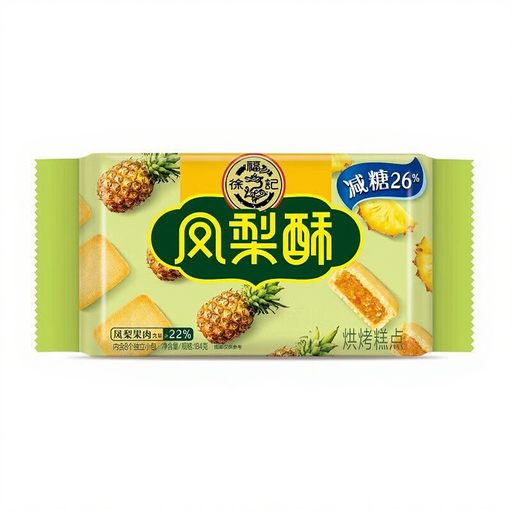 Image unavailable
If you’re looking for a reduced-sugar cake as a snack, check the carbohydrate content of the portion you’ll eat. The 184 g pack contains eight individual sachets; ‘Reduced Sugar’ doesn’t mean ‘sugar-free’.
 Image unavailable
If you’re considering a cereal-based product rather than cake for breakfast, compare the carbohydrate content of your planned portion and try it during training. This 425 g pack carries a ‘no added sugar’ claim.
No. This claim alone doesn’t tell you whether the cake fits into your pre-race fuelling plan. Check the carbohydrate content of the portion you plan to eat and try the product during training.
For a pre-packed product, start with the carbohydrate, sugar and energy figures per 100 g, then take your portion size into account. The DGCCRF states that nutrition information is given per 100 g or 100 ml; also check the ingredients and allergens for the product you choose.
No, these claims aren’t interchangeable. When choosing a product before a marathon, note the exact wording and check the sugar and carbohydrate amounts separately in the nutrition information.
Try the same product and portion during training, along with the drink you plan to have with it. That way, you can see how well you tolerate the combination without trying it for the first time on marathon day.