Hosts looking specifically for sugar-free biscuits
The difference between “sugar-free” and “no added sugar” will determine your choice. Check the exact claim and the “of which sugars” value per 100 g on every pack.


If your guests specifically need biscuits labelled “sugar-free”, check for that exact claim and the “of which sugars” figure per 100 g. Gerblé states that its Fourré Saveur Vanille contains 0 g of sugars per 100 g, as well as 26 g of polyols per 100 g. If biscuits with “no added sugar” are suitable, compare their nutritional values without treating them as sugar-free products. In either case, check the allergens for the specific product you plan to serve.
The difference between “sugar-free” and “no added sugar” will determine your choice. Check the exact claim and the “of which sugars” value per 100 g on every pack.
For a shared buffet, check allergens, any stated traces and the polyol content. Also check the pack format if you want to hand out the biscuits individually.
If your guests are happy with naturally occurring sugars, compare the nutritional information per 100 g, the ingredients and, where displayed, the Nutri-Score for each product.
First, decide whether “sugar-free” is a strict requirement. Allergens and serving arrangements may then rule out a product that otherwise meets this initial criterion.
| Criterion | What to check | Who is it for? |
|---|---|---|
| “Sugar-free” claim | The exact claim and the “of which sugars” figure per 100 g; don’t confuse these with “no added sugar”. | If I need to serve biscuits that strictly meet a “sugar-free” request, simply having no added sugar isn’t enough. Around 42% of consumers put this requirement first. |
| Ingredients and serving | Allergens and traces for the chosen variety; the number of portions and pack format if needed for sharing. | When serving several guests, I want to be able to spot ingredients to avoid and organise how the biscuits are handed out. This is a priority for around 33% of consumers. |
| Nutritional profile | Sugars, polyols, fat, fibre and energy per 100 g; the Nutri-Score if shown on the product. | If I’m happy with naturally occurring sugars, I want to compare the biscuits without basing my choice on just one figure. Around 25% of consumers prioritise this balance. |
A biscuit with no added sugar may still contain naturally occurring sugars. Gerblé’s cocoa biscuit with vanilla-flavour filling, for example, contains 2.4 g of sugars per 100 g.
If you’re looking strictly for “sugar-free” biscuits, check both the claim and the “of which sugars” figure on the exact product.
According to the DGCCRF, Nutri-Score is voluntary in France. It is no substitute for the full nutritional information or for checking the ingredients and allergens.
Use it as a guide where it’s displayed, then check the full label of the biscuit you’re considering.
According to Gerblé, Fourré Saveur Vanille contains 26 g of polyols per 100 g, as well as gluten, milk, eggs and soya. Traces of nuts and sesame are also indicated.
Keep the packaging next to the buffet and clearly label an alternative if this biscuit’s ingredients aren’t suitable for some guests.
The Joybuy France listings for LU Pépito Croc Sablé and BN strawberry flavour mention sugar or syrups containing sugars among their ingredients. These products aren’t suitable if you’re strictly looking for “sugar-free” biscuits.
Check the claim and ingredients list for each product, even if you know the brand well.
The brand offers several filled biscuits, labelled either “sugar-free” or “no added sugar”.
LU Pépito Croc Sablé is a useful point of comparison among classic filled biscuits.
BN’s strawberry-flavour filled biscuit shows why it’s important to check the recipe rather than relying on the biscuit category alone.
Oreo offers, among other products, a Gâteau nuage biscuit with a vanilla milk-flavour filling, which is worth considering as a separate variety.
These sandwich biscuits come in four individual packs and could work well for a shared buffet. Check the label before choosing them to meet a strict “sugar-free” request.
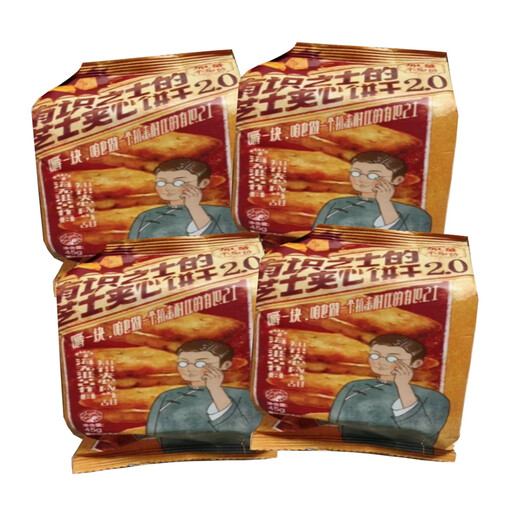 Image unavailable
The four-pack format could work well for sharing. The listing states 0.0 g of sugars per 100 g, but its ingredients include sugar and maltose syrup. Check the packaging before choosing these biscuits as a “sugar-free” option. The listing also identifies wheat, soya and milk as allergens.
No. Under European regulations, products can only be labelled “sugar-free” if they contain no more than 0.5 g of sugars per 100 g or 100 ml. A biscuit with “no added sugar” may still contain naturally occurring sugars. If this distinction matters to your guests, check its “of which sugars” value.
No. According to the DGCCRF, displaying Nutri-Score is voluntary in France, while nutritional information is compulsory for most prepacked foods. If Nutri-Score appears on the pack, check the nutritional information and ingredients too.
The “sugar-free” claim alone doesn’t tell you how much energy a product contains. Gerblé states that its Fourré Saveur Vanille has 455 kcal per 100 g. Compare the energy content of the products you’re considering on the same per-100 g basis.
Read the allergen information and any stated traces on the packaging of each variety you serve. According to Gerblé, Fourré Saveur Vanille contains gluten, milk, eggs and soya, and may contain traces of nuts and sesame. Don’t assume the same applies to another flavour.