
Livraison le jour même ou le lendemain

Qualité garantie

Débloquez vos offres de bienvenue: Livraison GRATUITE | Jusqu'à -80 % | 30 jours d'essai gratuits à JoyPlus
Téléchargez l'application
A suction cup shower shelf is a great way to save space without drilling or damaging your tiles. It's a particularly handy solution for tenants, students, and anyone who wants to be able to move their bathroom storage around easily. However, not all suction cups are created equal, and a well-presented product page can sometimes hide a few limitations in everyday use.
Before buying a suction cup shower caddy, focus on three things: the fixing surface, the maximum weight capacity stated, and water drainage. These are the factors that will determine the shelf's stability, how easy it is to clean, and how long it lasts.
Pressure-fit systems mainly adhere to smooth, clean, non-porous surfaces: glass, mirrors, polished metal, smooth tiles, stainless steel or acrylic. Textured ceramic, painted walls, grout, wallpaper or any porous surface will prevent the air from being properly expelled.
A no-drill shower organiser isn't compatible with every bathroom, then. Before you order, measure the available space and find a perfectly flat area.
Take the stated capacity with a pinch of salt. Full bottles of shampoo, shower gel and conditioner quickly become heavy, especially when several people are using the same caddy. The actual weight it can hold also depends on the quality of the surface and how the suction cups are positioned.
Place the heaviest items closest to the wall and don't exceed the limit stated by the manufacturer. Even an adjustable or removable shower shelf needs to be easily accessible so you can regularly check its grip.
A caddy without drainage holes can trap water underneath your bottles. This persistent dampness makes cleaning harder and leaves packaging constantly wet. For a waterproof shower storage solution that's staying inside the cubicle, go for a slatted base, a slight incline, or a design that encourages air circulation.
Read the installation instructions carefully rather than just relying on the "no drilling" label. Suction cups need to be placed on a clean, dry, grease-free surface, away from grout lines and any bumps. Press firmly on each one to expel the air, then check they're holding before you fill the caddy.
For a shower storage solution for tenants, removable models offer a very real advantage: they can be taken off easily for cleaning or when you move out, without leaving any glue or holes behind.
ABS and TPE are commonly used for caddies and suction cups. Stainless steel can work well for a wall-mounted shower shelf that aims for a metallic finish and good corrosion resistance. However, any "rustproof" claim should be checked against the actual material listed on the product page.
Clean the shelf regularly with water and a mild soap. Avoid abrasive products – they can scratch surfaces or damage the suction cups. If the grip starts to weaken, take the caddy down, wash the suction cup and let it dry before putting it back in place.
Compare the caddy's dimensions with those of your shower cubicle. A model that's too deep can get in the way, while one that's too narrow will struggle to hold large family-sized bottles. Double caddies let you separate your products, but they need more space.
A corner model needs to be installed in a genuinely right-angled corner, with two compatible walls. Also check whether the stated capacity refers to the whole unit or each individual basket.
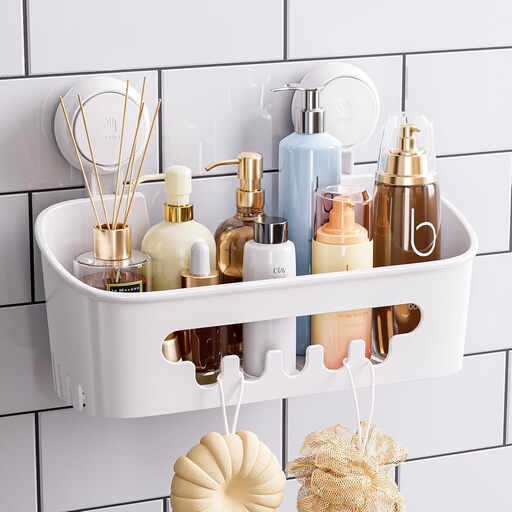
Why this choice suits this profile: This compact caddy is ideal for a small bathroom, a student room, or a first no-drill setup.
Its removable fixing lets you check the grip and reposition the caddy on a compatible surface, without glue or screws.
One caddy, two suction cups and a base with 22 drainage holes, according to the product page.
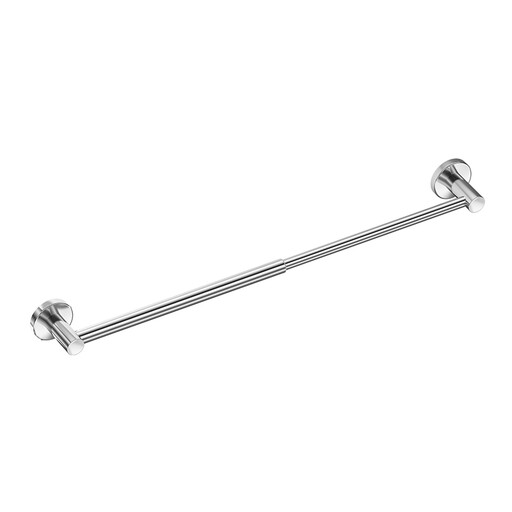
Why this choice suits this profile: Its silver finish and stainless steel construction fit into a bathroom that values a clean, polished look.
The product page mentions an adjustable stainless steel shelf, advertised as rust-resistant.
A sleek design, a silver finish and adjustment as stated by the manufacturer.

Why this choice suits this profile: This two-pack lets you separate shampoos, shower gels and accessories in a household where products quickly pile up.
Each caddy has two suction cups and must be installed on a smooth surface, away from grout lines and uneven areas.
Two caddies, four suction cups in total and a maximum stated capacity of 22 lb, which is roughly 10 kg.
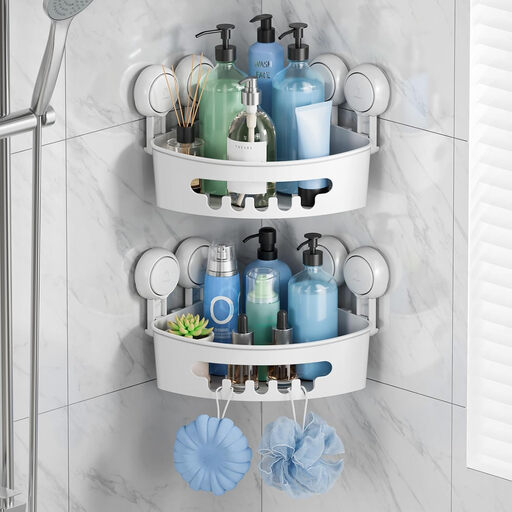
Why this choice suits this profile: Its corner shape makes use of space that's often wasted in showers with two 90° walls.
The product page specifies its compatibility with right angles and non-porous surfaces, which reduces the risk of poor installation.
A removable design, drainage holes and a maximum stated capacity of 22 lb, according to the product page.
We've selected a full range, updated in real time, of products that meet these selection criteria and European safety standards.
A suction cup that comes loose should be cleaned and dried before being put back in place. Always respect the maximum weight stated and don't install the storage near a strong heat source or in direct sunlight.
Yes, as long as the tiles are smooth, clean and non-porous. Grout lines, textured tiles and uneven surfaces significantly reduce the grip. Do a dry test before putting your products on it.
It depends on the model. Some product pages claim up to 22 lb, which is roughly 10 kg, but this value is still linked to the surface and the quality of the installation. Never exceed the limit stated by the manufacturer and spread the bottles out inside the caddy.
Regularly remove soap residue, avoid overloading the caddy and let the water drain away through the openings provided. For a rustproof metal shower shelf, dry any areas where water tends to pool. With an ABS and TPE model, just use water and mild soap – no abrasive products.