
Livraison le jour même ou le lendemain

Qualité garantie

Débloquez vos offres de bienvenue: Livraison GRATUITE | Jusqu'à -80 % | 30 jours d'essai gratuits à JoyPlus
Téléchargez l'application
Securing your home shouldn't come with hidden monthly fees. That's why the subscription-free Wi-Fi security camera has become a sought-after solution for many households in France. However, the market is flooded with often misleading marketing promises. Some models advertised as "fee-free" hide essential features behind a paid subscription, while others disappoint with their performance.
As the Head of Product Selection at Joybuy, my mission is to guide you through this jungle. Let's analyse the common pitfalls and the technical criteria to check to make an informed choice that's perfectly suited to your needs and budget.
Before looking at specific models, it's crucial to know the most common traps that can turn a good investment into a source of frustration.
To avoid falling into these traps, focus on a few key technical specifications that guarantee performance and autonomy.
This is the heart of the matter. To free yourself from any hidden fees, your camera must offer a local storage option. There are two main types:
Image quality is non-negotiable. Forget resolutions below 1080p (Full HD). For precise identification of faces or license plates, a 2K (QHD) or 4K (UHD) resolution is highly recommended.
For nighttime, check the technology used:
The choice of power source will depend on your camera's location.
Here are a few options that meet these criteria, suitable for different user profiles.
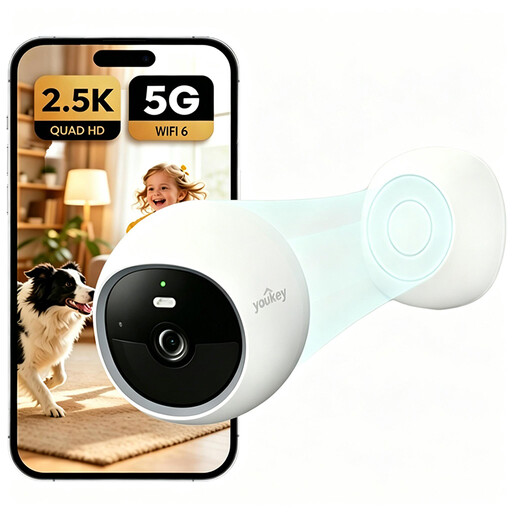
Why it's a great choice: Ideal for apartments or rental homes, this camera attaches magnetically to its mount, which can be stuck to the wall. The installation requires no drilling and leaves no marks—a blessing for preserving your walls.
It bypasses the "fake subscription-free" trap thanks to its 8GB of built-in eMMC storage. All features, including recordings, are available right out of the box, with no extra fees or need to buy an SD card.
Its 2.5K QHD resolution and 150° viewing angle deliver a sharp, wide image. Colour night vision and person/pet detection make it a very comprehensive indoor monitoring tool.
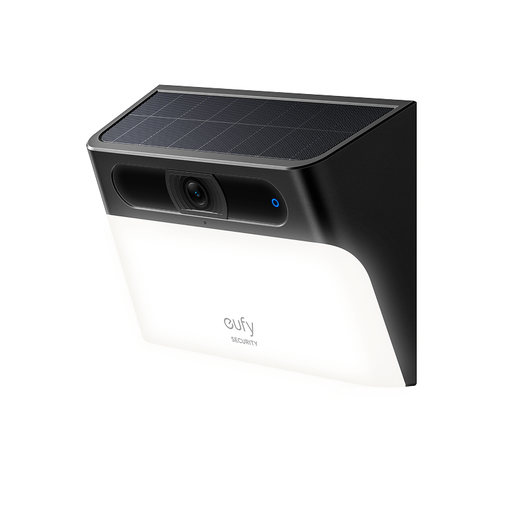
Why it's a great choice: Perfect for homeowners who want a "set it and forget it" solution. The integrated solar panel ensures continuous power with just a few hours of sunlight per day, eliminating the chore of manual recharging.
This model is a true no-monthly-fee product. It locally stores event recordings for up to 60 days. 2K colour night vision and AI detection are included at no extra cost.
It's a 2-in-1 device that combines a 2K security camera and a 300-lumen motion-activated wall light. It illuminates pathways while recording, providing a two-pronged deterrent effect.
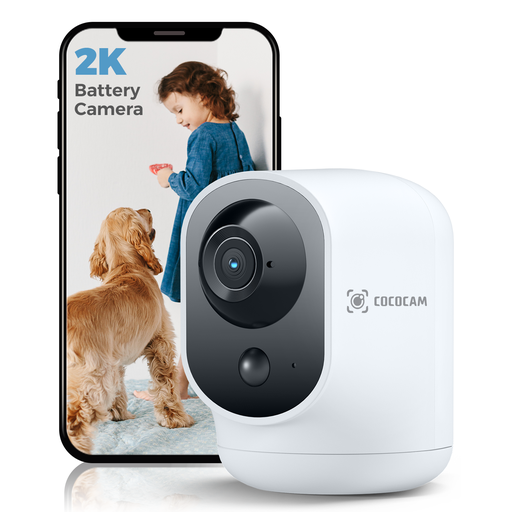
Why it's a great choice: Ideal for keeping an eye on a child's room, a pet, or a large living area. Its motorised Pan/Tilt (355°/90°) lets you scan every corner from the app. Its built-in battery offers great placement flexibility.
It supports storage on a microSD card up to 128GB (not included), giving you full control over your recordings without relying on a paid cloud service. Basic motion detection features are included free of charge.
The combination of a long-life battery (5200mAh) and 360° motorisation is rare at this price point. Two-way audio allows you to interact remotely, whether to soothe a baby or talk to a pet.
We have compiled a complete, up-to-date list of products that meet these strict selection criteria and security regulations.
1. Is a subscription-free security camera really 100% free? Yes, provided you choose a model with local storage (microSD card or built-in eMMC). The initial purchase of the camera (and possibly a memory card) is the only expense. All functions, including recording and viewing videos, are then free. Beware of brands that limit AI features without a subscription.
2. What is the real-world battery life of a wireless camera? Battery life varies considerably depending on usage, temperature, and settings. On average, a battery-powered camera can last from 1 to 6 months on a single charge. For outdoor use, a model with an integrated solar panel is a more sustainable solution that avoids manual recharging.
3. How are recordings stored on a subscription-free camera? Videos are recorded onto a local physical medium. Most often, this is a microSD card that you insert into the camera. When the card is full, the camera automatically deletes the oldest recordings to free up space (loop recording). You can remove the card and transfer the videos to a computer if you wish to archive them.