
Livraison le jour même ou le lendemain

Qualité garantie

Débloquez vos offres de bienvenue: Livraison GRATUITE | Jusqu'à -80 % | 30 jours d'essai gratuits à JoyPlus
Téléchargez l'application
A styling brush for hair can be used to detangle, smooth, add volume or create a blow-dry at home. But different models serve very different purposes: a detangling brush is no substitute for a blow-dry brush, just as a heated brush shouldn’t be used like a round blow-drying brush.
Before you buy, it’s worth looking beyond the promises of quick styling. Certain technical details can make all the difference in daily use, especially if you have fine, thick, curly or fragile hair.
A heated brush warms a barrel or bristles, but doesn’t necessarily dry your hair. It’s typically used on dry hair to smooth, shape a curve or add volume.
A blow-dry brush, on the other hand, combines airflow with styling. It can help shape your hair while drying, but the result depends on the airflow, temperature and how easy it is to handle. Always check whether the product is designed for use on damp hair or only on dry hair.
High heat can speed up styling, but it isn’t suitable for all hair types. Fine, sensitive or colour-treated hair generally needs a more moderate temperature. For regular use, choose a brush with adjustable temperature settings and easy-to-read controls.
Having a display or several levels doesn’t guarantee precise results on its own. It mainly allows you to tailor the use more closely to your hair type.
The diameter of a round blow-drying brush directly affects the result:
For detangling, a flat or cushion brush covers a wider area. It can be more practical than a round brush for your daily routine.
Start by defining your main need: detangling, drying, smoothing, waving, adding volume or taming a beard. A brush advertised as suitable for all hair types can be versatile, but it won’t always replace a tool designed for a specific task.
For curly or thick hair, look at the spacing and length of the bristles. For fine hair, soft bristles and a gentle setting make it easier to glide through without pulling unnecessarily on the lengths.
Nylon bristles, flexible pins and double-height bristles can improve grip and detangling, but technique matters just as much. Work in small sections, starting at the ends before gradually moving up towards the roots.
For a heated brush, look for a surface described as ceramic or tourmaline-ceramic, along with even heat distribution. However, avoid holding the device in one spot for too long and always follow the instructions in the manual.
Before ordering an electrical appliance, check:
For non-electric accessories, inspect the bristles regularly. A loose, broken or sharp bristle can irritate the scalp. Remove any hair build-up and clean the brush according to the manufacturer’s instructions.
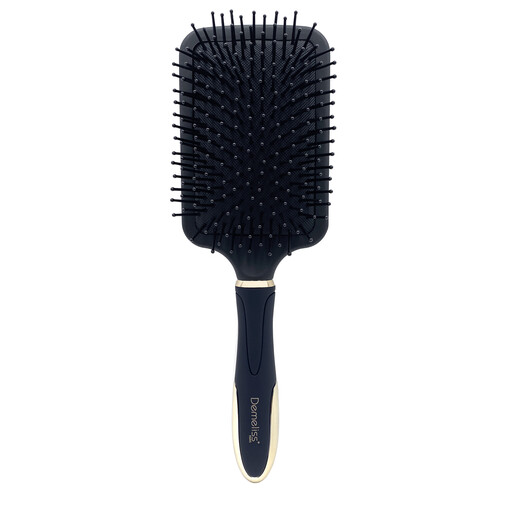
Why this choice suits this profile: This flat brush fits easily into a daily routine and works well with straight, curly, fine or thick hair. Its oval shape covers a large section of hair with each stroke.
It doesn’t claim to replace a heated appliance – its purpose is clearly focused on gentle detangling and everyday styling.
Soft nylon bristles, oval shape and wooden handle. Weight stated: 172 g.
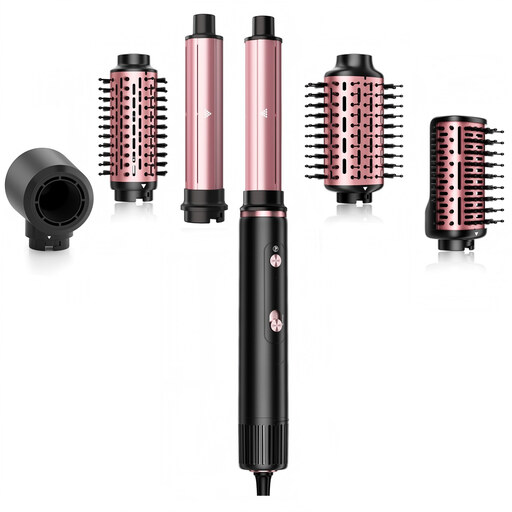
Why this choice suits this profile: This multi-styler is for those who want to combine several functions in one device: drying, smoothing, volume and curls.
The product page states five functions and nine settings, combining three temperatures and three airflow levels – so you can adapt the use to your hair rather than relying on a single heat setting.
Brushless motor stated at 110,000 rpm, dual auto-curling attachments and 360° swivel cord.
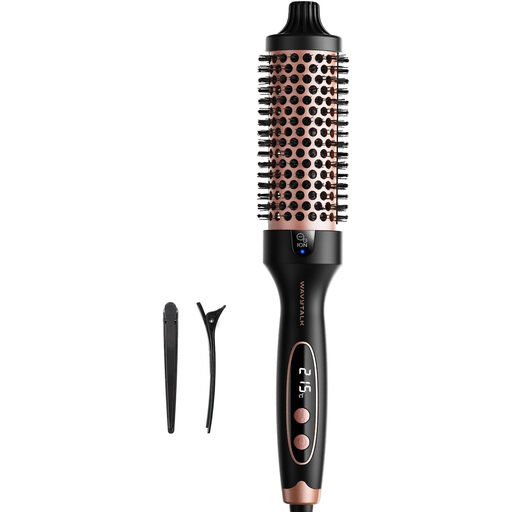
Why this choice suits this profile: This heated brush is ideal for those who regularly style dry hair and want a dedicated tool for volume, waves and soft movement.
The product page clearly states it is not a blow-dry brush and should not be used on wet hair. This distinction helps you avoid an unsuitable purchase.
38 mm barrel, five temperatures displayed on an LED screen and 360° swivel cord. Check the plug compatibility stated on the product page before use in the UK.
We’ve put together a comprehensive, real-time updated list of products that fully meet these strict selection criteria and European safety regulations.
It depends on the model. A blow-dry brush may be designed to help with drying, whereas a standard heated brush is generally used on dry hair. Read the manual and product page before first use.
Opt for an adjustable temperature, soft bristles and working in small sections. A non-heated detangling brush can work well for daily use, while an electrical appliance should be used on a moderate heat setting without holding it still on one section.
There’s no one-size-fits-all lifespan. Replace your brush when the bristles are broken, misshapen or difficult to clean. For an electrical appliance, stop using it if the cord is damaged, if you notice an unusual smell or if the heat protection no longer seems to work.