Which criteria should you check first?
Start with the measurements that could rule out a particular design, then compare the capacity and noise levels of models that will actually fit in your home.
| Criterion | What to check | Who should consider it? |
|---|
| Spin noise |
Noise level and noise class on the energy label; an independent test of the exact model, if available. |
If the washing machine is close to your living or sleeping area, noise during the spin cycle becomes the main consideration. Around 28% of consumers are said to put this need first. |
| Size and access |
Width, depth and height, delivery route and clearance for opening the machine. |
If the machine needs to pass through a narrow doorway or fit into an alcove, choose a design that works around the measurement causing the problem. This is said to be the priority for around 28% of consumers. |
| Washing capacity |
Capacity in kg, your usual laundry load and how often you wash. |
If you want to wash regularly without running lots of cycles, a small household may prefer a drum suited to its laundry rather than the largest capacity available. Around 22% of consumers are said to prioritise this need. |
| Installation and stability |
Water supply, drainage, hose route and whether you can level the machine. |
If the plumbing or flooring makes installation more difficult, being able to install and stabilise the machine matters more than choosing an anti-vibration accessory. This is said to be the priority for around 22% of consumers. |
Brands to consider
These examples point to models and manuals worth comparing. A brand’s inclusion in a test doesn’t, on its own, tell you about all of its washing machines.
Bosch
In its March 2026 update, UFC-Que Choisir includes the front-loading WGE03207FR and WGE02201FR among the models it covers.
- Bosch support explains how to remove the transit bolts and level the machine.
- These instructions don’t mean that a Bosch model will be quieter than another machine.
Miele
The front-loading WCA132WCS and WED385 WCS are among the models mentioned by UFC-Que Choisir in March 2026.
- A test of the specific model you’re considering can help you assess its noise level and washing performance.
- The inclusion of these models in a comparison doesn’t represent the entire Miele range.
Hisense
UFC-Que Choisir includes the front-loading WF3S9043BB3 among the models added to its comparison.
- Looking up the exact model lets you compare its energy information, dimensions and any available test results.
- The features of this model shouldn’t be taken as representative of other Hisense washing machines.
Electrolux
The Electrolux EWQ6412B is among the recently tested models mentioned by UFC-Que Choisir.
- Electrolux’s pre-installation guide encourages you to prepare the access route and connections.
- Preparing in this way doesn’t confirm that a particular model will fit your home.
AEG
UFC-Que Choisir includes the AEG LTR8C7331A among the models to consider if you’re looking for a top-loading machine.
- A top-loader is worth considering when width is your main constraint.
- Choosing a top-loader doesn’t mean you can skip comparing the spin noise of the specific model.
Washing machines available on Joybuy
These front-loaders are worth considering for everyday laundry in a flat. Depending on your space, depth or capacity may be the deciding factor. Compare their spin noise separately before choosing a model for your living area.
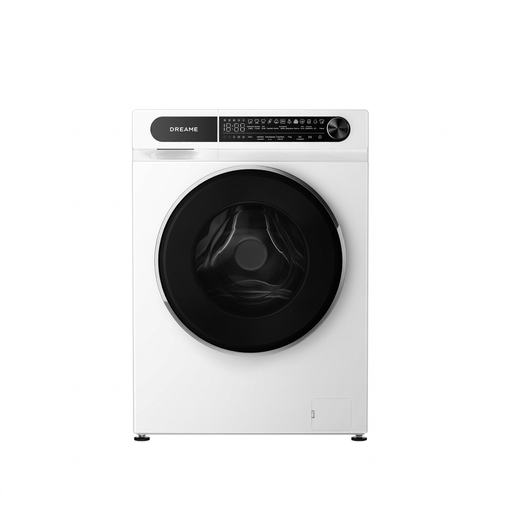 Image unavailable
Dreame DRWASHS8KG S, 8 kg white front-loader
Worth considering if depth is a constraint in your space and an 8 kg capacity suits your laundry. Measure the delivery route and required clearance, too. If you plan to install it near your living area, compare its spin noise with that of the other machines you’re considering.
View on Joybuy
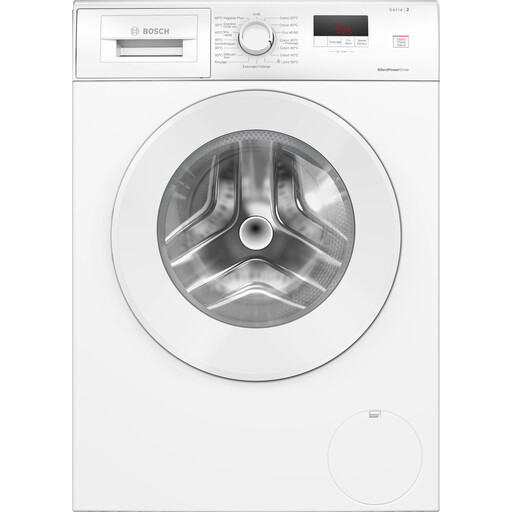 Image unavailable
Bosch WGE02407FR, 7 kg front-loader
Its 7 kg capacity may suit everyday laundry if it matches the amount you need to wash. The product title states a maximum spin speed of 1,400 tr/min, but this alone doesn’t tell you how noisy the machine is. Check the model’s label and make sure there’s enough room for the machine and to open the door.
View on Joybuy
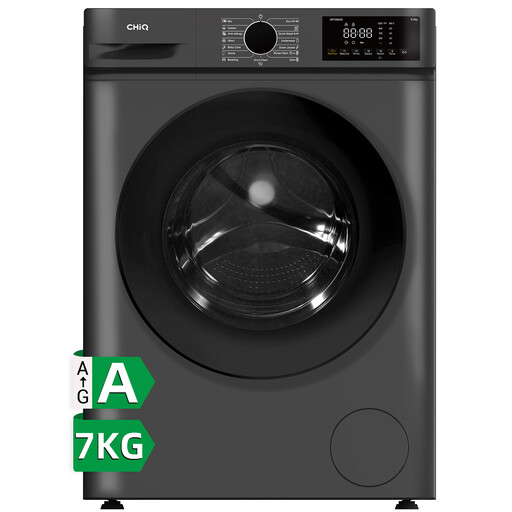 Image unavailable
CHiQ JW75883G, 7 kg dark grey front-loader
Worth considering if you’re looking for a front-loader for everyday laundry and have limited depth in your space. The title lists 16 programmes and a maximum spin speed of 1,200 tr/min, but these details don’t indicate the noise level. Check the full dimensions, clearance and spin noise before making your choice.
View on Joybuy
Frequently asked questions
What noise level should I compare if the washing machine is near my living area?
Check the spin noise level and noise class shown on the energy label. ADEME presents the label as a way to compare, among other things, the noise levels of washing machines. An independent test of the exact model can provide further information.
Is a top-loading washing machine better suited to a small flat?
A top-loader is best suited to a narrow space: UFC-Que Choisir says this type is generally 40 to 46 cm wide. If depth is more of a constraint than width, consider a slim front-loader. In either case, measure the space needed to open the machine.
Is a 7 kg capacity enough for a small household?
ADEME says a 7 kg washing machine is enough most of the time. However, adjust this guideline to how often you wash and whether you need to wash bulky items.
What should I check before having the machine installed?
Measure the access route and the space where the machine will go, then check the water supply, drainage and hose route. Follow the model’s instructions for removing the transit bolts and levelling the machine. Bosch highlights both steps in its installation guidance.
Can the energy label replace an independent test?
No. The label lets you compare declared information using a common framework, while a test of the exact model may offer further insights. UFC-Que Choisir assesses noise, washing, rinsing and spinning in its laboratory tests.


