For a studio flat or open-plan kitchen, start by shortlisting fridges based on their stated noise level and sound class, then check usable capacity and the space needed for ventilation. A compact model may suit one person without much need for freezer space; a fridge freezer is a better choice if you need to store frozen food, while an integrated model requires a compatible housing unit and ventilation. The dB(A) figure alone cannot predict how noticeable a fridge will be in your living space.
Which format is right for you?
The right format depends first on what you need to store and how much space you have. If you live in a single-room home, it’s also worth paying closer attention to operating noise.
One person in a studio flat
A compact fridge may be suitable for your regular shop if you don’t need a large freezer. UFC-Que Choisir suggests an average usable capacity of 100 to 150 l for one person. As the appliance may share your living or working space, compare its stated noise level too.
A household with an open-plan kitchen
A fridge freezer lets you store fresh and frozen food separately, if you have room for one. To assess how quiet it is, don’t rely on the stated noise level alone: UFC-Que Choisir highlights that how sounds are perceived can vary, particularly during operating cycles.
A home with a fitted kitchen
An integrated fridge can fit into a purpose-built housing unit. Before choosing a model, check its installation requirements against the unit’s dimensions, door fixing and ventilation openings. An integrated design doesn’t automatically mean less noticeable noise.
What should you check before choosing?
First work out how much space you need for fresh and frozen food, then compare the noise levels of models that can actually be installed in your home.
Compact or table-top fridge
Worth considering if: you live alone and don’t need a large freezer compartment.
Trade-off: its small size doesn’t guarantee quiet operation and leaves less room for frozen food.
Freestanding fridge freezer
Worth considering if: you need a separate freezer and have a suitable space for the appliance.
Trade-off: you’ll need to allow space for the appliance and the specified ventilation clearances. Don’t assume the dB(A) figure alone tells you how noisy it will seem.
Integrated fridge freezer
Worth considering if: your kitchen has a compatible housing unit and door.
Trade-off: ventilation and door fixing must follow the instructions; an integrated design doesn’t guarantee quieter operation.
| Factor |
What to check |
Your needs |
| Noise |
Compare the stated noise level in dB(A) and the sound class on the energy label for the exact model. If quiet operation is a priority, also look for an independent test that covers its operating cycles and sounds. |
I sleep or work near the fridge: a noise figure helps me make an initial shortlist, but it can’t guarantee that I won’t notice its vibrations or operating cycles. |
| Usable capacity |
Check the fridge and freezer capacities separately. UFC-Que Choisir suggests an average usable capacity of 100 to 150 l for one person; adjust this guide to suit your habits. |
Will my shopping fit in a compact fridge, or do I regularly need a proper freezer compartment? |
| Installation |
Measure the space and access routes. Check the instructions for the clearances required for a freestanding model or, for an integrated one, the housing unit, door and ventilation openings. |
I want the appliance to fit without blocking ventilation, particularly under a worktop or in a fitted kitchen. |
Which mistakes should you avoid?
-
Choosing a fridge based only on the lowest dB(A) figure
Two appliances with the same stated noise level won’t necessarily sound equally noticeable. UFC-Que Choisir also considers the sounds produced during operating cycles in its tests.
Use the energy label to create a shortlist, then look for an independent test of the exact model if the fridge will be near your bed or workspace.
-
Forgetting to allow space for frozen food
A compact fridge may offer enough room for fresh food but not meet your needs if you regularly want a separate freezer compartment.
Assess your fresh and frozen food needs separately, then compare the capacity of each compartment rather than just the total.
-
Placing a freestanding fridge right up against the walls
A fridge needs to release heat. Beko warns that insufficient airflow can affect its operation and increase energy consumption.
Measure the available space and follow the model’s instructions. Don’t apply the installation rules for an integrated appliance to a freestanding one.
-
Ordering an integrated fridge before measuring the housing unit
The appliance’s dimensions aren’t the only thing to consider: the door fixing and ventilation openings must also be compatible with the kitchen unit.
Measure the height, width and depth of the housing unit, as well as the door system, then check them against the model’s installation instructions.
A guide to some of the brands
These examples highlight specific formats and installation requirements; they don’t represent every range from each brand.
Liebherr
Liebherr’s UK product information lets you compare both table-top fridges and freestanding fridge freezers.
- According to Liebherr, the Rdi 1620 Plus offers 141 l of capacity and a stated noise level of 34 dB.
- These manufacturer specifications don’t show how noticeable the noise will be in your living space; check the dimensions and space requirements too.
Bosch
The KIN86SFE0 integrated fridge freezer is an example of an option for a kitchen with a compatible housing unit.
- Bosch lists 184 l of fridge capacity, 76 l of freezer capacity, 35 dB(A) and sound class B for this model.
- These details don’t confirm that it will fit your kitchen unit or tell you how noisy it will seem once installed.
Beko
Beko’s support advice is a useful guide to the different ventilation requirements of freestanding and integrated fridges.
- Beko recommends leaving at least 5 cm on each side and at the back of a freestanding fridge.
- This advice doesn’t replace the clearances specified in the instructions for your chosen model and shouldn’t be applied as it stands to an integrated fridge.
Fridges to consider on Joybuy
This selection includes freestanding fridge freezers in different capacities and an integrated model. For a studio flat or open-plan kitchen, compare their stated specifications with your freezer needs, available space and installation requirements.
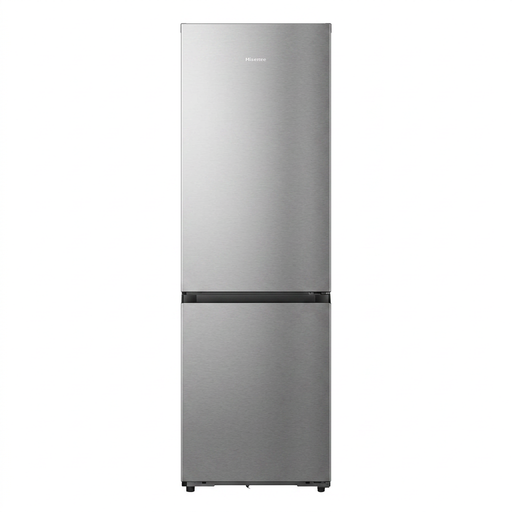 Image unavailable
Hisense RB3K330SAFC, 330 l freestanding fridge freezer
Worth considering if you’re looking for a freestanding fridge freezer for an open-plan kitchen. The product title lists a 330 l capacity, 35 dB noise level and No Frost technology. Compare these stated details with your available space and the required clearances. If noise is a deciding factor, look for a test of the exact model too.
View on Joybuy
 Image unavailable
Hisense RB3B250SAWC, 252 l integrated fridge freezer
This format is designed for a fitted kitchen with a compatible housing unit. The product title lists a 252 l capacity, No Frost technology, energy class C and an Inverter compressor. Check the instructions for the housing unit dimensions, door fixing, ventilation and noise specifications for this model.
View on Joybuy
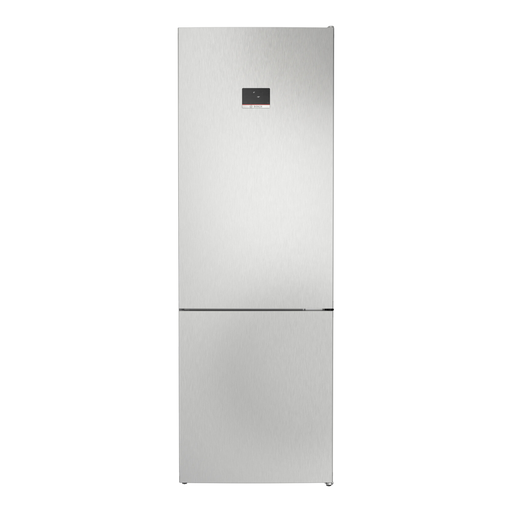 Image unavailable
Bosch KGN497LDF, 440 l fridge freezer
This 440 l fridge freezer is listed with energy class D. Check whether its capacity suits your needs and whether it will fit in your space. For an open-plan kitchen, compare the noise level and sound class for the exact model too, and allow for the specified clearances.
View on Joybuy
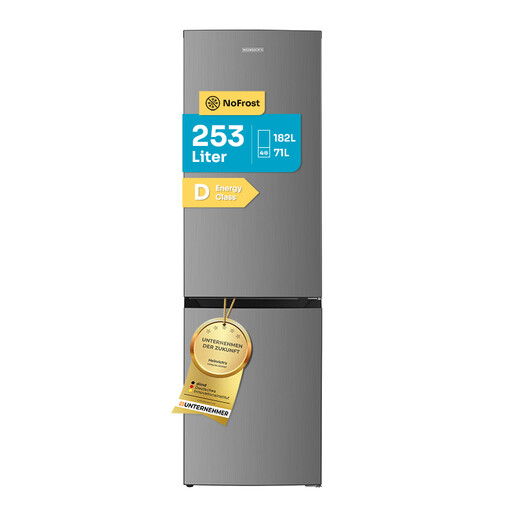 Image unavailable
Heinrich´s, 253 l stainless steel fridge freezer
If you need a freezer as well, the product title lists 182 l of fridge capacity and 71 l of freezer capacity. It also states 39 dB and No Frost technology. Check the sound class, dimensions and ventilation requirements before choosing this model for a living space.
View on Joybuy
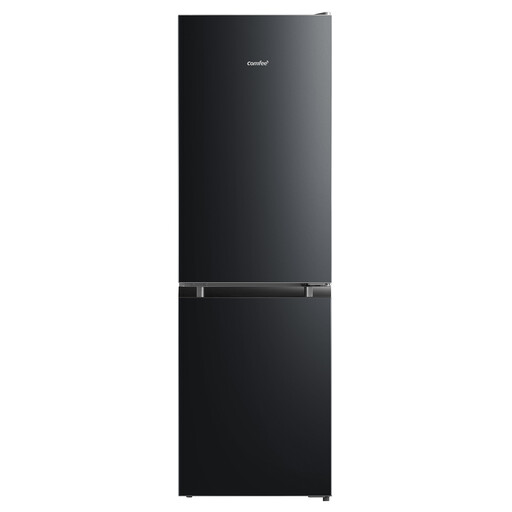 Image unavailable
Comfee’ by Midea RCB230BL2EU(E), 174 l fridge freezer
This 174 l freestanding fridge freezer may be worth considering if you want a smaller-capacity model with a freezer. The product title mentions Low Frost and a reversible door. Check the stated noise level, sound class, dimensions and required clearances for your space.
View on Joybuy
Frequently asked questions
How do you compare the noise levels of two fridges?
Compare the dB(A) noise level and sound class on each model’s energy label. The European Commission says the label also displays storage capacities. If noise matters in your living space, supplement your comparison with independent tests: UFC-Que Choisir points out that the stated figure doesn’t fully describe the sounds you may hear during operating cycles.
What capacity should one person look for in a studio flat?
UFC-Que Choisir suggests an average usable capacity of 100 to 150 l for one person. Adjust this to suit your shopping habits, and check the freezer capacity separately if you regularly store frozen food.
Can you install a freestanding fridge against a wall?
Follow the clearances specified in the instructions rather than pushing the fridge as close to the wall as possible. Beko recommends leaving at least 5 cm on each side and at the back of a freestanding model. An integrated appliance has its own ventilation requirements, depending on the kitchen unit and model.
Will an integrated fridge always be less noticeable in an open-plan kitchen?
No: an integrated design alone can’t predict how noticeable the noise will be. Check the noise level and sound class for the exact model, then make sure the housing unit, door and ventilation are compatible. Tests covering operating cycles can help you compare appliances with similar stated noise levels.


