What should you check before buying?
Start with your usual shopping habits and the space you have, then compare the stated noise levels of formats that genuinely meet both needs.
| What to consider |
What to check |
Think about your needs |
| Noise |
Compare the stated dB(A) levels of appliances in a similar size category. Look for reviews that describe cycles and vibrations, or test results with a clearly explained methodology. |
If I sleep near the kitchen, a low figure helps me narrow down my options, but I don’t take it as a promise that I won’t hear the appliance. |
| Capacity |
Check the fridge’s usable capacity and its full dimensions. UFC-Que Choisir distinguishes between compact fridges for studio flats and formats designed for greater storage needs. |
If I only do a small shop, I’d rather check that a compact model is big enough before making room for a fridge-freezer. |
| Freezing |
Check whether the model has a freezer compartment, how much it holds and what it’s designed for. A small built-in compartment won’t necessarily replace a separate freezer. |
I regularly store frozen food, so the capacity and features of the compartment matter more to me than the simple label ‘fridge-freezer’. |
| Installation |
Measure the height, width and depth, as well as the space needed to open the door. Follow the clearances specified in the manual and, for an integrated model, check the required vents. Electrolux highlights the importance of ventilation. |
In an open-plan kitchen, the appliance needs to fit its space without blocking the airflow required for installation. |
| Energy use |
Check the energy label and the specifications of the model you’re considering, as well as its capacity and stated noise level. Don’t assume its energy use from its size alone. |
I’m looking for a capacity that suits my shopping habits, without overlooking energy use when I make my final choice. |
A guide to some brands
These models illustrate different formats and requirements. The specifications mentioned apply to the specific models, not to every product from each brand.
Bosch
Bosch Electroménager France’s product specifications let you compare a compact fridge with an integrated fridge-freezer here.
- The KTL15NWEB has a stated 106 L of fridge capacity, an integrated freezer compartment and a noise level of 39 dB(A).
- The KIV86SFE0 has a stated noise level of 35 dB(A), but its 177,2 cm height and integrated installation require a suitably sized housing. These noise levels are stated by the manufacturer, not measured in a studio flat.
Oceanic
The Oceanic compact fridge featured by BUT is one option to consider when space is limited.
- The retailer’s product details give a capacity of 90 L, a noise level of 37 dB and dimensions of 44,5 × 47,5 × 85 cm.
- These specifications alone can’t tell you how noisy it will seem next to a bed or sofa.
Samsung
The RB34C602ESA is an example of a fridge-freezer to consider if your storage needs go beyond those of a small studio flat.
- BUT lists a capacity of 344 L and a noise level of 35 dB for this model.
- Its capacity needs to suit your needs and the space available. The stated noise level won’t tell you how noisy it will seem in your home.
Joybuy models to suit your needs
These options range from a small 45 L fridge to two fridge-freezers. First compare the capacity you’d find useful, then check the stated noise level where it appears in the model name, along with the installation requirements, before making your choice.
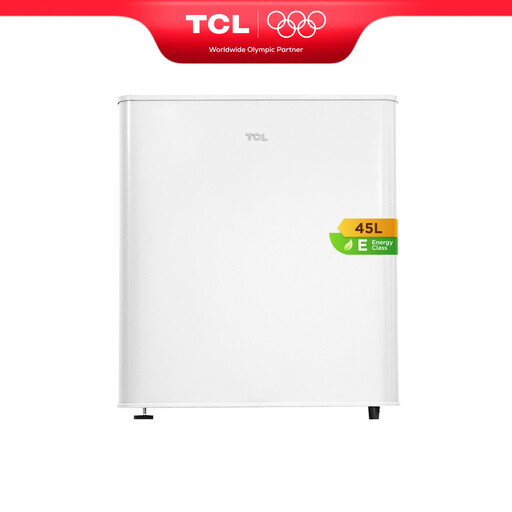 Image unavailable
TCL RF60DWE0FR, 45 L compact fridge
Its 45 L capacity is designed for modest storage needs in a small space. The product name lists adjustable feet, a toughened glass shelf and an E energy rating. If you plan to store frozen food, check the specifications of the freezer compartment, as well as the clearances set out in the manual.
View on Joybuy
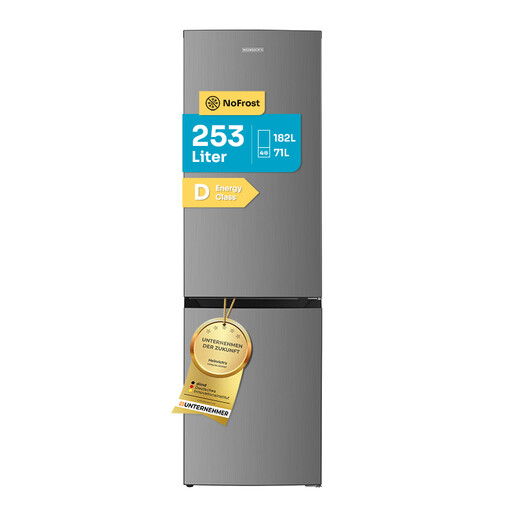 Image unavailable
Heinrich´s, 253 L fridge-freezer, stainless steel
Consider this model if you genuinely need a separate freezer and have room for a 253 L fridge-freezer. The product name lists 182 L of fridge capacity, 71 L of freezer capacity, a noise level of 39 dB and No Frost. Measure the space and check the model’s installation and ventilation requirements.
View on Joybuy
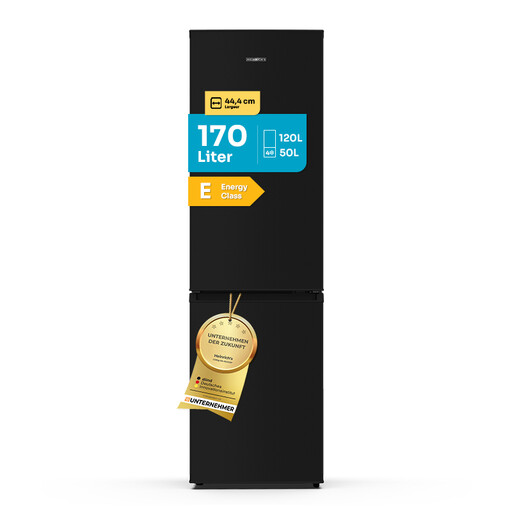 Image unavailable
Heinrich´s, 170 L fridge-freezer, black
This capacity could suit you if you need a separate freezer but don’t want the 253 L fridge-freezer featured here. The product name lists 120 L of fridge capacity, 50 L of freezer capacity, a noise level of 40 dB and an E energy rating. Check its dimensions and ventilation clearances before deciding where to put it in a studio flat.
View on Joybuy
Frequently asked questions
What noise level should I look for in a fridge for a studio flat?
Compare the stated dB(A) levels of appliances in a similar size category, but don’t treat the figure as a guarantee that you won’t hear the fridge. Bosch gives 39 dB as an indicative guide for a quiet fridge, though cycles and vibrations may still be noticeable near your bed.
Why might a fridge with a low stated noise level still be audible in an open-plan kitchen?
The stated noise level doesn’t tell you everything about intermittent sounds or vibrations in your room. When choosing, look for reviews that describe the sounds people heard and the installation conditions. Also follow the ventilation requirements in the manual: Electrolux highlights how important they are for the appliance to work properly.
Should you leave space around a fridge?
Yes. Leave the clearances specified in the model’s manual. Electrolux recommends allowing air to circulate around the appliance and points out that vents are particularly important for integrated models.
When should you plug in a fridge after delivery?
First, follow the instructions for the appliance you’ve received. For the installation it describes, Electrolux recommends waiting at least 4 hours before plugging it in, to allow the oil to flow back into the compressor.


