A single person with a kitchenette
If space is limited, measure the available width, depth and height before comparing capacities. Also check how much room you need to open the door and allow air to circulate, following the model’s instructions.


In a studio flat, first choose a fridge that fits the space, allowing for the door to open and for ventilation. Then match its capacity to your shopping habits. A table-top fridge is a good choice when space is tight; a single-door model suits everyday storage of fresh food, while a small fridge freezer is worth considering if you buy more frozen food. If your kitchen units require an integrated appliance, the cabinet dimensions, door fixing and model instructions will determine what fits.
If space is limited, measure the available width, depth and height before comparing capacities. Also check how much room you need to open the door and allow air to circulate, following the model’s instructions.
If you mainly shop for fresh food, the capacity of the fridge compartment matters more than the total capacity shown. UFC-Que Choisir suggests 100 to 150 l as a guide for one person, which you can adjust to suit how often you shop.
In a small home, a compact freezer compartment may not meet your need to save space. If you regularly buy frozen food, compare freezer capacity separately from the space available for fresh food.
The space available will determine which formats you can consider. Once you’ve found models that will fit, your shopping habits and how close the appliance will be to your living area can help you narrow down the choice.
Consider it if: you store little food and want a shorter appliance; UFC-Que Choisir recommends this format for studio flats.
Keep in mind: check the capacity of each compartment, especially if you store frozen food.
Consider it if: you mainly shop for fresh food and the usable capacity suits how often you buy groceries.
Keep in mind: a freezer compartment doesn’t necessarily offer enough room for regular frozen-food shopping.
Consider it if: you want separate storage for fresh and frozen food.
Keep in mind: measure the available height and check the freezer’s actual capacity, not just the total capacity.
Consider it if: your existing kitchen units require this type of installation.
Keep in mind: the cabinet dimensions, door fixing and ventilation must all match the instructions for the model you choose.
| Feature | What to check | Who is it for? |
|---|---|---|
| Installation and space | Measure the space and delivery route, then check that the door can open and that there’s enough clearance as stated in the instructions. For an integrated model, also check the cabinet dimensions and door fixing. | In a kitchenette, I need to be able to position and open the appliance without blocking its ventilation. Around 28% of consumers prioritise this installation compatibility. |
| Capacity for your shopping | Compare the fridge’s usable capacity with how often you shop. UFC-Que Choisir suggests 100 to 150 l as a guide for one person. | If I mainly store fresh food, I want enough room to last between shops without taking up unnecessary space in the kitchen. Around 22% of consumers prioritise having the right capacity. |
| Noise in your living space | Check the stated noise level in dB(A) and the noise class on the label, taking into account where you plan to put the appliance. | If the fridge is close to my bed or desk, its noise becomes part of everyday life. Around 17% of consumers put quiet operation first. |
| Space for frozen food | Check the type and capacity of the freezer compartment separately from the fridge capacity. | If I regularly buy frozen food, I need enough freezer space for the food I keep in stock. This is the top priority for around 17% of consumers. |
| Energy use and the label | Compare the energy-use and noise information on the labels of models with similar formats and capacities. | Before choosing an appliance that will run continuously, I want to compare its energy use with similar-sized options. Around 16% of consumers prioritise this kind of informed comparison. |
An appliance might have the capacity you need but still get in the way when you open the door, or fail to fit in your kitchenette. An integrated cabinet also has its own set dimensions.
Measure the space, delivery route and door swing before choosing a model. Then check those measurements against its installation instructions.
The clearance required depends on the appliance and how it’s installed. For example, the Beko BCNA254E23SN instructions specify 5 cm between the appliance and the ceiling and wall in the recess conditions they describe. This measurement doesn’t apply to every fridge.
Follow the ventilation instructions for the model you plan to install, rather than relying on measurements from another model’s manual.
UFC-Que Choisir points out that a basic freezer compartment isn’t enough if you eat a lot of frozen food. An appliance’s compact size alone doesn’t tell you how much it can freeze.
If frozen food is a regular part of your shop, compare the type and capacity of the freezer compartment in a small fridge freezer.
An energy rating won’t tell you whether the appliance fits your space, holds your shopping or is suitable for a room where you sleep. The label also provides information about noise.
Compare energy use and noise levels across models with similar capacities and formats, then check their dimensions and how the capacity is divided between compartments.
Liebherr’s product pages feature table-top models and several integrated configurations. The brand describes the Rdi 1621 as a 125 l table-top fridge; its stated external dimensions are 85 × 60 × 60,7 cm.
The Bosch KTL15NWEB is an example of a table-top fridge with an integrated freezer compartment. Bosch states that this model has 106 l of fridge capacity and a noise level of 39 dB.
Candy’s French catalogue includes formats such as under-counter table-top, single-door, fridge freezer and integrated models. It can help you compare formats before looking at specific models.
These models are mainly suited to kitchens designed for an integrated appliance, alongside a single-door option for storing fresh food. Before buying any of them, check that it’s compatible with your space.
 Image unavailable
Consider it if your kitchen units require an integrated model and you want separate compartments for fresh and frozen food. The model name states a capacity of 252 l, No Frost technology and an energy rating of C. Before choosing it, check the instructions for the cabinet dimensions, door fixing and required clearances.
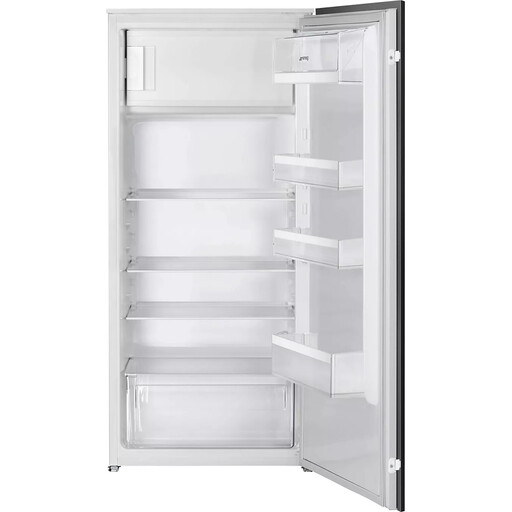 Image unavailable
Worth considering for a fitted kitchen if you need more space for fresh food than for frozen food. The model name states a capacity of 188 l and an energy rating of E. Check that it fits the cabinet and door fixing, and confirm the door opening direction and whether it can be reversed before ordering.
 Image unavailable
This fridge freezer is designed for a kitchen with compatible units, where you want separate storage for fresh and frozen food. The model name states a capacity of 249 l, TwinTech No Frost technology and an energy rating of E. Check the cabinet dimensions, clearances and door system in the instructions before choosing it.
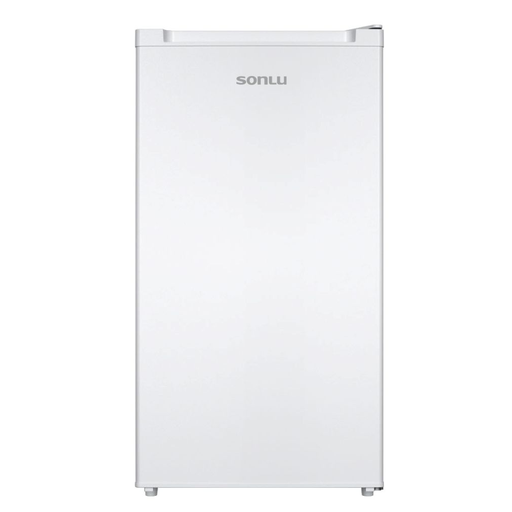 Image unavailable
Consider it if you often buy small amounts of fresh food: its stated capacity of 82 l is below the 100 to 150 l guide UFC-Que Choisir gives for one person. The model name states an energy rating of E. Measure the space and check the door opening, ventilation instructions and whether it has a freezer compartment, if you need one.
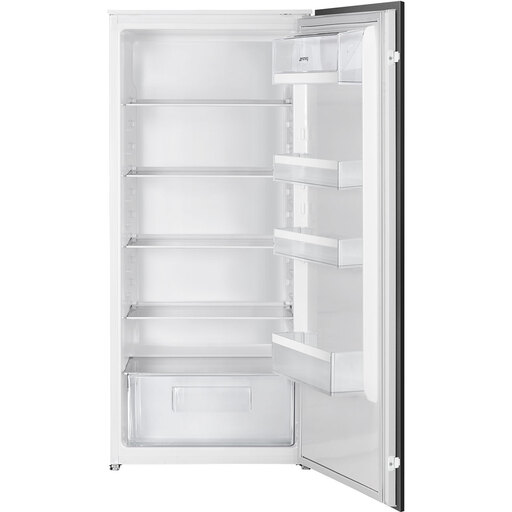 Image unavailable
Worth considering if your kitchen units require an integrated model and you mainly need space for fresh food. The model name states an energy rating of E, but its capacity information gives two different figures, so confirm the exact capacity before buying. Also check the cabinet dimensions, ventilation requirements and whether you need freezer space.
UFC-Que Choisir suggests 100 to 150 l of usable capacity as a guide for one person. Adjust this to how often you shop, and distinguish between the space for fresh food and the space for frozen food. This is a guide, not a minimum requirement.
No. The clearance required depends on the model and its installation. One Beko manual specifies 5 cm between the appliance and the ceiling and wall when it’s installed in the recess described. Check the instructions for your own model before measuring the space you’ll need.
Compare energy use and noise information, while giving just as much consideration to the appliance’s capacity and dimensions. The ADEME describes the energy label as a comparison tool. To choose between two models, compare ones with similar formats and capacities.
According to the ADEME, you can return it to the retailer or delivery driver when your new appliance arrives, or use an appropriate collection service. A fridge shouldn’t be disposed of with ordinary waste: its refrigerants require specialist handling.