In a studio flat, start by choosing a fridge that fits the space and has enough room for its door to open properly. A table-top model without a freezer leaves more room for fresh food if frozen food isn’t part of your shopping; a single-door model with an integrated freezer compartment suits occasional freezing, while a small fridge-freezer is a better fit if you shop less often and regularly buy frozen food, provided you’re happy with its height and depth. Then compare the capacity of each compartment, annual energy consumption, noise levels and the climate class of the models you’re considering.
Who are these formats suitable for?
The right format depends as much on the space available as on what you actually keep chilled or frozen.
Renter with space under a worktop
You need to be able to fit the appliance, open its door and access the shelves and drawers in a tight space. A table-top model is worth considering: Que Choisir recommends this type for studio flats, but dimensions and installation requirements vary from model to model.
Someone who keeps a few frozen items
You’re cooking for one and want to keep a few frozen items or some ice on hand. A single-door model with a freezer compartment could meet your needs, as long as you check the capacity for fresh food and the compartment capacity separately.
Small household that shops less often
You need more storage space and regularly use a freezer compartment. A small fridge-freezer is worth considering if the space can accommodate its height and depth, and allow its doors to open.
What sets these formats apart?
Start with the space available and how often you shop, then compare appliances with compartments suited to the same needs.
Table-top fridge without a freezer
Consider this if: the appliance needs to fit under a worktop and you buy few or no frozen foods.
The trade-off: there’s no compartment for storing frozen food.
Single-door fridge with a freezer compartment
Consider this if: you want to keep a few frozen items without choosing a taller fridge-freezer.
The trade-off: the freezer compartment takes up some of the appliance’s capacity, so check the separate volumes.
Small fridge-freezer
Consider this if: you shop less often and regularly keep frozen food.
The trade-off: you’ll need to make room for a taller appliance and check its depth too.
| Factor |
What to check |
Who is it important for? |
| Size and installation |
Measure the available width, height and depth, then check the door opening and clearance requirements in the model’s manual. |
In a narrow kitchen, you need to be able to open the door and pull out the drawers without hitting a wall or unit. Around 36% of consumers prioritise installation and the appliance’s footprint. |
| Fresh food capacity |
Compare usable fridge capacity and shelf layout. Que Choisir gives an average guideline of 100 to 150 l of usable capacity for one person, which you can adjust to suit your shopping habits. |
If you keep leftovers and several days’ worth of fresh food, you need storage that’s genuinely practical. Fridge capacity comes before other criteria for around 29% of consumers. |
| Space for frozen food |
Check the type of freezer compartment and its capacity separately from the fridge, according to how often you buy frozen food. |
You want to keep a few frozen items without buying an unnecessarily large appliance. Around 21% of consumers put this moderate freezer capacity at the top of their list. |
| Energy use, noise and room temperature |
Compare annual energy consumption in kWh and noise levels on the product specifications. Also check that the climate class is suitable for the room temperature. |
If you live and sleep in the same room, noise may affect your choice, as might energy use or a very warm kitchen. These conditions are a priority for around 14% of consumers. |
What should you avoid before buying?
-
Relying on the appliance dimensions alone
A fridge might fit into an alcove but still leave too little room to open the door, remove the drawers or meet its ventilation requirements.
Measure the whole space, check for obstacles and read the installation instructions for your chosen model before ordering.
-
Assuming a small compartment is the same as a separate freezer
An integrated compartment may suit occasional purchases of frozen food, but you should assess its capacity separately from the space for fresh food.
Compare the two capacities, and choose a small fridge-freezer if your regular use of frozen food makes the extra space worthwhile.
-
Comparing only the energy rating letter
The letter alone doesn’t tell you about the available capacity or the compartment features of two different appliances.
Compare annual energy consumption, capacity and noise levels across models that meet similar needs. The European Commission provides this information in EPREL product records for the appliances concerned.
-
Forgetting the room temperature
The climate class indicates the range of ambient temperatures the appliance is designed for. A kitchen that’s too cold or too warm for the model may affect how it works.
Consider how the room temperature varies throughout the year and check the climate class on the fridge’s product specifications or rating plate.
Brands to consider by installation type
These examples show different configurations; their features don’t apply to every appliance from each brand.
Bosch
Two freestanding table-top models let you compare an appliance without a freezer to one with an integrated compartment.
- According to Bosch’s product specifications, the KTR15NWEB offers 134 l of fridge capacity without a freezer compartment, while the KTL15NWEB has 106 l of fridge capacity with an integrated compartment.
- Check how much space you’ll have for fresh food in the version you choose: these two models don’t meet the same freezing needs.
Liebherr
The range includes table-top models and taller fridge-freezers to consider, depending on the space available.
- Liebherr lists its Rdi 1621 Plus table-top model at 125 l, with dimensions of 85 × 60 × 60,7 cm.
- For a fridge-freezer from this brand, check the dimensions of the exact model. A change in format can make a significant difference to the space needed in your studio flat.
Beko
Worth considering if your kitchen needs a built-in appliance rather than a freestanding model.
- Boulanger’s product specifications for the BU1154HCN list 92 l of fridge capacity and 15 l of freezer capacity.
- Before choosing this built-in model, check that it’s compatible with your cabinet space, furniture door and installation requirements.
Fridges to consider on Joybuy
These models cover two needs in a studio flat: mainly storing fresh food with a small freezer compartment, or having a fridge-freezer for more regular use of frozen food. Whether they’ll suit you depends on your space and shopping habits.
 Image unavailable
CHiQ JR227LSE, 227 l silver fridge-freezer
Worth considering if you store both fresh and frozen food and have room for a fridge-freezer. The model name indicates 153 l of fridge capacity and 74 l of freezer capacity, a width of 54 cm, a reversible door and an E energy rating. Check the height, depth and installation clearances in the manual before choosing this format.
View on Joybuy
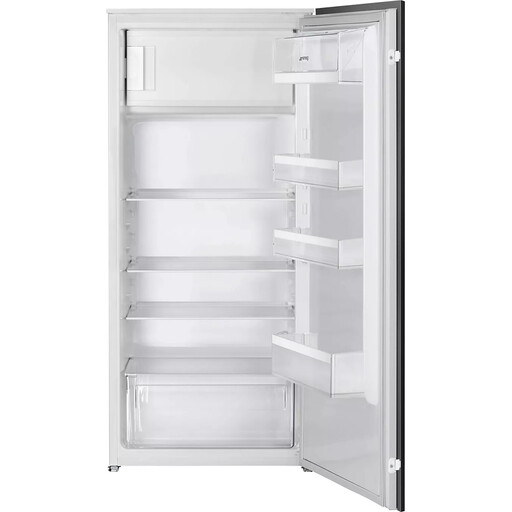 Image unavailable
SMEG S4C122E, 188 l built-in single-door fridge-freezer
Worth considering if your studio has a fitted kitchen and you want a single-door appliance with a freezer compartment at the top. The product title indicates a total capacity of 188 l and an E energy rating. Before buying, check the cabinet dimensions, door-fixing system and separate capacities of the two compartments.
View on Joybuy
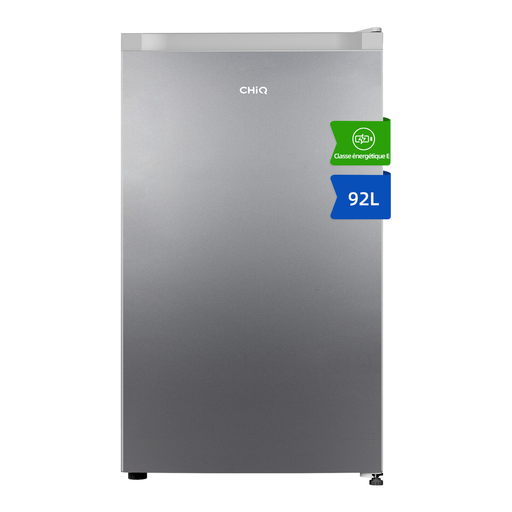 Image unavailable
CHiQ JR92DSE, 92 l single-door fridge
Worth considering if space is limited and you don’t need much room for fresh food. The product name indicates a 92 l capacity, a freezer compartment and an E energy rating. This is below Que Choisir’s average guideline of 100 to 150 l of usable capacity for one person. Check that it suits how often you shop, along with the full dimensions and freezer compartment capacity.
View on Joybuy
Frequently asked questions
How much fridge capacity should one person allow for?
Que Choisir gives an average guideline of 100 to 150 l of usable capacity for one person. Adjust this to suit how often you shop, and compare fridge capacity separately from freezer capacity.
Can a fridge work in an unheated room?
Choose one based on the actual temperature the room reaches and the climate class of the specific model. Bosch says the climate class corresponds to the range of ambient temperatures the appliance is designed for. Check it on the product specifications or rating plate.
What should you compare on the energy label?
Compare annual energy consumption in kWh, compartment capacities and noise levels across appliances with similar features and dimensions. The European Commission’s EPREL records let you check these details for the relevant registered appliances.
How much space should you leave behind a fridge?
Follow the clearances specified in the installation instructions for your chosen model rather than relying on a single recommended distance. Also check how much room you’ll need to open the door and access the storage compartments.


