You’re furnishing a studio flat
In a kitchenette or beside a narrow passage, check the appliance dimensions, ventilation and door clearance before focusing on capacity. Que Choisir lists table-top fridges among the options suited to studio flats.


In a studio flat, first measure the space, the clearance needed and how far the door opens. Then decide how much room you need for fresh and frozen food. A table-top fridge is a good choice when space is at a premium and you store very little; a compact fridge freezer is better if you need to freeze food more regularly. An integrated model only makes sense if your kitchen’s housing and door system are compatible with the model you choose.
In a kitchenette or beside a narrow passage, check the appliance dimensions, ventilation and door clearance before focusing on capacity. Que Choisir lists table-top fridges among the options suited to studio flats.
Compare the space for fresh food with the freezer capacity separately. A small built-in freezer compartment may not suit your storage habits.
Checking the unit’s width alone isn’t enough to confirm compatibility. Check the height, depth, ventilation, hinges and door fixing too. The product specifications for two Electrolux integrated models list different housing heights.
First decide whether your appliance will be freestanding or fitted into a housing unit. Then compare the available sizes based on the space you have and how often you store frozen food.
Consider this if: space is very limited and you shop frequently or buy small amounts.
Bear in mind: a smaller fridge gives you less room to store fresh and frozen food.
Consider this if: you mainly store fresh food and only freeze things occasionally.
Bear in mind: the built-in compartment takes up some of the interior space and may be too small if you regularly buy frozen food.
Consider this if: you want a separate freezer compartment for frozen food you buy regularly.
Bear in mind: check that its overall size and door opening suit your kitchen.
Consider this if: you have a suitable housing unit or your kitchen furniture is designed for the appliance.
Bear in mind: your choice also depends on the door system and the installation instructions for the specific model.
| Factor | What to check | What matters to shoppers |
|---|---|---|
| Positioning and door clearance | Measure the space, how far the door opens and the clearances specified in the manual. | In a narrow kitchenette, I want to be able to install the appliance and open its door without blocking the way. Around 36% of shoppers put this positioning constraint first. |
| Space for frozen food | Compare the freezer’s net capacity separately from the fridge’s. | If I buy frozen food regularly, a small built-in compartment may not be enough for what I want to store. Around 29% of shoppers prioritise this separate capacity. |
| Room for groceries | Compare the fridge’s net capacity with how often you shop, and check the interior layout. | If I shop less often, I mainly want enough room for fresh food between trips. Fridge capacity would be the main priority for around 21% of shoppers. |
| Compatibility with a housing unit | Check the model’s installation dimensions, ventilation and door fixing. | In a fitted kitchen, I first need to find an appliance that’s compatible with the unit and its door panel. For around 14% of shoppers, this fit is the priority. |
A fridge may fit in the space but still lack the clearance it needs for ventilation or for the door and drawers to open fully.
Check the model’s manual, any obstacles around the door and the space needed for delivery. Whirlpool recommends 5 cm above and 10 cm behind its freestanding fridges; always follow the instructions for the model you choose.
Two appliances with a similar total capacity may divide the space differently between the fridge and freezer.
Compare the net capacity of both compartments with what you usually buy, especially if frozen food is part of your regular shop.
The required height varies between integrated models: the Electrolux product specifications for models LRB3AE12S and KNS3SE18S list housing dimensions of 1 225 × 560 × 550 mm and 1 780 × 560 × 550 mm respectively.
Compare the installation guide for the model you’ve chosen with your existing kitchen unit, including the door mechanism and ventilation requirements.
If the housing unit or fixing isn’t compatible, you may need to modify the unit or arrange installation work.
This information doesn’t replace checking the capacity, installation requirements and other features that matter day to day.
For appliances of a similar size and capacity, also check the stated annual energy consumption, net capacities and noise level. ADEME recommends using the available information to help you choose a household appliance.
These models suit different needs in a small kitchen: fridge freezers with a separate freezer compartment, an integrated model for a compatible housing unit, and a single-door fridge with a small freezer compartment. Check the dimensions and installation requirements, then choose based on how the capacity is divided.
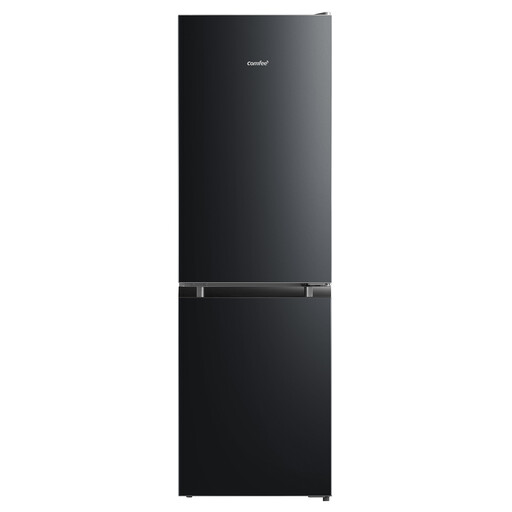 Image unavailable
This freestanding fridge freezer is worth considering if you want both fridge and freezer space in an appliance with a stated capacity of 174 L. It has a reversible door and is described as Low Frost, but this doesn’t mean it never needs defrosting. Before choosing it for a narrow space, check the installation dimensions, ventilation clearances and how the capacity is divided.
 Image unavailable
This fridge freezer is worth considering if freezer space matters as much as room for fresh food: its product title lists 153 L for the fridge and 74 L for the freezer. It’s listed as 54 cm wide and has a reversible door. Check the depth and required clearances too before deciding where to place it; Low Frost doesn’t necessarily mean it never needs defrosting.
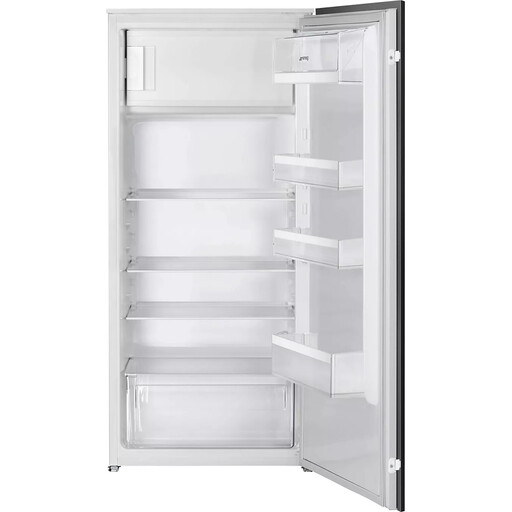 Image unavailable
This single-door model has a freezer compartment at the top and is designed for an integrated kitchen, provided the housing unit and door system are compatible. Its product title lists a total capacity of 188 L and an energy rating of E. Before buying, compare the installation guide with your existing kitchen unit and check how much space is actually available for frozen food.
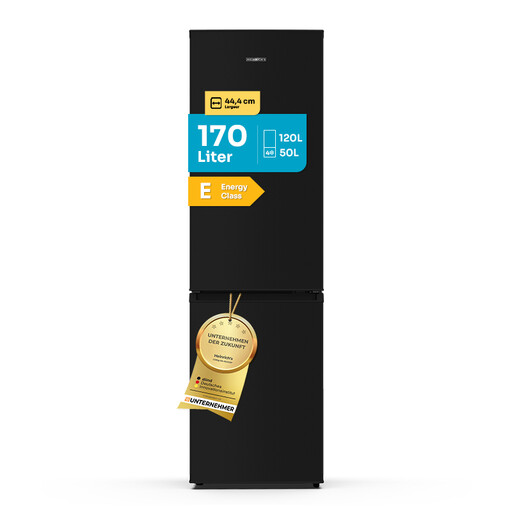 Image unavailable
This fridge freezer lets you consider your fresh and frozen food needs separately: its product title lists 120 L for the fridge and 50 L for the freezer compartment. Check its external dimensions and ventilation clearances before choosing it for a small kitchen.
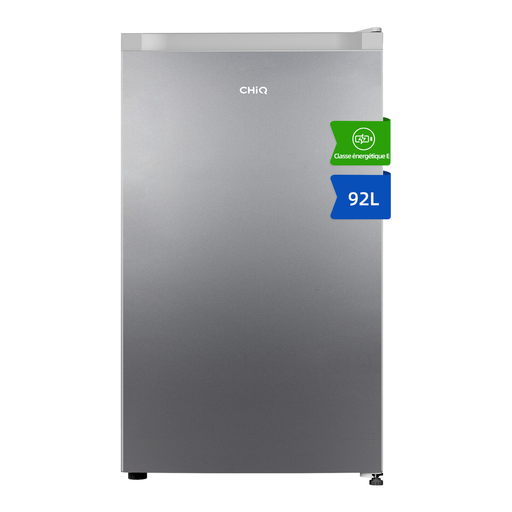 Image unavailable
This single-door fridge is worth considering if you mainly store fresh food and only need a small freezer compartment. Its product title lists a total capacity of 92 L and a compact freezer compartment. If you plan to store frozen food regularly, check the compartment’s capacity, the full dimensions and the clearances required.
Choose the net capacity based on how often you shop and what you store, rather than the size of your home alone. Que Choisir recommends comparing sizes according to shopping and eating habits. If you buy a lot of frozen food, check the freezer capacity separately too.
Don’t treat it as an integrated appliance unless the manufacturer explicitly says you can. A kitchen unit may block the clearances needed for ventilation or stop the door opening properly. For an integrated appliance, compare the housing dimensions and door system with the specifications for the exact model.
Yes. Follow the clearances specified in the appliance manual. Whirlpool recommends 5 cm above and 10 cm behind its freestanding fridges; these measurements don’t replace the instructions for the model you’re buying.
No. For appliances of a similar size and capacity, also check the stated annual energy consumption, net capacities, noise level and the space needed for installation. ADEME presents energy information as one way to help you choose, alongside the appliance’s other features.