In a studio flat, first make sure the washing machine can be delivered, installed, unpacked and connected in the space available. Width alone won’t tell you whether it’s suitable. A top-loading model is worth considering if space is tight across the width, while a compact or slim model may work where a standard-sized machine won’t fit. A washer-dryer saves space by doing away with a second appliance, but UFC-Que Choisir points out that its drying capacity is lower than its washing capacity. Check the duration and energy and water consumption of the combined cycle, too.
Who are these formats for?
If you have a very narrow space
If the appliance needs to fit in a small bathroom, kitchen or cupboard, measure the delivery route, the space needed to open it and access to the connections, too. UFC-Que Choisir highlights the benefits of compact formats when there’s no room for a standard-sized model.
If you don’t have a practical place to dry clothes
If you can only fit one appliance, a washer-dryer lets you wash and dry your clothes in the same place. However, compare its washing and drying capacities separately, along with the combined cycle’s features, as UFC-Que Choisir recommends.
If you want to cut down on the number of wash cycles
Choose a capacity that suits the amount of laundry you actually build up between washes. UFC-Que Choisir notes that a poorly matched capacity can mean running more cycles than necessary or using more water and electricity than you need.
How do the three formats compare?
Compact or slim
Consider this if: a standard-sized washing machine won’t fit in the space available.
Bear in mind: a smaller format doesn’t necessarily mean a capacity that suits your laundry routine, as UFC-Que Choisir points out.
Top-loading
Consider this if: width is limited, but there’s enough clear space above the machine to open the lid.
Bear in mind: a narrow top-loader can still be deep. Check all the model’s dimensions, not just its width, to make sure it fits in the room.
Washer-dryer
Consider this if: you need to wash and dry your clothes but don’t have room for a second appliance.
Bear in mind: the drying capacity is lower than the washing capacity. UFC-Que Choisir also recommends checking the drying cycle’s duration and water consumption.
When choosing an appliance for a studio flat or a particularly narrow space, start with the constraint that would have the biggest impact on your day-to-day use, then check the specifications of the exact model.
| Criteria | What to check | Who it matters to |
|---|
| Fitting the available space |
Full dimensions and clearance for the door or lid; delivery route and connections. |
If my space is narrow, the appliance needs to fit and open without getting in the way. Around 40% of consumers would put this installation constraint at the top of their list. |
| Drying without a second appliance |
Separate washing and drying capacities; duration and consumption of the combined cycle. |
If I don’t have a practical place to dry clothes, I’d want to dry them in the same appliance, even if that means splitting a load. Around 30% of consumers would make this their priority. |
| A capacity that suits your laundry routine |
Capacity in kg of dry laundry; consumption figures for a comparable programme on the energy label. |
To avoid running extra cycles, I need a drum that suits the amount of laundry I actually build up. Around 30% of consumers would prioritise this useful capacity. |
Mistakes to avoid before installation
-
Relying only on a washer-dryer’s washing capacity
A full wash load may not fit in the dryer all at once. UFC-Que Choisir also highlights trade-offs in drying time and water consumption.
Compare the two capacities and decide whether removing some of the laundry or running another cycle would suit your routine.
-
Measuring only the width of the space
A top-loader needs clearance above the lid, while a front-loader needs room for the door to open. Depth, the delivery route and access to connections matter, too.
Measure the available width, height and depth, then compare them with the installation diagram for your chosen model, including the required clearances.
-
Temporarily draping the drain hose over a sink
The French National Consumer Institute and the Agence Qualité Construction recommend not placing the drain hose over the edge of a sink. Use a suitable drainage set-up instead.
Confirm the planned drainage arrangement before delivery and check the connections regularly.
-
Assuming a bigger drum will always mean fewer cycles
According to UFC-Que Choisir, a capacity that doesn’t suit the amount of laundry you usually wash can lead to more cycles or unnecessary consumption.
Work out how much laundry you build up between washes, then compare the capacity and energy label figures of the appliances you’re considering.
Brands to consider by format
Electrolux
A brand to look at if you’re after a top-loading washing machine for a narrow space.
- For the EW8T3653BA top-loader, Electrolux France lists dimensions of 89 × 40 × 60 cm and a capacity of 6 kg.
- These figures apply to this specific model. Check how much space you’ll need to open the lid, too.
Whirlpool
The range includes top-loaders worth considering if you have limited width available.
- Whirlpool France lists dimensions of 40 × 90 × 60 cm and a 6 kg capacity for the TDLR6247FR/N.
- Check its depth and the space needed to open the lid against your available space. These specifications don’t apply to every Whirlpool model.
Bosch
A range of washer-dryers to compare if your home doesn’t have room for two appliances.
- Bosch Home Appliances France lists a washing capacity of 8 kg and a drying capacity of 5 kg for the WNG24402FR.
- This means you can’t dry a full maximum wash load in one go with this model. Check its dimensions and combined-cycle figures before choosing.
Washing machines and washer-dryers on Joybuy
These appliances show three ways to equip a studio flat: a top-loader if width is limited, front-loaders to compare with the dimensions of your space, and a washer-dryer if you need washing and drying in one appliance. Measure the space and check the instruction manual before choosing a model.
 Image unavailable
Candy TCA464TM4-S ProWash 500, top-loading washing machine
Worth considering if width is your main constraint and you have room to open the lid.
Listed capacity of 6 kg and spin speed of up to 1 400 tr/min. Check the full dimensions, clearance above the machine and connections.
View on Joybuy
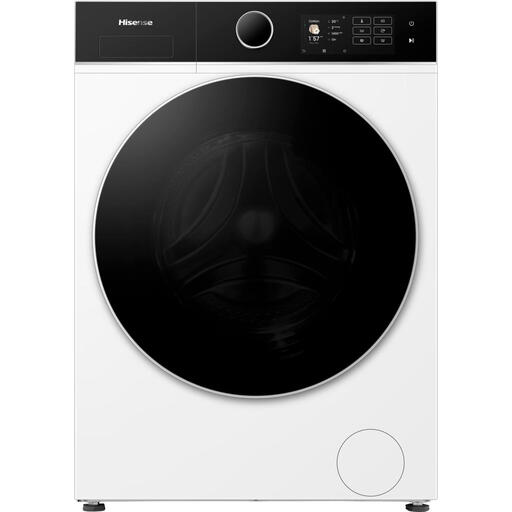 Image unavailable
Hisense WF5I8043BWF, 8 kg front-loading washing machine
Worth considering if you want an 8 kg capacity and can leave enough space in front of the door.
Listed spin speed of up to 1 400 tr/min. Compare the full dimensions and the space needed to open the door with your available space.
View on Joybuy
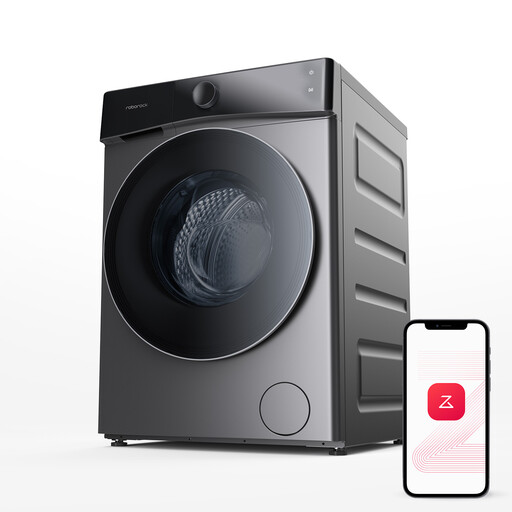 Image unavailable
Roborock Zeo Lite Gray, 10 kg / 6 kg washer-dryer
Worth considering if you need one appliance to wash and dry your clothes.
Listed capacities of 10 kg for washing and 6 kg for drying, so a full wash load can’t be dried in one go. Check the dimensions, duration and consumption of the combined cycle.
View on Joybuy
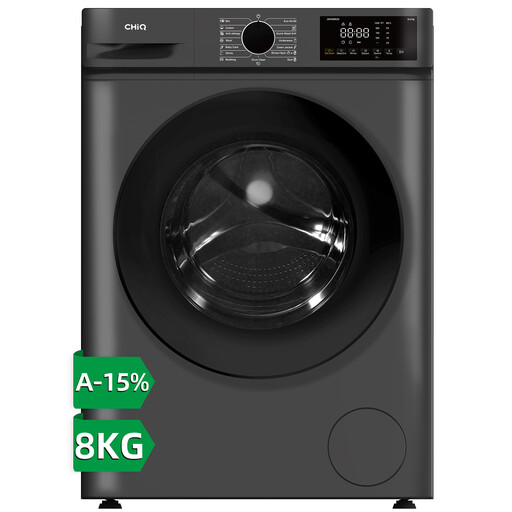 Image unavailable
CHiQ JW85883G, 8 kg dark grey front-loading washing machine
Compare its dimensions with your available space if you’re looking for an 8 kg front-loader.
Listed spin speed of up to 1 400 tr/min and 16 programmes. Check the full dimensions and clearance in front of the door before buying.
View on Joybuy
Frequently asked questions
Do you need a hot water supply to install a washing machine in a studio flat?
Not for the front-loading and top-loading washing machines covered by Electrolux France’s guidance: the brand says they’re designed for a cold water supply. For other appliances, follow the instructions for the exact model rather than assuming the connection is the same.
How can you tell if the space is suitable for a washing machine?
Check for a water supply, suitable drainage, a socket, a clear delivery route and the clearances specified in the instruction manual. For its own pre-installation service, Electrolux France requires the washing machine to be within 1.2 m of the water supply and drain, among other things. This is a guide only and doesn’t replace the requirements for your chosen model and installation.
What should you compare on a washer-dryer’s energy label?
Compare figures for the same type of cycle, distinguishing between washing only and washing followed by drying. The European Commission states that the energy scale for washing machines and washer-dryers in the European Union has run from A to G since 1 March 2021. Also check the consumption, water use, duration and noise figures shown for the appliance you’re considering.
What should you do after installation?
Check the hoses and connections regularly, and use a suitable drainage arrangement. The French National Consumer Institute and the Agence Qualité Construction advise against placing the drain hose over the edge of a sink.


