What should you check before buying ?
To choose a format that works in a studio flat, start with the restriction that’s preventing installation, then check the capacity, connections and access to the appliance.
Narrow top-loading washing machine
Consider this : if width or the space in front of the machine is your main concern, but you can still access the top.
Bear in mind : a narrow appliance can still be deep. Measure the space and allow room to open the lid. UFC-Que Choisir lists some top-loaders as being between 40 and 46 cm wide.
Slim front-loading washing machine
Consider this : if depth is your main obstacle, and there’s enough width for the appliance and room in front of the door.
Bear in mind : the models described by UFC-Que Choisir are around 33 to 45 cm deep and still have a front-opening door. You’ll also need to allow for the hoses and door clearance.
Compact washing machine
Consider this : if space is limited in several dimensions but a plumbed-in appliance would still suit your laundry loads.
Bear in mind : ‘compact’ doesn’t mean ‘portable’. Candy lists the CW50-BP12307U1-S as measuring 510 × 488 × 700 mm, with a 5 kg capacity. Measure the entrance and the space where it will actually go.
Mini washing machine for occasional use
Consider this : if you can’t install a plumbed-in model and mainly need to wash small loads.
Bear in mind : UFC-Que Choisir describes models with a 2 to 3 kg capacity and often a low spin speed. Bulky or frequent loads may call for another solution.
| What to consider |
What to check |
Who should pay particular attention ? |
| Width and access |
Measure the available width and depth, as well as the space above the machine for opening the lid. |
If the machine needs to fit into a narrow alcove without blocking the way, I’d prioritise width and a loading style that doesn’t need door clearance. Around 25 % of consumers put width and front clearance first. |
| Depth and door clearance |
Compare the model’s stated depth with the hoses, the remaining walkway and the space needed to open the door. |
In a shallow room, I want to limit how far the appliance sticks out while keeping the door accessible. Depth is the top priority for around 25 % of consumers. |
| Connections and location |
Check the instructions, water supply, drainage, power supply and the layout of the room. |
If the location or connections are uncertain, I’d first check that installation is both possible and safe. Around 20 % of consumers make the feasibility of connecting the appliance their top priority. |
| Capacity you’ll use |
Compare the model’s stated capacity with your usual loads and largest laundry items. |
To avoid running extra cycles, I’d look for a capacity that suits my usual laundry loads. The amount of laundry is the top criterion for around 15 % of consumers. |
| Height and multiple dimensions |
Measure the height, width and depth, then check the connections and clearance on the exact model’s product page. |
If the alcove is low or restricted on several sides, I’d check every dimension before choosing a format. Around 15 % of consumers prioritise these space constraints. |
Mini washing machines for occasional use on Joybuy
These foldable or portable models are designed for small loads when installing a standard washing machine is difficult. They may not be a suitable replacement for an appliance designed for frequent washing or bulky items.
 No image available
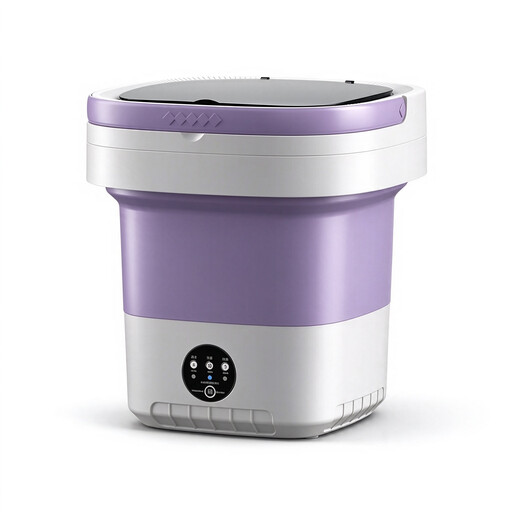
12 L foldable mini washing machine with spin function
Worth considering for small laundry items when it’s not possible to install a standard machine.
The title lists a 12 L capacity, three wash modes and a spin basket. The model is described as being designed for small clothes.
View on Joybuy
 No image available
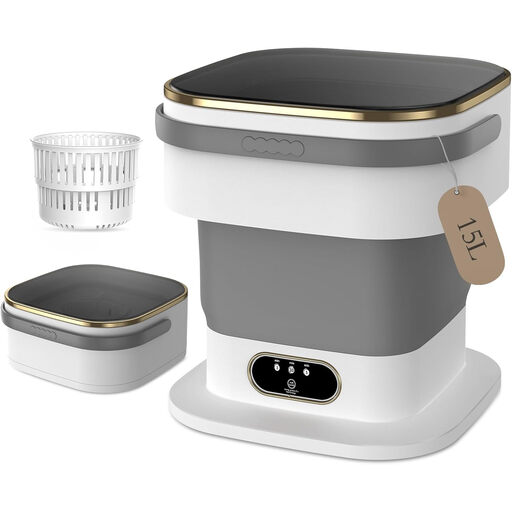
15 L foldable mini washing machine with spin basket
Worth considering for small loads in a home where a standard appliance can’t be installed.
The title lists a 15 L capacity, three wash modes and a spin basket. The model is described as being designed for small laundry items.
View on Joybuy
 No image available
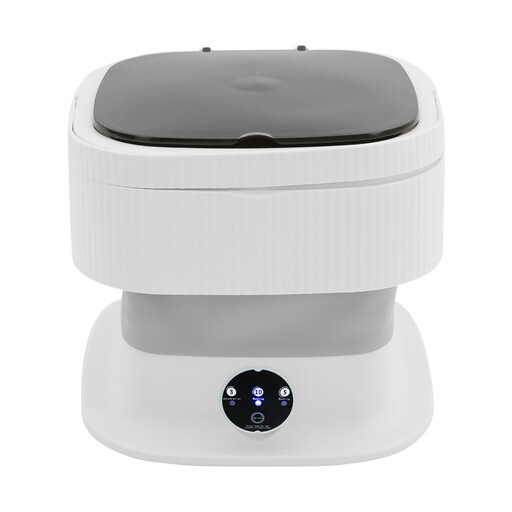
10 L foldable mini washing machine
Worth considering for small laundry items rather than bulky clothes.
The title lists a 10 L capacity, three wash times of 2, 5 or 10 minutes, a 40 W motor, a speed of 320 tr/min and a drainage basket. It isn’t a tumble dryer.
View on Joybuy
 No image available
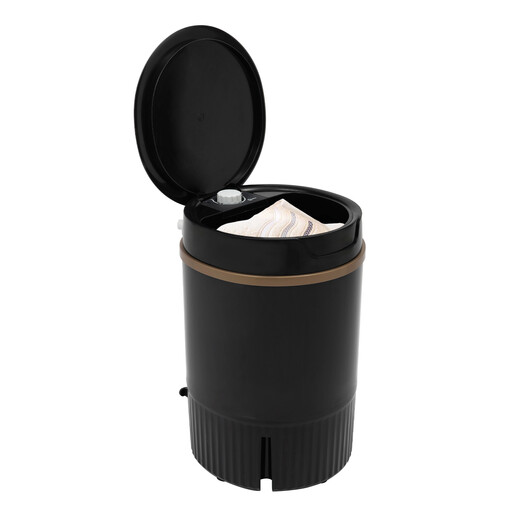
4,5 L semi-automatic mini washing machine
Best suited to very small loads, such as small laundry items, if a standard appliance can’t be installed.
The title lists a 4,5 L capacity and a spin-drying basket. The stated maximum load for this model is 0,8 kg.
View on Joybuy
Frequently asked questions
Is a top-loading washing machine always less bulky than a slim model ?
No: a top-loader is best if you’re short on width or front clearance, while a slim model mainly reduces depth and still has a front-opening door. For example, Whirlpool says the TDLR6253BFR is 40 cm wide and 60 cm deep. Also check how much space you’ll need to open the lid or door.
Can a mini washing machine replace a standard one ?
It’s better suited to small loads when a standard installation isn’t possible. UFC-Que Choisir describes mini washing machines as having a 2 to 3 kg capacity and often a low spin speed. Compare these limitations with how often you do laundry and the size of your laundry items.
What should you check before connecting and levelling a washing machine ?
Check the water supply, drainage and the model’s instructions. Bosch advises removing the transit bolts and adjusting the feet to level the appliance. Also check the tap, inlet hose and drain in line with the instructions.
Can you install a washing machine in a small bathroom ?
Yes, provided the location and electrical installation meet the relevant safety requirements. Promotelec highlights the need for earthing and 30 mA residual-current protection. The rules you need to check also depend on the layout and the installation itself. If you’re unsure, have the location assessed before installation.
Do you need your landlord’s permission to install a washing machine in a rented home ?
Installing an appliance doesn’t automatically mean you always need written permission. However, if installation involves altering the property or its fittings, ANIL advises getting the landlord’s written consent. Check this before changing the connections.


