Someone living in a studio flat
You need to fit the appliance into a small space and open the door without it getting in the way. Then check whether you really need a freezer compartment.


To choose a fridge for a studio flat or shared kitchen, first measure the space, clearances and door opening. Then compare the fridge and freezer capacities separately against your shopping habits. A table-top or single-door fridge may suit you if saving space or storing fresh food is the priority; a fridge-freezer is a better choice if several people share the appliance or you regularly store frozen food. Finally, compare the noise level and annual energy consumption on the label for the specific model.
You need to fit the appliance into a small space and open the door without it getting in the way. Then check whether you really need a freezer compartment.
You need enough fridge space for several people’s shopping, with storage that everyone can access. Work out separately how much room you need for frozen food.
You’ll need to weigh up freezer capacity, the space left for fresh food and the appliance’s dimensions. Also check what the compartment is designed for, depending on what you want to store or freeze.
Start with the dimensions and installation requirements, then choose the fridge and freezer capacities you need. Next, compare the noise levels and energy consumption of models that meet those needs.
| Criteria | What to check | Who should prioritise it? |
|---|---|---|
| Dimensions and installation | Measure the height, width and depth; check the door opening and clearances specified in the manual. | If I need to fit the appliance into a small kitchen, I want to keep the walkway clear and be able to remove the drawers. Around 25% of consumers prioritise size and installation. |
| Capacity and storage | Compare the fridge capacity in litres, shelves and drawers with your usual shopping. UFC-Que Choisir gives an average guide of 100 to 150 l for one person, plus 50 l for each additional person, adjusted to suit how you use it. | When we share a fridge, I want enough room for fresh food between shopping trips. Around 25% of consumers prioritise fridge capacity and shared storage. |
| Freezer capacity | Check whether there’s a freezer compartment, its capacity in litres and its star rating; a small compartment is not the same as a large freezer. | If I often buy frozen food or prepare food to freeze, separate freezer capacity matters more than the total capacity shown. Around 20% of consumers put frozen food storage at the top of their list. |
| Noise | Compare the noise emissions shown on the models’ labels, especially if the appliance will be near a space where you sleep or work. | In a studio flat, I’d rather know the stated noise level before placing the appliance near my bed or desk. Around 15% of consumers prioritise a quieter living space. |
| Energy consumption | On the EU energy label, compare the kWh/year, energy rating and compartment capacities for the specific model, as recommended by the European Commission. | As the fridge runs every day, I want to weigh up its energy consumption against the capacity I actually need. Around 15% of consumers prioritise electricity consumption. |
Two appliances with a similar total capacity may divide the space very differently between fresh and frozen food.
Compare the capacity of each compartment in litres and picture how you’ll store your usual shopping before you choose.
The appliance needs the specified clearances for ventilation, and the door must open wide enough for you to remove the drawers. A poorly chosen spot may also mean you need to rethink your layout.
Before ordering, check the dimensions, door swing and ventilation instructions in the model’s manual.
The star rating describes the compartment’s storage or freezing function, not how much food it can hold. A small space may soon prove inadequate if you regularly buy frozen food.
Check the star rating and capacity in litres, as well as how often you shop for frozen food.
The KTe500 is an example of a slim table-top fridge designed to prioritise refrigeration in a small space.
The TSE1284N is an example of a 54 cm-wide table-top fridge with a freezer compartment at the top.
The CCTOS 544WHN is an example of an under-counter, single-door fridge with a small freezer compartment.
The WHK22373X6EA is an example of a freestanding fridge-freezer to consider if a separate freezer compartment becomes a priority.
The KTR15NWFA and KTL15NWEBP models show why it’s important to check the full model number and whether a freezer compartment is included.
This selection includes fridge-freezers, integrated models and compact fridges. Compare their separate capacities and installation requirements with the space available and your shopping habits.
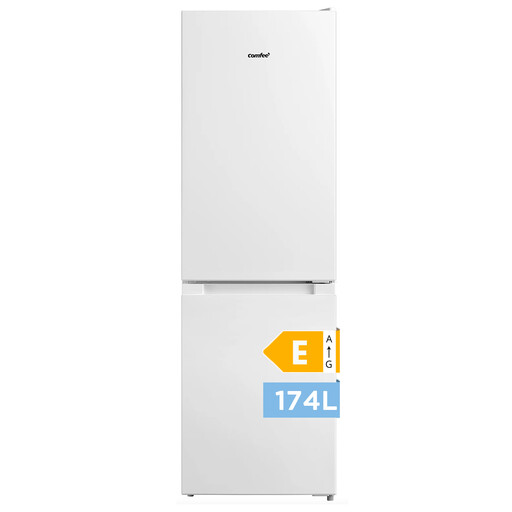 Image unavailable
For a small household looking for two separate compartments, the stated capacities are 115 l for the fridge and 59 l for the freezer.
The model is listed with Low Frost technology, a reversible door, adjustable shelves and a noise level of 39 dB.
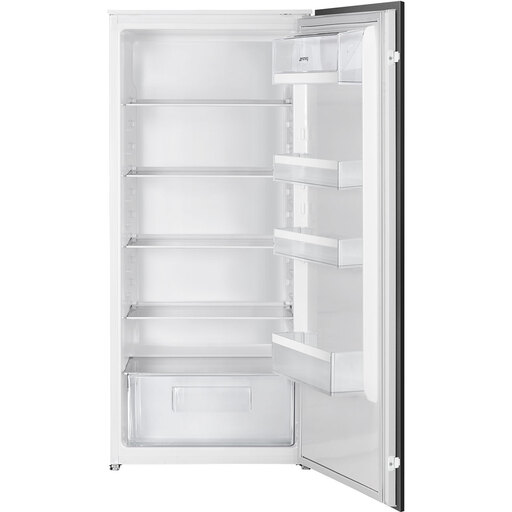 Image unavailable
If fresh-food storage is your priority, this integrated single-door fridge has a stated capacity of 188 l.
A noise level of 34 dB and automatic defrost are listed. Installation requires a housing unit that fits the model’s dimensions.
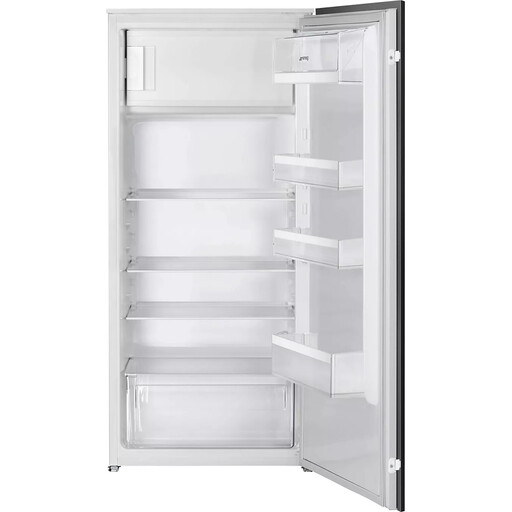 Image unavailable
For fridge and freezer storage in a fitted kitchen, the stated capacities are 174 l for the fridge and 14 l for the freezer.
The stated noise level is 35 dB and the door is reversible. Installation requires a 56 × 122,5 × 55 cm housing unit; the furniture door is not included.
 Image unavailable
To divide your shopping between fresh and frozen food, the stated capacities are 153 l for the fridge and 74 l for the freezer.
Its stated width is 54 cm. The model is also listed with a reversible door, a four-star freezer, Low Frost technology and a noise level of 39 dB.
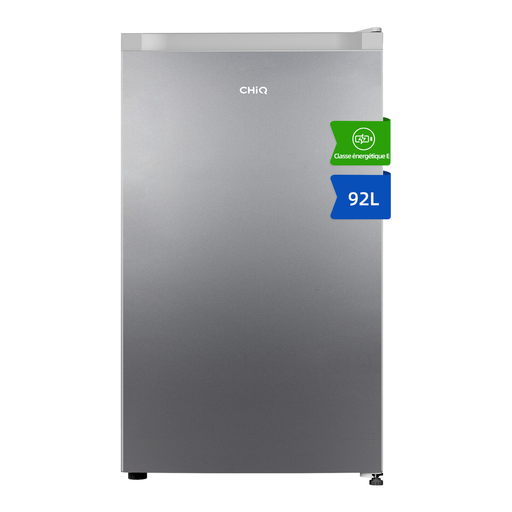 Image unavailable
For a narrow space, this compact 92 l model includes a small freezer section and has a stated width of 47 cm.
The door is listed as reversible. UFC-Que Choisir gives an average guide of 100 to 150 l for one person, so compare this capacity with your usual shopping before you choose.
No: ‘table-top’ describes the format, not a guaranteed freezer compartment. Check the freezer capacity in litres and the star rating in the model details. A four-star compartment can also freeze fresh food, but it may be too small if you regularly buy frozen food.
Measure the appliance and check that the door can open wide enough for you to remove the drawers. Also follow the ventilation instructions in the manual for the model you’ve chosen: general installation advice doesn’t replace the clearances specified by the manufacturer for that model.
Anses recommends storing raw meat and fish in the coldest part of the fridge, at below 4 °C, covering opened food and avoiding overfilling the fridge. A thermometer can help you check the temperature.
Compare the kWh/year shown on the EU energy label with the capacities and features you need. In France, the legal guarantee of conformity covers, among other things, new, second-hand and refurbished goods sold by a trader to an individual; it is separate from a paid commercial warranty, as explained by the Ministry of the Economy and Finance.
The European Commission says that labels for the relevant fridges show an A to G energy rating, annual energy consumption, compartment capacities and noise emissions. Check the label for the exact model rather than a similar one.