What should you look for before buying?
Start with the meals you actually prepare: a hob is for cooking in a saucepan or frying pan, while a microwave is mainly for reheating. Choose a mini oven if you regularly cook things in the oven, and a pot-style appliance for dishes you want to prepare in it. Your accommodation’s rules must come first.
| Criteria |
What to check |
Relevant consumers |
| Accommodation rules |
Read the rules and check which appliances are provided. If in doubt, ask the manager to confirm in writing whether you can use the appliance you’re considering. |
If the rules limit the personal appliances I can use, I need to know what’s allowed before planning my meals; around 27% of consumers would put this permission at the top of their list of needs. |
| Cooking in a saucepan |
If an induction hob is allowed, check that your cookware is compatible and the right size, and make sure you have enough room to cook. |
If I often make pasta, sauces or stir-fries, my first priority is being able to boil or pan-fry food. Everyday cooking would be the priority for around 33% of consumers. |
| Quick reheating |
Measure the space for the microwave, allowing for the clearances specified in its manual, then choose the functions to suit the dishes you plan to make. |
When most of my meals need reheating or defrosting, I want to prepare them without setting up several appliances; around 20% of consumers would prioritise this need. |
| One-pot meals |
Check that the appliance is allowed, then compare its capacity, useful functions, storage requirements and cleaning instructions. |
If I regularly make soups or one-pot meals, I’d rather spend less time keeping an eye on the food and washing up; this would be the top priority for around 20% of consumers. |
Useful brands to consider
The specifications below apply to the models mentioned, not to every appliance made by each brand. Compare them with your accommodation’s rules and the space you have available.
Tefal
Its Everyday Slim portable induction hob is a useful example for a kitchenette where portable hobs are allowed.
- Tefal lists a height of 45 mm, a power rating of 2 100 W and seven heat settings for this model.
- Tefal points out that not all cookware is suitable for induction; check your saucepans before choosing this option.
Whirlpool
Its freestanding microwaves are an option for reheating and defrosting without built-in installation.
- The MWF421SL featured by Whirlpool has a capacity of 25 L and offers microwave and grill functions.
- This model measures 49 × 32 × 42,6 cm. Whirlpool says to leave the ventilation grilles unobstructed, so measure the space in line with the manual.
Moulinex
The Cookeo Touch Mini is an example of a multi-cooker for people who often prepare meals in a single pot.
- Moulinex describes this 3 L model as suitable for two people and says its cooking bowl is dishwasher-safe.
- This does not mean it’s allowed in a Crous residence: the Crous guide exempts microwaves, but not other personal cooking appliances.
Severin
Its TO 2052 mini oven is a useful example if you regularly cook food that needs to be oven-baked.
- Severin lists a capacity of 9 L, a power rating of 800 W and dimensions of 20,6 × 35,8 × 31 cm for this model.
- Allow space for it in accordance with the manual and check that your accommodation’s rules allow a personal mini oven.
Appliances for cooking on a hob or in a pot
These products offer two ways to prepare meals in a studio flat: use a portable induction hob or cook in an electric pot or rice cooker. Before choosing one, check that your accommodation allows the appliance and that its dimensions, cookware and functions suit the meals you make.
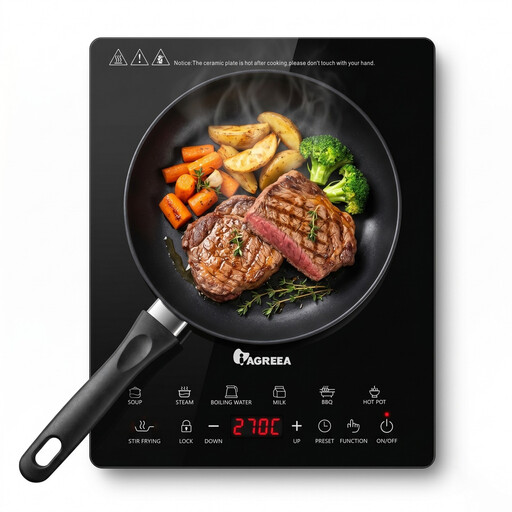 Image unavailable
IAGREEA DF200-14V10, 2 000 W induction hob
For cooking in a saucepan or frying pan where your accommodation allows a portable hob.
The title lists eight power levels, seven preset functions, a 3 h timer and cookware measuring 12 to 26 cm. Before buying, check that your cookware is compatible, measure the appliance and review the electrical and installation instructions.
View on Joybuy
 Image unavailable
ochama, 2 000 W portable induction hob
For cooking meals on a portable hob in accommodation where it’s allowed.
The title lists ten power settings, six functions and a control lock. Check that your saucepans are compatible, make sure you have enough space and review the electrical and installation instructions.
View on Joybuy
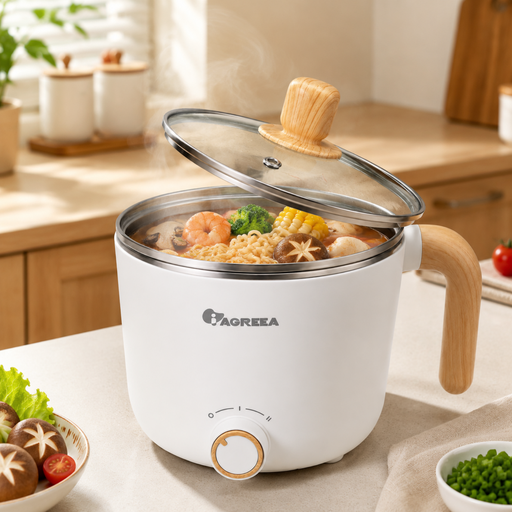 Image unavailable
IAGREEA MS‑AFX004, 1 L electric pot
For making simple meals in one pot, if your accommodation allows personal cooking appliances.
The title lists a stainless steel inner pot and two power settings, 300 W and 600 W. Check whether the 1 L capacity suits your portions, as well as the dimensions and cleaning instructions.
View on Joybuy
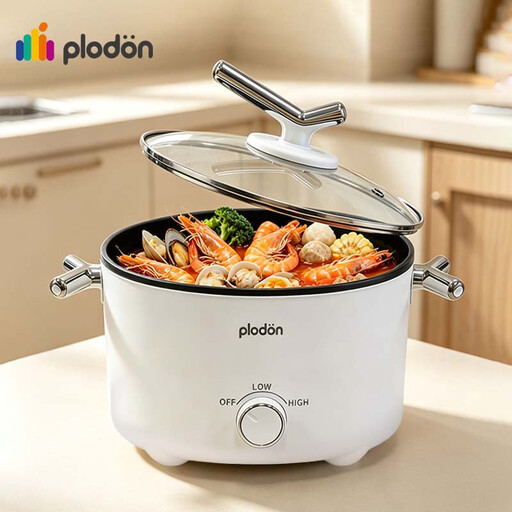 Image unavailable
plodon, 2 L portable electric pot, 1 000 W
For cooking one-pot meals where your accommodation’s rules allow this appliance.
The title mentions a non-stick coating and two power settings. Compare the 2 L capacity with your usual portions, and check the dimensions and cleaning instructions.
View on Joybuy
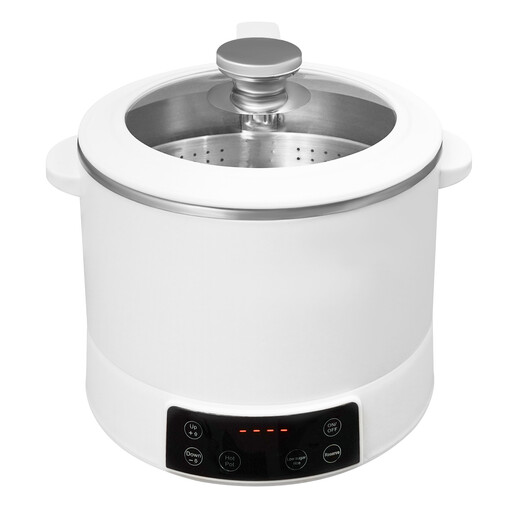 Image unavailable
3 L rice cooker, 220 V, 1 500 W
Worth considering if you mainly cook rice and your accommodation allows a personal rice cooker.
The title lists a 12 h delay timer and says it’s suitable for one to three people. Before choosing this model, check its other functions, dimensions, cleaning requirements and electrical instructions.
View on Joybuy
Frequently asked questions
Can I use a hob, mini oven or multi-cooker in a Crous residence?
The Crous guide dated 2 September 2026 says residents must not use personal cooking appliances, except for microwaves. So don’t plan to use your own hob, mini oven or multi-cooker without confirmation from the manager. Local rules may add to the residence regulations, so check the rules for your accommodation before buying.
Do Crous residence rules apply to private rentals?
No. The Crous guide applies to its residences and isn’t the rulebook for your private rental. Check your accommodation documents, the appliances already provided and the instructions for the appliance you want to install.
Can you put a microwave on any piece of furniture?
No. The furniture and location must suit the dimensions and installation instructions for the model you choose. Whirlpool specifically says not to block the ventilation grilles, so measure the appliance and allow for the clearances listed in its manual.
Do you need to replace your saucepans to use an induction hob?
Only if your saucepans aren’t compatible with induction. Tefal recommends checking, in particular, that a magnet sticks to the base, and that it’s flat and the right size for the cooking zone. Test your cookware before choosing a hob.
Which appliance will use the least energy in my studio flat?
Your appliance’s energy use will depend on what you cook, the portion sizes and how often you use it. ADEME’s published annual figures for different appliance categories aren’t enough on their own to compare the small models you might consider for your studio flat. First, choose an appliance that suits your meals and avoid buying equipment with overlapping uses.


