Student without a working kitchen
If you haven’t got bread, a knife or crockery to hand, a portion combining spread and breadsticks is ready to eat without any preparation. Check the allergens for the product you choose.


If you haven’t got any bread or a knife yet, a portion of hazelnut and cocoa spread with breadsticks is ready to eat with no preparation. An individually wrapped wafer is a better choice if you want to take a snack with you. If you want to spread and portion it onto your own food, choose a jar or single portion of spread, after checking the packaging.
If you haven’t got bread, a knife or crockery to hand, a portion combining spread and breadsticks is ready to eat without any preparation. Check the allergens for the product you choose.
If you want to pop a sealed portion in your bag, an individually wrapped wafer serves a different purpose from a jar. It is, however, a filled biscuit, not a spread.
If you have bread and a knife, a jar lets you take out as much as you like. A small portion of spread could also work for you, as long as you check the packaging and have something to eat it with.
When moving into student accommodation, start with how you plan to use it: eat it straight away, take a portion with you or spread it on your own food. Then check the label to compare similar products.
| What to consider | What to check | Who is it for? |
|---|---|---|
| No preparation | Whether the portion includes breadsticks or something else to eat it with; the exact type of product. | When I haven’t unpacked the breakfast box yet, I want something I can eat without bread or a knife. Around 33% of consumers put this ready-to-eat convenience first. |
| Taking it with you | Whether each item is individually wrapped and how many items are in the pack. | Between moving in and going to lectures, I want a sealed snack to put in my bag. Around 27% of consumers prioritise being able to take it with them. |
| Portion control | Whether it’s a spread rather than a filled biscuit; the size of the jar or portion. | If I already have bread and a knife, I’d rather choose how much to spread myself. Around 20% of consumers prioritise portion control. |
| Label | Ingredients and allergens; nutritional information per 100 g and the amount eaten per portion. | Before choosing a recipe, I want to check the sugars and allergens in the specific product. Around 20% of consumers check the label first. |
The DGCCRF states that the nutrition declaration for relevant food products is given per 100 g or 100 ml, making it easier to compare them. According to Manger Bouger and Santé publique France, displaying the Nutri-Score is voluntary. If it appears on the packaging, read it alongside the other nutritional information rather than treating it as the only verdict on the product.
Nutella B-ready is a filled wafer. It’s ready to eat, but it isn’t for spreading on your own bread.
Check the product description. Choose a jar or single portion of spread if you want something to spread, and a wafer if you’re looking for a snack to take with you.
According to Manger Bouger and Santé publique France, displaying it is voluntary in France. So its absence doesn’t, by itself, mean that the labelling is non-compliant.
If it is shown, compare products in the same category and check their ingredients and nutritional information too.
Information from Nutella France for & Go and B-ready lists hazelnuts, milk, soya and cereals containing gluten, among other ingredients. & Go also contains egg.
Check the ingredients list and allergen information on the packaging of the product and format you’re buying.
Nutella France offers spread in a jar, an & Go portion with breadsticks and individually wrapped B-ready wafers.
Carrefour offers, among other products, a 400 g jar of hazelnut and cocoa spread.
E.Leclerc offers Nustikao as a 1 kg jar of spread, with a Nutri-Score of E for this product.
Auchan offers, among other products, a 200 g jar of cocoa and hazelnut spread and a 400 g jar of Pasta Cao.
These products suit three different needs when moving into student accommodation: eating a portion with breadsticks, taking separately wrapped wafers with you or choosing a small portion of spread to use on food.
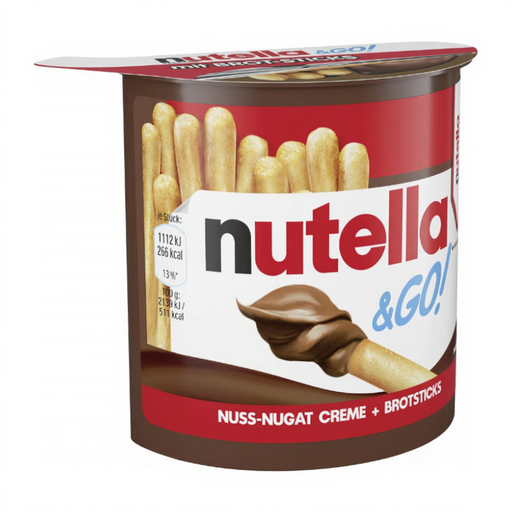 Image unavailable
If you want something to eat without bread or a knife while moving in, this 52 g portion combines hazelnut and cocoa spread with breadsticks. It isn’t a jar of spread that you can portion as you like. Information for this product lists wheat, hazelnuts, milk, eggs and soya, among other ingredients. Check the packaging.
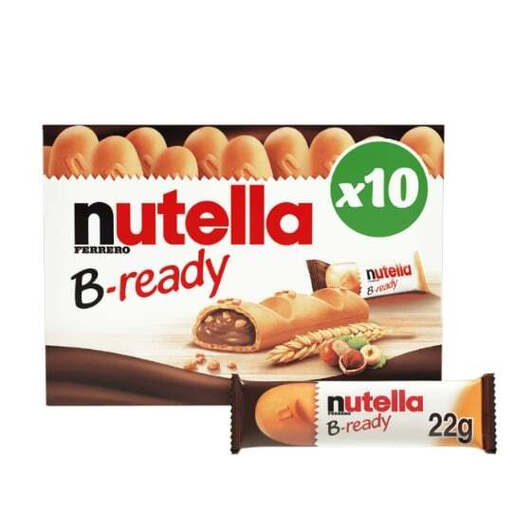 Image unavailable
If you want a snack to take with you between lectures, this 220 g pack contains ten 22 g wafers, each individually wrapped. They’re filled, not designed to be spread on other food. Information for this product lists hazelnuts, milk, soya, wheat and barley, among other ingredients. Check the packaging.
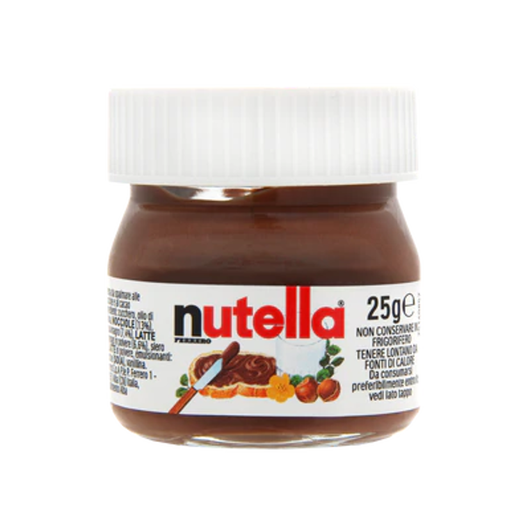 Image unavailable
If you want a small amount of spread to take with you, this product comes in a 25 g portion. If you plan to eat it while you’re out, check what’s included in the packaging and bring something to spread it on, as well as a utensil if needed. Check the portion’s label for ingredients and allergens too.
No. According to Manger Bouger and Santé publique France, displaying it is voluntary. The DGCCRF does, however, state that relevant prepacked foods generally need to include a nutrition declaration, with values given per 100 g or 100 ml.
Use it to compare similar products, then check the ingredients, nutritional values and the amount you plan to eat. A score alone isn’t enough to determine whether a product suits your needs.
Nutella France’s information lists hazelnuts, milk, soya and cereals containing gluten for these formats, among other ingredients. & Go also contains egg. Check the packaging of the product you buy rather than relying on the brand name alone.
Yes, especially if you plan to keep them for a while. Check the date on the packaging of each item you buy and follow its storage instructions.