What should you look for?
When moving into student accommodation, first decide between ready-made soup that you heat up and dehydrated soup that you prepare, then consider how much you’ll open for each meal.
1 L carton
Choose this: if you’re serving several bowls at once or will use the contents soon after opening.
Bear in mind: once opened, you’ll need to follow the storage instructions for that specific product.
Multipack of small cartons
Choose this: if you want to spread ready-made soup across several meals without opening 1 L at a time.
Bear in mind: each small carton comes in its own packaging.
Dehydrated sachets
Choose these: if you want compact portions that let you prepare just the amount you need.
Bear in mind: you’ll need hot water and must follow the quantities given for each recipe.
| Factor |
What to check |
Who it matters to |
| One portion, no leftovers |
Volume of each sachet or small carton; instructions for use after opening. |
If I’m eating alone, I want to make one bowl without opening a large carton I won’t finish. Around 36% of consumers would make having a portion with no leftovers their priority. |
| How much to buy |
Total pack size and how much you think you’ll use. |
On a tight budget, I’d rather buy an amount I can use than automatically reach for a large pack. Around 29% of consumers would prioritise keeping the amount they buy in check. |
| Sharing a meal |
Total volume and the number of portions stated for the product you’re considering. |
When sharing accommodation, I want to be able to serve several bowls at the same meal. Around 21% of consumers would put the volume available to share first when making their choice. |
| Preparation and storage |
Water and equipment needed; storage instructions before opening. |
If I have limited cupboard space and equipment, I want a format that’s easy to store and prepare. Around 14% of consumers would put this convenience first. |
Soups and portioned preparations on Joybuy
These products are mainly for making portions from dehydrated soups. The selection also includes a chicken rice soup and a sweet soup. Check that the preparation method suits the meal you’re looking for rather than treating them as ready-made soup in a carton.
 Image unavailable
Royco carrot and mushroom noodle soup, 3 × 20 cl
A handy option for making one portion instead of opening a large carton. This is a dehydrated soup; check the packaging for preparation instructions and allergen information.
View on Joybuy
 Image unavailable
Knorr Thai mushroom noodle soup, 2 assorted, 69 g, 0,70 L
Worth considering if you can make noodle soup with water in a saucepan. Check the cooking instructions and ingredients before choosing this preparation instead of soup that’s ready to heat.
View on Joybuy
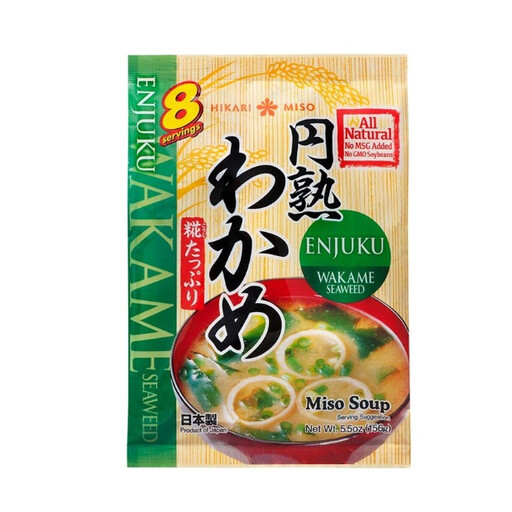 Image unavailable
Hikari Enjuku Wakame miso soup, 156 g, 8 portions
A good option for keeping several portions to prepare separately. This miso soup needs hot water; check the packaging for the amount of water needed per portion and the ingredients.
View on Joybuy
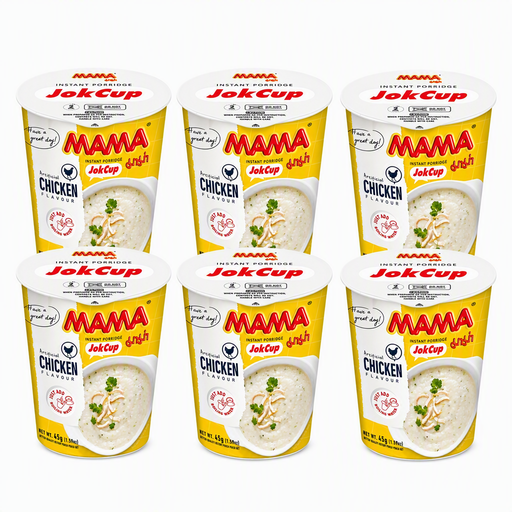 Image unavailable
MAMA instant chicken rice soup, 45 g, pack of 3
A way to mix things up with a portioned rice preparation instead of vegetable soup. The title gives 45 g for a pack of three: check the packaging for the weight of each unit and the total contents.
View on Joybuy
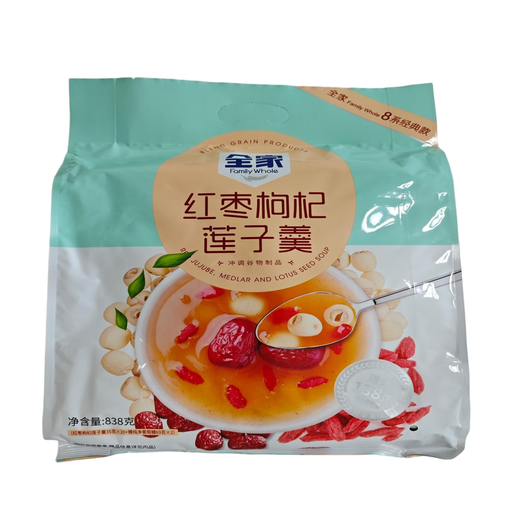 Image unavailable
Family Whole sweet soup with red dates, goji and lotus, with glucose, 838 g
Only consider this if you’re looking for a sweet soup in portions, rather than a savoury soup for a meal. Check the ingredients and preparation instructions on the pack.
View on Joybuy
Frequently asked questions
Is a 1 L carton of soup necessarily a family-size pack?
No: the volume alone doesn’t determine how many portions will suit you. Auchan describes its 1 L vegetable velouté as serving four people, but that applies to this particular product. Check the serving suggestion and instructions for use after opening on the product you choose.
Should I choose ready-made soup or instant sachets?
Choose ready-made soup if you want to heat it without mixing it with water, and sachets if you’d rather make one portion at a time. Sachets need water: the instructions for the Royco 12-vegetable soup featured by Auchan call for 200 ml of boiling water per sachet.
How can I check a soup’s allergens?
Read the ingredients and allergen information for the exact product, even if you’re already familiar with the brand. The products mentioned by Auchan and E.Leclerc show that vegetable soups may contain milk, celery, wheat or cream, depending on the recipe.
Can you eat soup after the date printed on the pack?
It depends on the type of date and the condition of the product. The DGCCRF distinguishes between a use-by date, which you must not go beyond, and a best-before date, after which a product with intact packaging may have lost some of its qualities. You should also follow the storage instructions and guidance for use after opening.


