Tenant who mainly reheats meals
You want to reheat and defrost individual portions with minimal washing-up, without expecting your microwave to take the place of an oven.


For reheating and defrosting meals in temporary accommodation, start by considering a straightforward freestanding microwave. A grill is useful if you want to brown certain dishes; a combination model makes sense if you’ll also use its additional cooking modes. A built-in model requires a compatible housing and a permanent installation. Whatever you choose, check its dimensions and the ventilation clearances specified for that model.
You want to reheat and defrost individual portions with minimal washing-up, without expecting your microwave to take the place of an oven.
You reheat meals every day but would also like to brown certain dishes now and then, without necessarily needing convection cooking.
You have a suitable housing unit and would prefer a permanent installation to an appliance you need to move between homes.
For student, second or temporary accommodation, UFC-Que Choisir distinguishes between solo, grill and combination microwaves according to the functions you need. First decide whether you’ll only use the appliance for reheating, then make sure your choice fits the space you actually have available.
Choose this if: reheating and defrosting cover your needs.
Bear in mind: this type of appliance won’t brown dishes like a grill.
Choose this if: you’d also like to brown or crisp dishes occasionally.
Bear in mind: a grill alone doesn’t offer all the modes of a convection oven.
Choose this if: you’ll genuinely use its cooking modes in addition to the microwave and grill.
Bear in mind: pay particular attention to its depth and weight before making space for it or planning a move.
Choose this if: a fitted kitchen has a compatible housing unit and the installation needs to be permanent.
Bear in mind: the housing unit, socket and fixing must all meet the instructions for the model.
| Priority | What to check | Who is this for? |
|---|---|---|
| Reheating and defrosting | Compare the defrost functions and turntable diameter with the size of your plates. | If I mainly prepare individual portions and leftovers, I want to keep handling to a minimum without adding modes I won’t use. Around 38% of consumers would make this their priority. |
| Fitting it in without taking up too much space | Measure the external dimensions and the ventilation clearances required by the instructions. | In a small kitchen, I need an appliance that leaves enough room to open the door and allow air to circulate. This would be the top priority for around 31% of consumers. |
| Browning or cooking more | Check whether the model has a grill or also offers convection cooking, depending on the meals you plan to make. | Without another oven for certain dishes, I’d like to be able to brown food or use additional cooking modes. Around 23% of consumers would make this their main requirement. |
| Fitting it into a permanent kitchen | Check the dimensions of the housing unit, the socket location and the fixing instructions. | My kitchen already has a dedicated space, and I plan to leave the appliance there long-term. This would be the priority for around 8% of consumers. |
The capacity in litres won’t tell you whether a large plate will fit or how much worktop space the appliance will take up. For example, the Whirlpool MWSC933SB freestanding combination microwave is listed as 33 L, but measures 49 × 37,3 × 54 cm and weighs 27,45 kg, according to Whirlpool.
Measure the available space and your largest plate, then compare the external dimensions and turntable diameter.
Blocked vents can cause overheating. Samsung recommends an average clearance of 10 cm at the back and sides, and 20 cm above; these figures don’t replace the instructions for your particular model.
Before choosing a spot for it, check the instructions and keep the ventilation openings clear.
Samsung warns that unsuitable materials, particularly metal, can cause sparks or a fire in microwave mode. The accessories you can use may vary when the grill or a combination mode is operating.
Check the instructions to see which containers and accessories are suitable for each mode you use.
A combination model offers more cooking options, but these won’t be of much use if you only need to reheat and defrost meals.
Make a list of the dishes you plan to prepare before comparing a combination model with a straightforward freestanding one.
Samsung’s range lets you compare the features of solo, grill and convection models.
Whirlpool offers freestanding and built-in models, to suit installations that need to be either movable or permanent.
Worth considering if you’re looking for a combination model with several cooking modes.
A model to compare if you’re looking for a freestanding microwave with a grill.
The EMZ421MMK is an example of a freestanding option combining microwave and grill functions.
These Joybuy models include solo microwaves for reheating and defrosting, as well as grill models for browning dishes occasionally. Compare their size and features with the way you plan to use them in your home.
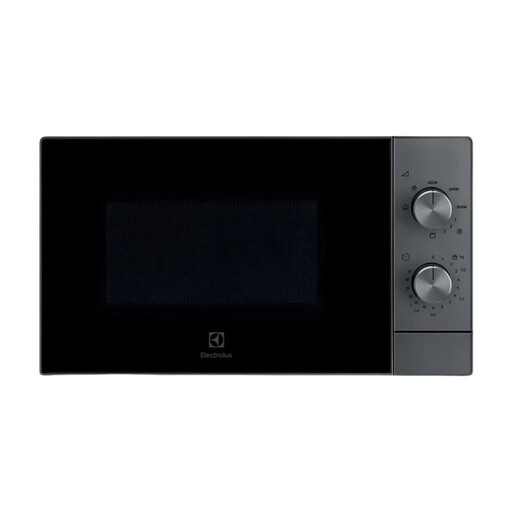 Image unavailable
Worth considering if you reheat meals every day and would also like to brown dishes from time to time. The product title lists a capacity of 21 L and a power rating of 800 W; check the instructions for ventilation clearances and which containers are allowed in each mode.
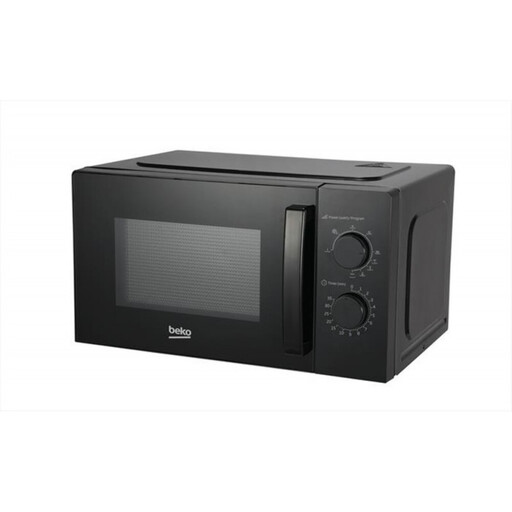 Image unavailable
An option for meals you want to reheat and dishes you’d like to brown now and then. The product title lists 20 L and 700 W. If you also expect convection cooking, check the available modes separately. Follow the clearance guidance in the instructions.
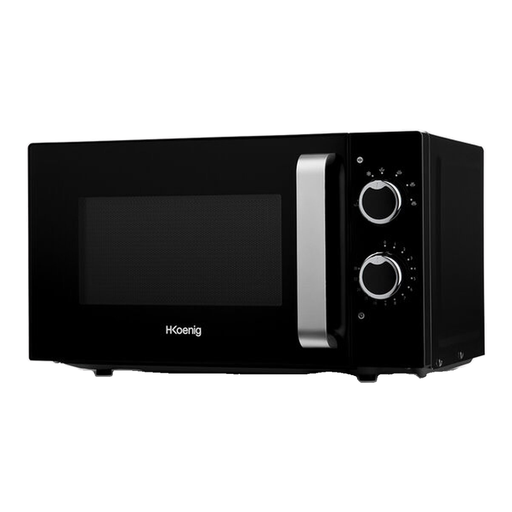 Image unavailable
Designed for reheating and defrosting in a small home. The product title lists 700 W and 20 L. If browning is important to you, check the exact functions. Before buying, also check the plug and the power supply required for your installation.
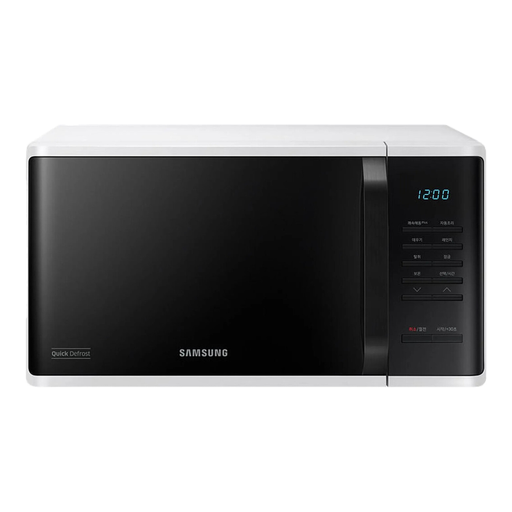 Image unavailable
For reheating and defrosting without the need for a grill mode. The product title lists a capacity of 23 L and the Quick Defrost function. Measure your plates and check the instructions to allow enough clearance around the appliance.
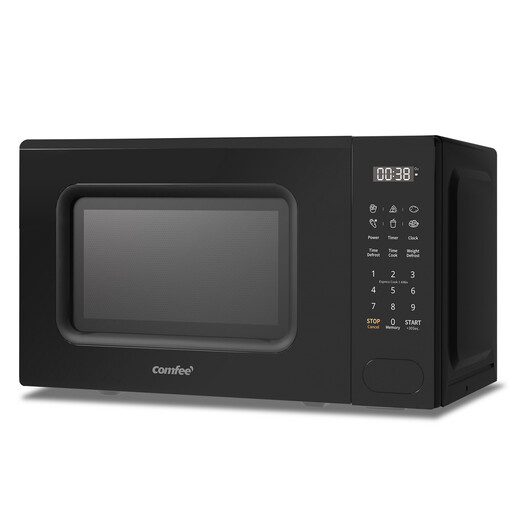 Image unavailable
Worth considering if you want to reheat or defrost using digital controls. The product title lists 700 W, six pre-set menus and eleven power levels. Before buying, check the plug, the power supply required and the installation instructions for the model.
Choose a container approved for the mode you’re using, rather than one that’s simply suitable for the appliance in general. Samsung advises against using metal and aluminium in microwave mode, in particular, because of the risk of sparks or fire. Only use a rack or metal accessory in modes specifically listed in the model’s instructions.
Follow the clearances specified in the instructions for your model and don’t block its vents. Samsung gives a general guideline—not a rule that applies to every appliance—of at least 10 cm at the back and sides, and 20 cm above. Whirlpool also recommends placing the appliance on a flat surface.
Only if the accommodation has a suitable housing unit and a permanent installation is practical. Whirlpool says installation of the relevant models requires, among other things, a socket inside the recess, two people to handle the appliance and secure fixing. Check the exact instructions before choosing this option.
The statutory guarantee of conformity applies when you buy goods from a professional seller, whether they’re new, second-hand or refurbished, according to the Directorate General for Competition Policy, Consumer Affairs and Fraud Control. It covers goods that don’t conform to the contract and is separate from any commercial warranty offered by the seller or manufacturer.
An old microwave can be taken to a collection point for waste electrical and electronic equipment, including a retailer or recycling centre, according to ADEME. The Ministry for the Ecological Transition also describes a take-back service from the retailer when you buy an appliance of the same type. Check the available collection arrangements before transporting your old appliance.