For reheating individual portions
If you mainly reheat meals and defrost food, a solo microwave is the first type to compare. Before choosing its capacity, though, measure the available space and your plates.


If you’ll mainly be reheating and defrosting food, start by comparing solo microwaves. Choose a grill model if you’d also like to brown food from time to time. A combination microwave is worth considering if you’ll genuinely use its convection function for extra cooking, particularly if you don’t have a conventional oven. In every case, measure the space and your containers, then check the installation instructions for the model you choose.
If you mainly reheat meals and defrost food, a solo microwave is the first type to compare. Before choosing its capacity, though, measure the available space and your plates.
A grill model adds browning to reheating and defrosting. It’s a practical choice if you occasionally want to brown a dish, without assuming you’ll use the convection function of a combination microwave.
If you plan to use convection for extra cooking, compare freestanding combination microwaves. Check their dimensions and weight against your worktop and any future moves.
UFC-Que Choisir distinguishes between solo microwaves, grill models that let you brown food, and combination models that also offer convection cooking. Your choice depends first on which functions you’ll use, then on how much space the appliance needs.
Choose this: for reheating and defrosting, without the need to brown food.
The trade-off: it doesn’t offer a grill or convection cooking.
Choose this: if you want to add occasional browning to your usual microwave tasks.
The trade-off: having a grill doesn’t mean the appliance also offers convection cooking.
Choose this: if you’ll use convection for extra cooking, particularly if you don’t have another oven.
Bear in mind: measure the space and check the weight of the model you’re considering before setting aside a spot for it.
| What to consider | What to check | Think about your needs |
|---|---|---|
| Reheating and defrosting | Check for a defrost function, power settings and the turntable diameter to make sure it suits your containers. | I mainly reheat individual portions, leftovers or drinks, and don’t regularly use other cooking functions. |
| Grill or convection | Tell the difference between a grill and convection or fan-assisted cooking. Check the functions available on the exact model. | Is occasional browning enough, or do I need extra cooking functions similar to those of an oven? |
| Space and installation | Measure the width, height, depth and door clearance. Check the manual for installation, clearance and ventilation requirements, as well as the model’s electrical specifications. | My worktop needs to fit the appliance and leave the clearances specified in its manual. |
| How long you’ll use it and end of life | Check the model-specific information on spare parts and warranty terms. If you replace the appliance, look into collection or reuse options. | If I move or replace the appliance, I want to know what repair options are available and how I can dispose of my old microwave. |
Capacity doesn’t tell you whether your plates will fit or whether the appliance will sit comfortably on your worktop. According to Boulanger, the 20 L Samsung MS20A3010AL has a 25.5 cm turntable and is 33.7 cm deep.
Compare the diameter of your containers with the turntable, the appliance’s external dimensions, door clearance and the clearances specified in the manual.
Convection won’t add anything if you don’t plan to use it. For example, Whirlpool lists its MCP349WH combination microwave as 49.4 cm deep and weighing 18.6 kg.
Work out what you’ll actually cook before making space for a combination microwave. Compare solo and grill models too.
A freestanding model isn’t automatically designed to operate in a fitted kitchen unit. Bosch says its FFL023M and FFL053M freestanding microwaves aren’t intended for installation in a built-in cabinet.
Only plan to fit a microwave into a cabinet if the manual for your chosen model allows it and gives the relevant installation requirements.
Whirlpool says not to block the ventilation openings on its microwaves. Check the space required for the specific appliance you plan to install.
Read the manual for the exact model before deciding where to put it, and leave the specified clearances unobstructed.
These two models let you compare solo and grill options without assuming that every Samsung microwave offers the same functions.
The EMZ421MMK is an example of a freestanding grill microwave for adding browning.
The MCP349WH is a freestanding combination model to consider if you’d also like to use fan-assisted cooking.
This selection includes solo microwaves for reheating and defrosting, as well as grill models for browning food. Compare the dimensions and installation requirements of your chosen model with the space available in your accommodation.
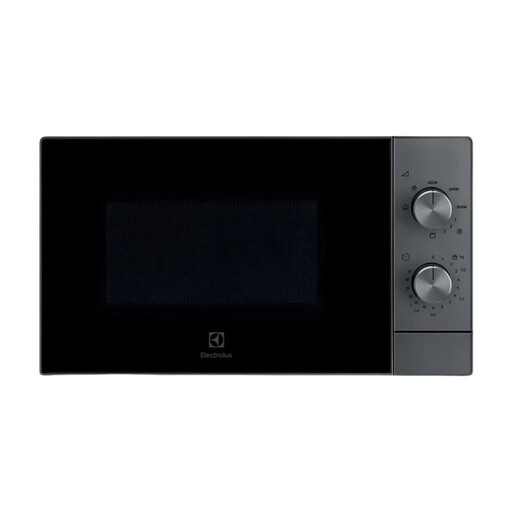 Image unavailable
Worth comparing if you want a freestanding appliance for reheating and are also considering browning food. The model name indicates 21 L and 800 W. Check its cooking functions and dimensions, and the clearances required in the manual, before choosing a spot for it.
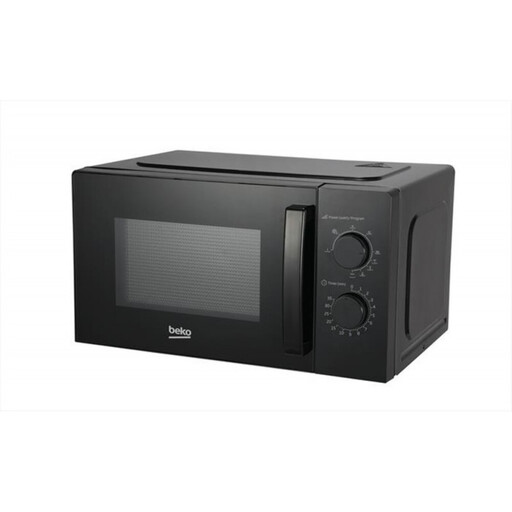 Image unavailable
The grill is handy if you occasionally want to brown food as well as reheat it. The model name indicates 20 L and 700 W. Also compare the turntable size with your plates and check the manual for the required clearances.
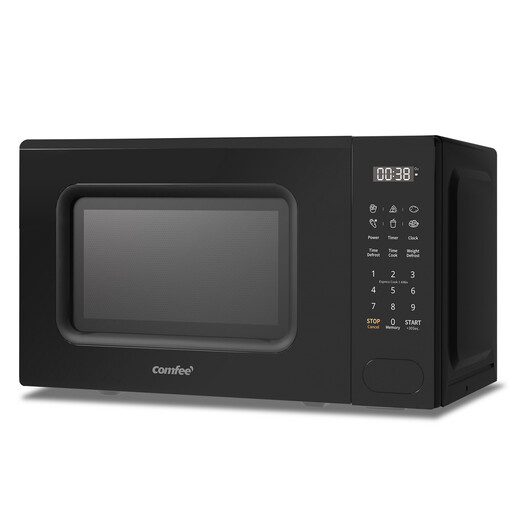 Image unavailable
For reheating and defrosting, this model has a stated output of 700 W, 11 power levels and a defrost function. Check the turntable diameter, external dimensions and installation requirements to make sure it suits your space.
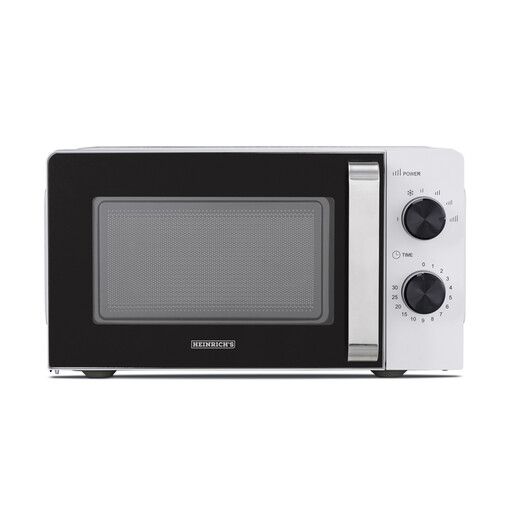 Image unavailable
This solo model is suited to reheating and defrosting, and its name doesn’t mention a grill. It has six power levels and a 30-minute timer. Check the manual to see how much space you need to leave around the appliance.
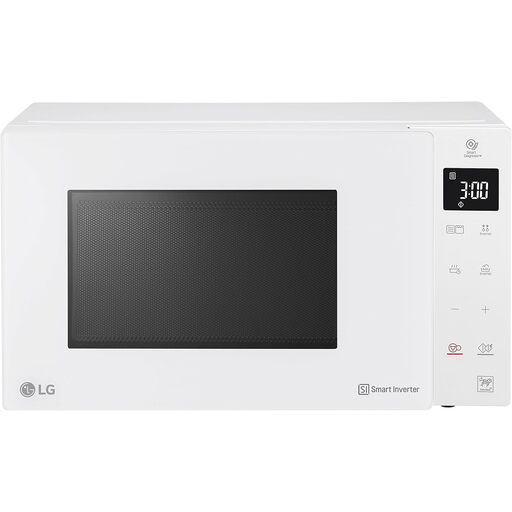 Image unavailable
Consider this model if you’d like a grill and a stated capacity of 25 L. The product name mentions 1,000 W but doesn’t say which function this refers to. If microwave power is important to your choice, check the details for the exact model, along with its manual for installation requirements.
Yes, if you’ll mainly be reheating and defrosting food. UFC-Que Choisir distinguishes this type from grill models, which let you brown food, and combination models, which also offer convection cooking. Choose those functions if you expect to use them.
Don’t assume a freestanding appliance can be built in. Bosch says its FFL023M and FFL053M models aren’t intended for installation in a built-in cabinet. Check the manual for your own model to see what it allows.
Follow the clearance requirements in the manual for your chosen model rather than using a measurement from another appliance. Whirlpool says not to block the ventilation openings on its microwaves and to place the appliance on a flat surface. This doesn’t set a clearance that applies to every microwave.
The French Ministry for the Ecological Transition says you can take an electrical appliance to a collection point or waste disposal centre, return it to a retailer, or give it to a social and solidarity economy organisation.