Student who mainly reheats portions
If you mainly need to reheat and defrost meals, start by looking at solo models. In a kitchenette, compare their overall size too, and check there’s enough room for your plates.


Choose a solo microwave if you mainly reheat and defrost portions, a model with a grill if you also want to brown food occasionally, or a combination microwave with convection if you genuinely plan to cook dishes as you would in a small oven. Before you buy, measure the space available, the room needed to open the door and the space required for your cookware. Then check the model’s instructions for its ventilation requirements.
If you mainly need to reheat and defrost meals, start by looking at solo models. In a kitchenette, compare their overall size too, and check there’s enough room for your plates.
If you want to cook dishes that need convection, look for a combination microwave that explicitly includes this mode. Measure the space before choosing a larger model.
If you mainly want to brown food as part of reheating, a model with a grill will suit you, without assuming you’ll also need convection cooking.
For a student kitchen or a second home without an oven, start with the type of cooking you need most. UFC-Que Choisir distinguishes between solo, grill and combination microwaves based on the cooking options they offer.
| Consideration | What to check | Who it’s for |
|---|---|---|
| Oven-style cooking | Whether it explicitly has a convection or fan-assisted mode; the combination microwave’s external dimensions. | I don’t have an oven and want to regularly cook dishes that need oven-style cooking, not just reheat a plate; around 40% of consumers rank this type of cooking as their top priority. |
| Reheating and available space | External dimensions, cavity and turntable; the clearance specified in the instructions. | In my kitchenette, I mainly need to reheat and defrost portions without taking up too much worktop space; this compact use comes first for around 40% of consumers. |
| Occasional browning | Whether it has a grill; accessories and containers permitted for this mode. | I want to brown food from time to time, but don’t need convection for my other meals; browning is the top priority for around 20% of consumers. |
Capacity doesn’t tell you whether the appliance will fit on your worktop or whether your dishes will fit inside the cavity. You’ll also need space for the door and ventilation.
Measure the space and your largest dish, then compare the width, height, depth, internal dimensions and turntable diameter.
Convection won’t add anything to your meals if you don’t plan to use that mode. A combination microwave may also take up more worktop space.
Make a note of the cooking you’ll actually do: reheating and defrosting, occasional browning, or dishes that need oven-style cooking.
Whirlpool France warns that blocked ventilation can cause overheating. A Bosch instruction manual also specifies that the freestanding model it covers is not designed to be installed in a built-in unit.
Keep the vents clear and follow the installation instructions for your chosen model. Don’t assume a freestanding appliance is suitable for an enclosed unit.
Anses recommends following the instructions on food packaging designed for microwave use. This helps avoid excessive heating, which could increase the migration of substances into food.
Check that the container is suitable for the mode you’re using, and follow the power and heating time shown on the packaging.
The French models cited by Panasonic showcase solo, grill and multi-function options.
The Whirlpool France product details cited include a freestanding model with a grill and a combination model with fan-assisted cooking.
Samsung France’s MC35R8088LC/EF combination microwave is an example of a 35 L convection model.
The Bosch product details cited showcase solo and grill freestanding microwaves.
These models cover everyday reheating with a solo microwave, browning with a grill and convection cooking with a combination model. First choose the mode you need, then check the available space and installation requirements for the model you’re considering.
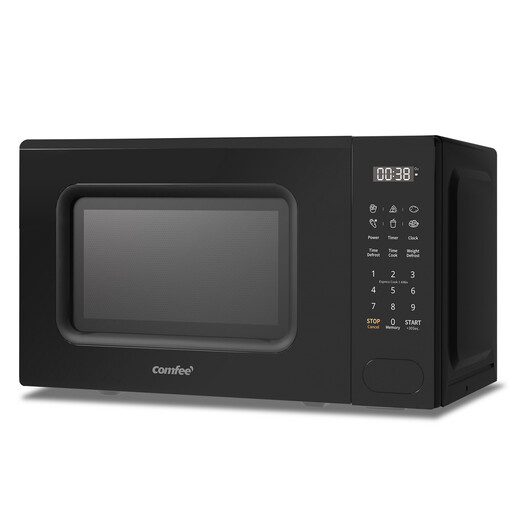 Image unavailable
For reheating and defrosting portions in a small kitchen. The product title lists 11 power levels and six pre-set programmes. Compare the cavity dimensions, turntable and required clearances with your available space and cookware.
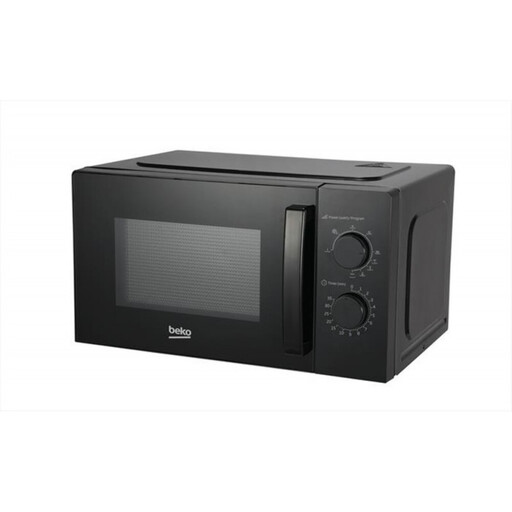 Image unavailable
Worth considering if you usually reheat meals but also want to brown them from time to time. Check the cavity size against your dishes. If you want to cook as you would in an oven, check separately whether it has a convection mode.
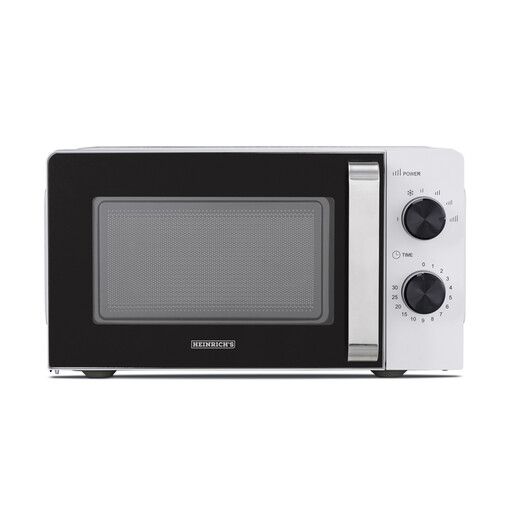 Image unavailable
For reheating or defrosting portions without needing a grill. The product title lists six power levels and a 30-minute timer. Check the instructions for ventilation clearances before installation.
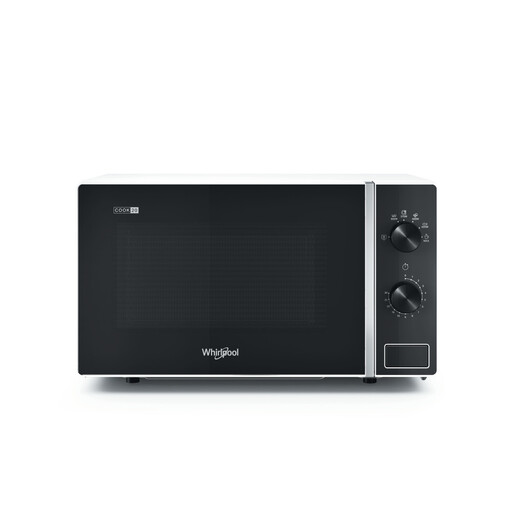 Image unavailable
For everyday reheating and defrosting. The guidance given for this model calls for at least 10 cm of clearance on all sides. Make sure your chosen spot allows for this, and check the requirements in the instruction manual.
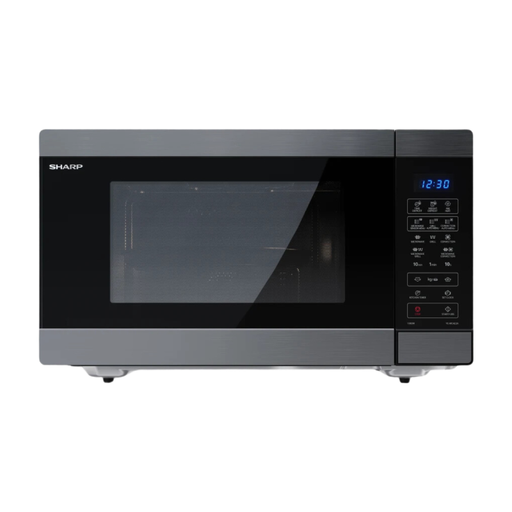 Image unavailable
Worth considering if you’ll use convection as well as the microwave and grill modes. Its listed external dimensions of 553 × 326 × 505 mm mean you’ll need to measure the space and check there’s room to open the door. Also check the ventilation and electrical requirements in the instruction manual.
Measure the available width, depth and height, as well as the space needed to open the door and reach the socket. Then compare these measurements with the model’s external dimensions, and check that the cavity or turntable will fit your cookware. Check the instructions for the required clearances.
Don’t do this unless the instructions for your specific model explicitly say it’s suitable. Whirlpool France says not to block the vents, while a Bosch manual rules out installation in a built-in unit for the freestanding models it covers.
No. Only use packaging or containers labelled as suitable for microwave use, and follow the power and heating time instructions. Anses recommends following this guidance to help avoid excessively heating food in its packaging.
Choose a combination microwave if you plan to regularly use an oven-style cooking mode as well as reheat food. If you only want to brown or grill food occasionally, a model with a grill will do the job. Check the product details to confirm the exact modes.