What sets the models apart?
Solo microwave
Choose this if: you mainly reheat and defrost everyday portions.
Bear in mind: it doesn’t have a grill or convection function; check the features of the specific model.
Microwave with grill
Choose this if: you’d occasionally like to brown or grill dishes as well as reheat food.
Bear in mind: a grill on its own doesn’t provide the convection cooking of a combination microwave.
Combination microwave
Choose this if: you don’t have an oven and will regularly use additional cooking modes.
Bear in mind: its extra features won’t make up for an appliance that won’t fit in the intended space with enough room for ventilation.
To compare these three options, start with the meal you prepare most often, then check how much room the appliance needs, including space for ventilation.
| Need |
What to check |
Which shoppers? |
| Reheating and defrosting |
The model’s functions and whether the cavity has enough room for your dishes. |
I want to prepare everyday meals without paying for oven features I won’t use. Around 50% of shoppers put this need first. |
| Occasional browning |
Whether it has a grill and which dish sizes will fit. |
I sometimes want to brown a portion, but don’t plan to cook regularly using convection. Around 30% of shoppers prioritise this occasional browning. |
| Cooking without an oven |
Cooking modes, external dimensions and the clearances specified in the instructions. |
I don’t have an oven and plan to regularly cook dishes rather than simply reheat them. Around 20% of shoppers prioritise this cooking option. |
Microwaves for these needs on Joybuy
These models are mainly suited to reheating and defrosting in a small kitchen; the Beko also has a grill for browning dishes. Before deciding whether any appliance will fit your space, check the required clearances in its instructions.
 Image unavailable
Beko MGC20100B1 microwave with grill, 20 L, black
Worth considering if you want to reheat meals and occasionally brown a dish.
It has a 20 L capacity and a stated power output of 700 W. Check the required clearances in the instructions, particularly above the appliance.
View on Joybuy
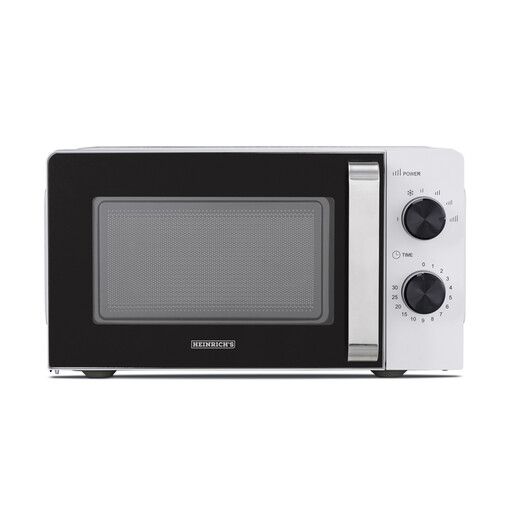 Image unavailable
Heinrich's solo microwave, 20 L, 700 W
For reheating and defrosting meals without the need for a grill function.
The product title lists six power levels and a 30-minute timer. Check the instructions to confirm the clearance required in your chosen space.
View on Joybuy
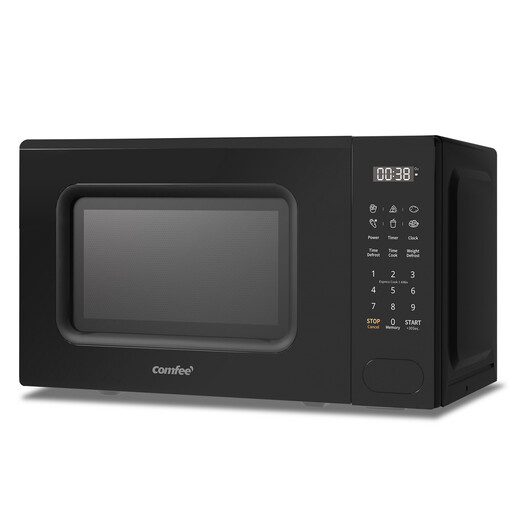 Image unavailable
COMFEE CM-E202CC(BK), 20 L, 700 W
For meals you want to reheat or defrost, if you prefer digital controls.
The product title lists six pre-set menus and eleven power levels. Compare the appliance’s dimensions and the clearances specified in its instructions with your available space.
View on Joybuy
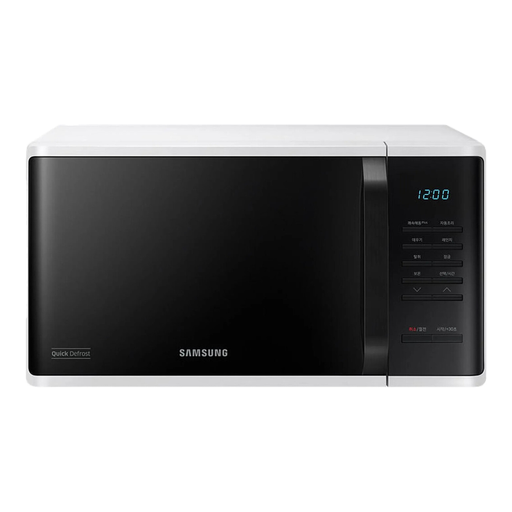 Image unavailable
Samsung MS23K3513 solo microwave, 23 L
Worth considering for reheating and defrosting if a 23 L cavity suits the dishes you use.
The product title mentions quick defrosting and a display. Check the instructions for this model’s dimensions and required clearances.
View on Joybuy
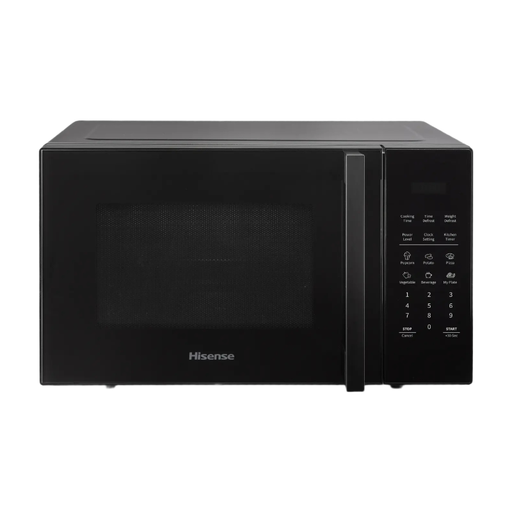 Image unavailable
Hisense H25MOBS7H, 25 L, 900 W, black
Compare it with smaller-capacity models if you’d like to reheat or defrost food in a 25 L cavity.
The product title describes it as a solo model. If browning matters to you, confirm its cooking modes before choosing it. Also measure the space required, including clearances.
View on Joybuy
Frequently asked questions
Is a solo microwave enough for everyday meals?
Yes, if you mainly want to reheat and defrost food: Samsung describes its solo range as suitable for these uses. If you’d also like to brown dishes, look for a model with a grill.
Can a microwave with a grill replace an oven?
A grill lets you brown food, but it doesn’t provide convection cooking on its own. For regular oven-style cooking, look specifically for this function on a combination model; UFC-Que Choisir distinguishes between these capabilities in its guide.
How much space should I leave around a freestanding microwave?
Follow the clearance requirements in the instructions for the specific model. Samsung’s general guidance is to leave 10 cm behind and at the sides, and 20 cm above, but it notes that requirements vary between appliances.
How can I tell whether a model will fit in my kitchenette?
Measure the space, then compare it with the appliance’s external dimensions, allowing for the clearances specified in its instructions. Also check that you’ll be able to open the door and fit your dishes into the cavity: capacity in litres alone won’t answer these questions.


