For students who mainly reheat meals
If you reheat leftovers and defrost food, a solo microwave will cover these needs. It’s a good choice if you also have access to a hob or oven for dishes that need browning.


If you mainly want to reheat and defrost food, choose a solo microwave; add a grill if you want to brown dishes. A combi is worth considering if you also plan to cook oven-style dishes regularly and have enough space for the door to open and the ventilation clearances specified in the manual.
For a student kitchenette, your choice mainly depends on the meals you prepare and whether you have access to other cooking equipment.
If you reheat leftovers and defrost food, a solo microwave will cover these needs. It’s a good choice if you also have access to a hob or oven for dishes that need browning.
If reheating is still your main use, but you also make dishes such as gratins or lasagne, a grill model gives you the option of browning the top. A grill on its own doesn’t provide fan-assisted cooking.
If you regularly plan to cook dishes that need an oven, look at combi models with the relevant cooking modes. First check the available space, the size of dishes that will fit and the installation requirements for the specific model.
Start with the meals you prepare, then compare the features you want with the dimensions of the appliance, your dishes and the space where you plan to put it.
| What to consider | What to check | Your needs |
|---|---|---|
| Cooking modes | A solo model is for reheating and defrosting; a grill lets you brown dishes. According to Que Choisir, combi models may also offer fan-assisted cooking: check the modes available on the model you choose. | I mainly reheat leftovers, or I make dishes to brown or cook like an oven often enough to use these extra features. |
| Space and ventilation | Measure the width, height and depth, and allow room for the door to open. Leave the clearances specified in the manual: Samsung’s general guidance of 10 cm at the back and sides and 20 cm above doesn’t replace the instructions for your model. | My worktop needs to fit the appliance without obstructing the door or blocking the vents. |
| Dish size | Compare the dimensions of the cavity and, if there is one, the turntable diameter with the plates and dishes you usually use. The capacity in litres alone won’t tell you whether a rectangular dish will fit. | I need to be able to fit in and easily remove a dish I use regularly. |
| Containers | Follow the compatibility instructions on the container or packaging, as well as the appliance manual. Anses recommends following the stated power and heating time for microwave-safe packaging. | When reheating a ready meal or leftovers, I want to know which container to use and which instructions to follow. |
| Everyday use | Consider the controls, access to the cavity, how easy it is to remove dishes and the appliance’s weight if you need to move it. Check the accessories and cleaning instructions for your model. | In temporary accommodation or a shared kitchen, clear controls and an appliance that’s easy to position make everyday life easier. |
Two appliances with similar capacities can take up different amounts of space, and the stated volume won’t tell you whether your usual dish will fit inside.
Measure the space and your dishes, then compare the external dimensions, cavity and turntable of the model you’re considering.
An installation that blocks the vents doesn’t meet the appliance’s operating requirements. The clearances needed vary by model.
Check the manual before deciding where to put it, and make sure the door can open fully.
Extra modes won’t help you choose if you don’t plan to make dishes that need browning or oven-style cooking. You’ll also need to consider the dimensions and weight of the combi model.
Think about the meals you actually prepare: a solo model is enough for reheating and defrosting, while a grill or fan-assisted cooking suits other needs.
Anses says that heating food for too long or at too high a power level can increase the transfer of substances from some types of packaging into food. A sealed container may also burst, as noted in the Schneider Consumer manual cited here.
Check that the container is suitable, remove any metal parts and follow the power and heating time instructions on the packaging and in the manual.
These examples highlight features and practical considerations to compare on specific models; they don’t represent a brand’s entire range.
The MS23T5018AK is an example of a solo model for reheating and defrosting, without a grill.
The EMZ421MMK is an example of a freestanding model that combines microwave and grill functions for browning dishes.
The MWF259SG is an example of an appliance with several cooking functions to consider if reheating alone isn’t enough.
These solo and grill models suit reheating and defrosting, with some also offering the option to brown dishes in a kitchenette. If you’re looking for fan-assisted cooking, check that the model you’re considering has this feature rather than assuming it comes with a grill.
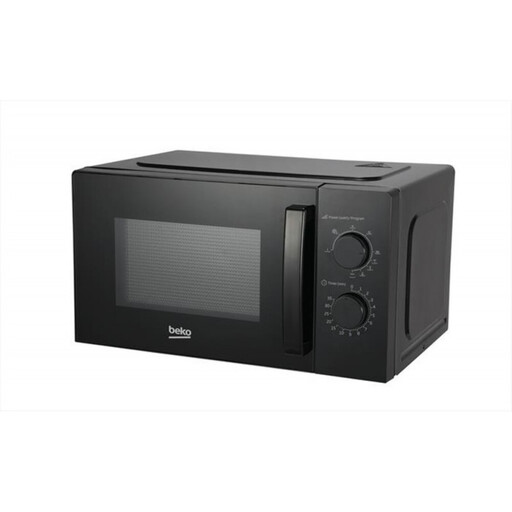 Image unavailable
Worth considering if you mainly reheat and defrost meals, but would also like to brown dishes from time to time. Check your dishes against the 245 mm turntable listed for this model, and allow for the clearances specified in its manual.
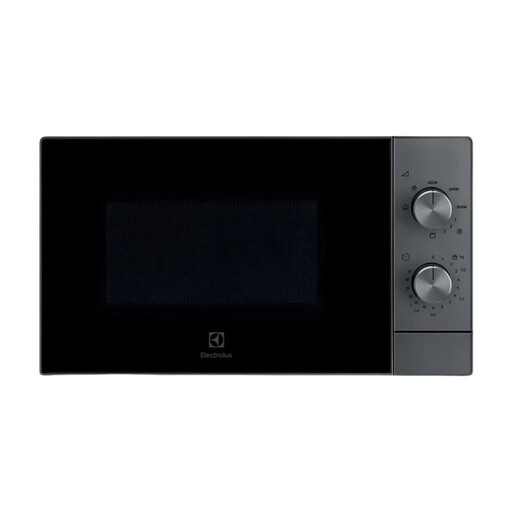 Image unavailable
This freestanding model combines reheating and defrosting with a grill for browning dishes. Check that the cavity will fit your dishes. If you plan to cook food as you would in an oven, check which modes are available rather than assuming the grill provides fan-assisted cooking.
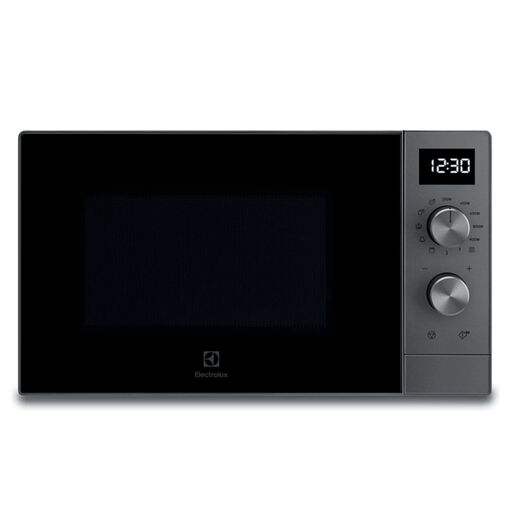 Image unavailable
For reheating, defrosting and browning, this model has a quartz grill and a 28.8 cm turntable, according to its product listing. Measure your dishes and the space where you plan to put it. If fan-assisted cooking is essential, check that the exact model offers it.
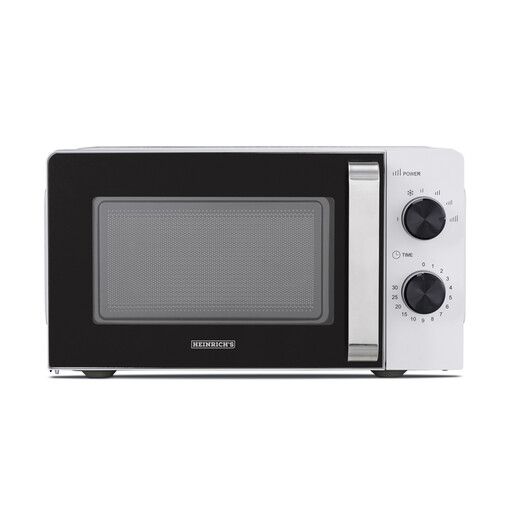 Image unavailable
This solo model is suited to reheating and defrosting. Its product title lists six power levels and a 30-minute timer. Check the cavity dimensions and ventilation clearances in the manual before deciding where to put it.
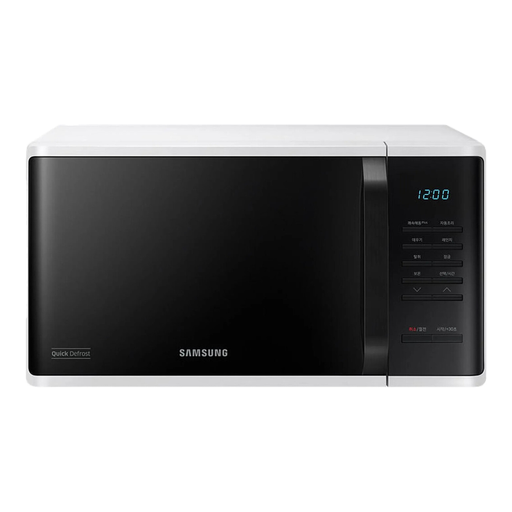 Image unavailable
For reheating and defrosting without a grill, this model has a 28.8 cm turntable, according to its product listing. Compare the diameter and cavity dimensions with your dishes, then check the manual for the clearances needed for installation.
Measure the available width, height and depth, then check that the door can open and allow for the ventilation clearances specified in the model’s manual. Samsung gives general guidance of 10 cm at the back and sides and 20 cm above, while noting that requirements can vary.
It can cover some oven-style cooking needs if it has the right modes. Que Choisir says that combi models can grill and cook using fan-assisted heat. However, check the modes available on the specific model, the size of dishes it can accommodate, its accessories and the space needed for installation.
Choose a container or packaging that is explicitly labelled as microwave-safe, then follow the appliance manual. For microwave-safe packaging, Anses recommends following the stated power and heating time.
No. Follow the tray’s preparation instructions. Anses says that heating food for too long or at too high a power level can increase the transfer of substances from some types of packaging into food.