Before buying a fridge for student accommodation, check what appliances are provided and, if you live in halls, any rules about installing your own. If you need to buy one, a small fridge with space for fresh food may be enough for one person. If you want to store frozen food or freeze fresh food, choose a model with a compartment and freezer rating that meet your needs. Then compare the appliances by their dimensions, usable capacity, kWh/an and noise level.
Which size is right for you?
The right size depends on what you need to store, as well as the space available in your bedroom, studio flat or shared accommodation.
Living alone in a small space
A mini fridge or table-top model may suit you if you mainly store small amounts of fresh food. Measure the space, check that the door can open fully and allow for the ventilation clearance specified by the manufacturer. If the fridge will be in your living area, compare noise levels too.
Keeping frozen food
Don’t choose based on total capacity alone. Check the capacity and rating of the freezer compartment: storing frozen food and freezing fresh food may require different specifications.
Wanting your own space in a shared home
An additional appliance can keep your food separate from everyone else’s. First check what’s already provided and what’s allowed, then choose a capacity that suits your shopping without overlooking the space it takes up or how noisy it is.
What should you check before choosing?
First, check whether you actually need to buy a fridge. Then compare the space available with the food you want to store, and use the energy label to compare models.
| What to consider | What to check | What I need |
|---|
| Appliances provided |
Check the inventory and tenancy agreement. If you live in halls, read the rules and any additional conditions before installing your own appliance. |
I want to know whether a fridge is already provided and whether I’m allowed to install another one. For furnished rentals covered by Decree No. 2015-981, Légifrance lists refrigeration equipment as part of the minimum furnishings. Les Crous state that additional conditions may apply alongside the residence rules. |
| Size and space |
Check the overall height, width and depth. Allow for the ventilation clearance specified by the manufacturer and make sure the door can open. |
In a bedroom or small kitchenette, I need to be able to fit the appliance in, open its door and move it when I move out. |
| Capacity and freezing |
Compare the capacity for fresh food and the freezer capacity separately. If you want to freeze fresh food, check the compartment’s rating, as well as how the model defrosts. |
I may mainly shop for fresh food, or I may need dedicated space for frozen food. These needs can call for different choices, even when the total capacity is similar. |
| Energy use and noise |
On the energy label, compare the energy class, kWh/an, compartment capacities and airborne noise emissions in dB across similarly sized models. The European Commission lists these as information provided on fridge energy labels. |
If I sleep or work near the fridge, its noise matters every day. I also want to know its stated annual energy use rather than judging it by the energy class letter alone. |
What mistakes should you avoid?
-
Buying before checking the inventory
A fridge may already be included with your accommodation. For furnished rentals covered by Decree No. 2015-981, Légifrance requires a fridge and freezer, or at least a fridge with a compartment that can reach −6 °C or below, as part of the minimum furnishings. According to Les Crous, additional conditions may apply in university accommodation.
Check your tenancy agreement and inventory, then ask the residence manager whether you’re allowed to install your own appliance.
-
Assuming a small fridge can freeze food
The appliance’s external size or the word “mini” tells you nothing about how much room it has for fresh or frozen food. The compartment may also be unsuitable for freezing fresh food.
Compare the capacity of each compartment and check the exact model’s freezer rating before planning your shopping.
-
Measuring the space but not the full installation
The depth, door clearance and ventilation space could prevent you from fitting the fridge where you planned. Electro Dépôt recommends leaving space around the appliance and not building it in unless it is designed for that.
Check the overall dimensions, the manufacturer’s instructions and which way the door opens before ordering.
-
Relying on the energy class alone
Two appliances in the same class can differ in capacity, stated annual energy use and noise level. These details are among the information shown on the energy label, as outlined by the European Commission.
Compare kWh/an and dB alongside the capacity you actually need, especially if the fridge will be in your bedroom.
A few brands to consider
These examples show different configurations worth comparing. The specifications apply to the models listed, not every model from each brand.
Beko
Two Beko table-top fridges show how compact dimensions can accommodate different layouts.
- Beko France lists the TSE1264FMGN as 54 cm wide, with a 4-star compartment; the TS190340N is listed as 47.5 cm wide and 82 cm high.
- Check the capacity, noise level, kWh/an and full dimensions of the model you’re interested in. Width alone isn’t enough to make your choice.
VALBERG
The TT 4* 102 D W742C table-top fridge combines fresh-food storage with a separate freezer compartment.
- Electro Dépôt lists this model as having 88 L of fridge capacity, 14 L of freezer capacity and a noise level of 37 dB.
- Its listed dimensions of 85 × 50 × 56.5 cm mean you’ll need to check the available depth, as well as the installation clearances.
HIGH ONE
The TT 93 D W625C is an example of a compact fridge designed for chilled storage.
- Electro Dépôt lists this model as having 93 L of total usable capacity, a width of 47.2 cm, a depth of 45 cm and a noise level of 39 dB.
- If you store frozen food, check whether it has a suitable compartment and review its specifications rather than relying on its compact size.
Two compact fridges on Joybuy
These two models offer different capacities for storing food in a small home. Their inclusion here doesn’t determine whether either has the right freezer compartment for you: check its specifications if you need one.
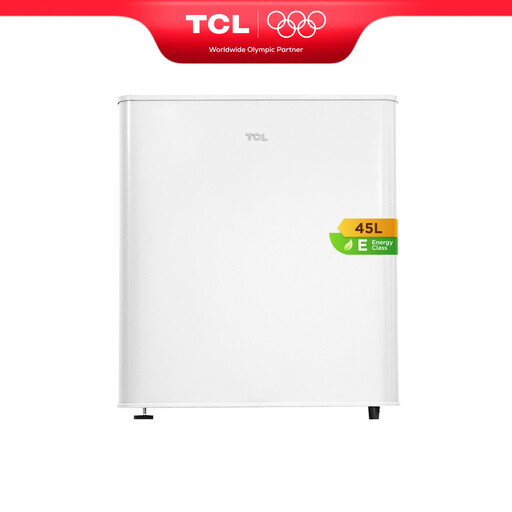 Image unavailable
TCL RF60DWE0FR, 45 L mini fridge
For keeping your own food in a bedroom or studio flat, first check that this size will fit and that you’re allowed to install it in your accommodation.
The model name indicates a capacity of 45 L. It also has an E energy class, a tempered glass shelf and adjustable feet. If you plan to store frozen food, check the compartment’s rating and specifications. You should also check the energy label for kWh/an.
View on Joybuy
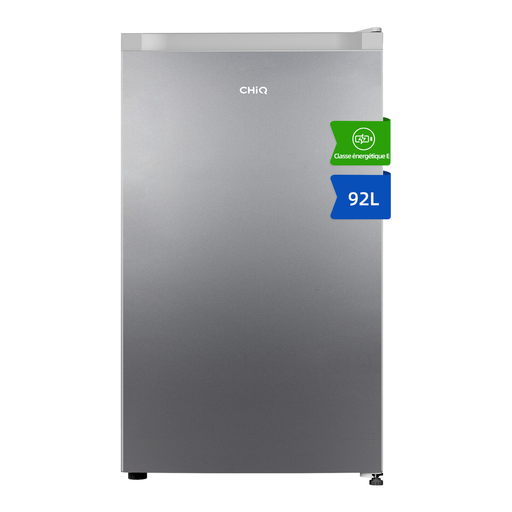 Image unavailable
CHiQ JR92DSE, 92 L single-door fridge
Its stated capacity may suit someone who wants more room for their shopping, as long as the appliance fits in the space available.
The model name indicates a freezer section and an E energy class. Before planning to store frozen food, check the section’s capacity and rating. Also check the full dimensions, kWh/an and noise level on the model’s product details.
View on Joybuy
Frequently asked questions
Do I need to buy a fridge for furnished student accommodation?
Not before checking what’s provided. For furnished rentals covered by Decree No. 2015-981, Légifrance lists a fridge and freezer, or at least a fridge with a compartment that can reach −6 °C or below, as part of the minimum furnishings. Check the tenancy agreement and inventory to see what’s included in your accommodation.
Can I install my own mini fridge in university accommodation?
Check your residence rules before buying one. Les Crous state that the house rules attached to the admission decision may be supplemented by additional conditions. Ask the residence manager what applies to your room or studio flat.
What should I compare on a small fridge’s energy label?
Compare the energy class, kWh/an, compartment capacities and noise emissions. The European Commission lists these details on fridge energy labels. Compare models with capacities that meet your needs rather than choosing based on the energy class alone.
How should I install the fridge and keep food fresh?
Leave the ventilation clearance specified by the manufacturer and don’t build in an appliance that isn’t designed for it. To keep food fresh, Anses recommends checking that the temperature is 4 °C in the coldest part of the fridge and avoiding overfilling it so that air can circulate.
What should I do with an old fridge when I move?
Take it to a suitable collection point for waste electrical and electronic equipment rather than putting it in household rubbish. France’s Ministry for the Ecological Transition explains how this system works in France. Ask your retailer or local council about the options available near you.


