
Livraison le jour même ou le lendemain

Qualité garantie

Débloquez vos offres de bienvenue: Livraison GRATUITE | Jusqu'à -80 % | 30 jours d'essai gratuits à JoyPlus
Téléchargez l'application
A strong multi-material glue can be a real lifesaver at home, in the office or in the workshop. But a product marketed as "universal" isn't necessarily suitable for every surface or every situation. Flexible plastic, metal, porous wood, ceramic and rubber all react differently to instant glue.
Before you place an order, three common mistakes keep cropping up:
So the right choice depends less on a "universal" promise and more on the material, the scale of the repair and the level of precision required.
Check the list of compatible and excluded surfaces on the product page. A plastic glue designed for everyday use may work on PVC, ABS or certain rigid plastics, but not be suitable for polyethylene or polypropylene.
For everyday repairs, cyanoacrylate glues can be suitable for:
A wood glue or a specialist DIY adhesive is still more appropriate when the surface is large, very porous or subject to significant movement. For a large assembly, a small tube of instant glue is generally not the most practical format.
Clear liquid glue penetrates narrow cracks and small assemblies. It's particularly good for jewellery, models and discreet repairs, provided you can apply a minimal amount.
Gel glue is more at home on vertical surfaces, uneven areas and flexible materials. A rubber-enriched formula can accommodate some movement, for example on a sole or a flexible hose. Always check the product's specific recommendations though.
For detailed work, go for a precision glue, a long nozzle, a fine tip or a dosing system. Anti-drip technology helps limit spills, but it doesn't replace the need to apply a thin layer.
A 1 to 3 g tube is enough for a one-off repair or a basic toolkit. Mini-doses reduce the risk of the contents drying out between uses. On the other hand, a 20 g format can be better value for regular projects.
If the item is exposed to moisture, check for the water-resistant label and wait the full curing time stated before any contact with water. This label doesn't mean the product is suitable for permanent immersion. For fixing a panel, a mirror or a skirting board, a hybrid mounting adhesive like Pattex Ni Clou Ni Vis Fix Crystal works on a very different principle to an instant glue.
The products below stand out for their format, applicator and the surfaces stated by the manufacturers. Always read the instructions and any restrictions before application.
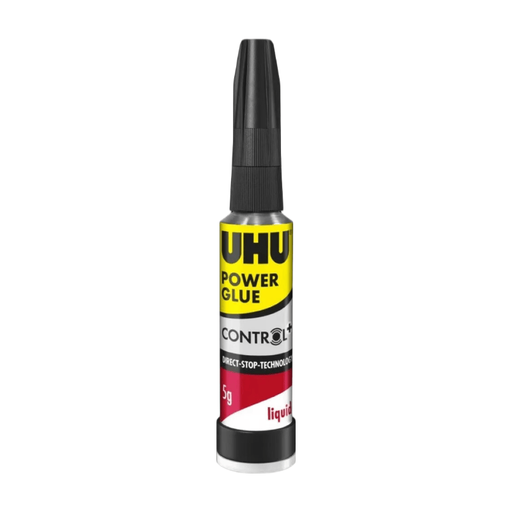
Why this suits them: With its 5 g tube and Direct-Stop nozzle, this glue makes small repairs around the house or office easy, without forcing you to buy a large format.
The control system helps prevent drips when applying to a small area. Excluded surfaces include PE, PP, silicone, PTFE and expanded polystyrene.
A clear liquid formula, precise application and stated compatibility with metal, wood, ceramic, rubber and several plastics.
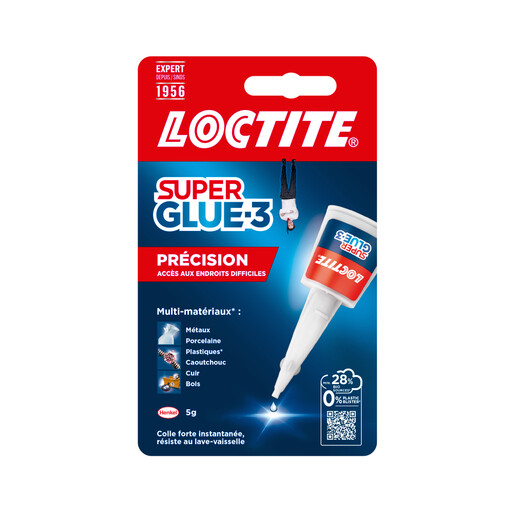
Why this suits them: Its long nozzle allows you to work cleanly on visible items, into gaps and on craft pieces.
The drop-by-drop dosing reduces the risk of over-application and marks on a delicate repair. PE, PP and PTFE are not among the stated surfaces.
A clear liquid, a precision tip and stated use on porcelain, ceramic, metal, wood, leather and rubber.
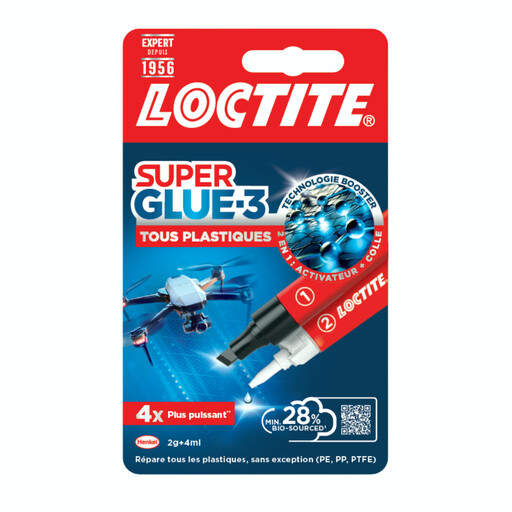
Why this suits them: Its duo of a 2 g tube and an activator pen targets difficult-to-bond plastics, especially for everyday items and technical accessories.
The activator prepares the surface before the cyanoacrylate is applied. You still need to identify the type of plastic and follow the stated drying time.
A two-part system, a clear finish and a pen designed for targeted application.
We've put together a complete, real-time updated selection of products that meet these demanding criteria and European safety regulations.
Cyanoacrylate glues can bond skin and eyes in seconds. In case of contact, do not pull sharply: rinse thoroughly and consult the instructions or a healthcare professional depending on the situation.
It can work for some assemblies, but it all depends on the plastic used. PE, PP and PTFE are often excluded. For a technical plastic, a system with an activator may be more suitable if the instructions recommend it.
A gel glue or an anti-drip glue generally stays in place better than a very runny liquid. It's practical for vertical items, uneven surfaces and certain flexible materials.
Close the nozzle carefully after each use and store the tube in a cool, dry place away from heat. Mini-doses are particularly useful if you only do a few small repairs each year.