Campers looking for a strong mint flavour
If mint flavour is your top priority, look at recipes described as ‘intense’ or ‘extreme’, then compare the mint leaves and flavourings listed in the ingredients.


For a camping cuppa with a pronounced mint flavour, start with recipes described as intense, then check the ingredients: the proportion of mint alone doesn’t determine how it will taste. Tea bags make it easy to get the right amount, provided you can heat water and keep them dry. If you want to avoid flavourings, check the ingredients list rather than relying on the recipe name.
If mint flavour is your top priority, look at recipes described as ‘intense’ or ‘extreme’, then compare the mint leaves and flavourings listed in the ingredients.
You want to make a cuppa without measuring loose-leaf tea. The number of bags helps you decide how much to take, while the brewing instructions tell you how much hot water you’ll need.
You prefer to check how much of the recipe is made up of mint leaves and flavourings before choosing. However, a short ingredients list doesn’t guarantee the mintiest cup.
For a camping trip, start with the flavour you’re after, then check whether the format, preparation and ingredients suit the conditions you’ll be in.
| What to consider | What to check | Who is it for? |
|---|---|---|
| Mint flavour | The intensity claim, ingredients and brewing instructions; no single proportion determines how it will taste in the cup. | I mainly want to taste the mint clearly in my cup, rather than choose a recipe simply called ‘mint tea’. Around 50% of consumers would prioritise a pronounced mint flavour. |
| Transport and preparation | The number of tea bags, protection from moisture and whether you can heat the water as instructed. | If I’m making tea at the campsite without a measuring scoop, I want portions that are easy to carry and keep dry. For around 30% of consumers, this practicality would come before other considerations. |
| Ingredients | The ingredients list, particularly any flavourings, and whether it contains green tea if you’re monitoring your caffeine intake. | Before looking for a stronger mint flavour, I want to know what’s in the recipe and take my other caffeinated drinks into account. This would be the priority for around 20% of consumers. |
The product listings from Carrefour and Auchan describe different recipes: Lipton Thé Vert Menthe Intense combines spearmint and peppermint, while 1336 tea lists mint leaves without making a particular claim about intensity.
If you’re after a pronounced flavour, compare the intensity claim with the ingredients list, then follow the brewing instructions for the product you choose.
The listings for Lipton Thé Vert Menthe Intense and Auchan Thé vert menthe extrême specify natural mint flavourings. The listing for 1336 tea, on the other hand, mentions green tea and mint leaves.
If flavourings affect your choice, check the ingredients on each box: neither the word ‘natural’ nor a shorter recipe on its own can tell you how strong the mint will taste.
Auchan says its Thé vert menthe extrême should be kept away from heat and moisture; Twinings recommends storing its mint green tea in a cool, dry place.
Keep the packaging sealed and put the tea bags in a container that protects them from moisture, away from heat.
According to the European Food Safety Authority, tea leaves naturally contain caffeine.
If you’re monitoring your caffeine intake, remember to include the other drinks you have during the day.
The Carrefour listing for Lipton Thé Vert Menthe Intense describes a box of 20 tea bags for hot brewing.
Auchan’s Thé vert menthe extrême comes in a box of 25 tea bags, weighing 40 g.
The Auchan listing for Twinings Thé vert à la menthe describes a box of 25 tea bags, weighing 50 g.
The Auchan listing for 1336 Thé vert à la menthe describes a recipe of green tea and mint leaves.
Carrefour sells mint teas under its own brand, as well as products from other brands.
These mint green teas in tea bags let you compare formats that are easy to take camping. Their inclusion here doesn’t mean every recipe will make an extra-strong cup: start by choosing the flavour you’re after and checking the details for each product.
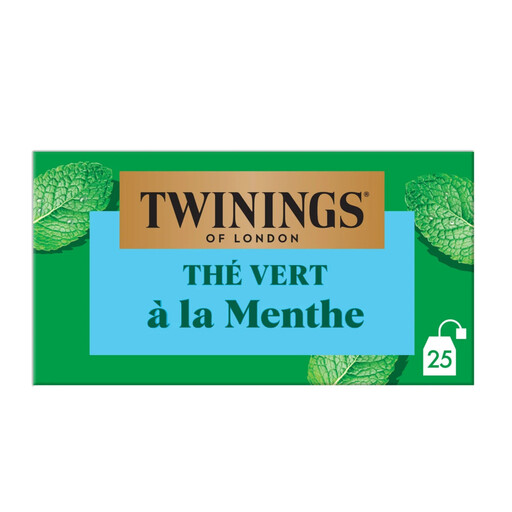 Image unavailable
For making individual cups at the campsite: a box of 25 tea bags, 50 g.
For this product, the Twinings listing shown by Auchan recommends brewing for 4 minutes if you want a stronger cup; this doesn’t indicate how its mint flavour compares with other recipes.
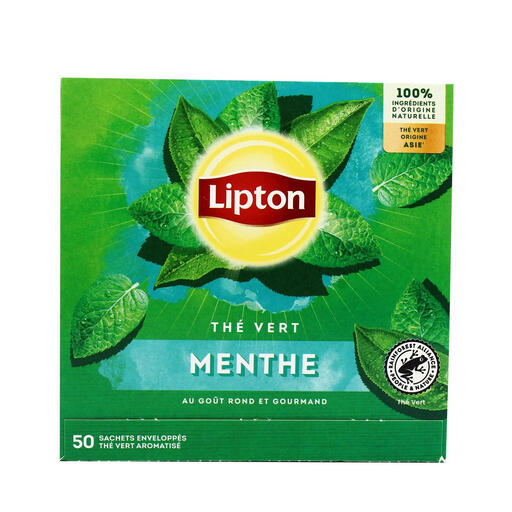 Image unavailable
For taking individual portions of mint green tea with you: a box of 50 tea bags, 80 g.
If you’re after a strong mint flavour, check the description of this variant rather than assuming it has the same characteristics as Lipton Thé Vert Menthe Intense.
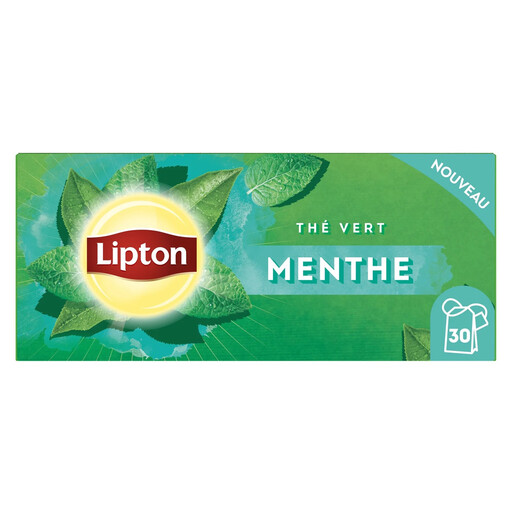 Image unavailable
For making tea one cup at a time at the campsite: a box of 30 tea bags, 48 g.
The format doesn’t tell you how strong the flavour is; compare the recipe for this variant if mint intensity is your top priority.
 Image unavailable
For making individual portions without measuring loose-leaf tea: a box of 20 tea bags.
The recipe name and number of tea bags don’t tell you how strong the mint will taste in the cup.
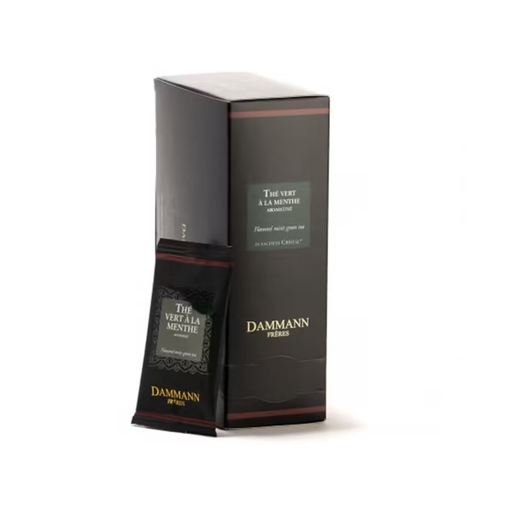 Image unavailable
For taking individual portions of mint green tea with you: a box of 24 tea bags, 48 g.
If you’re looking for a particularly pronounced flavour, check the ingredients and brewing instructions on the packaging before choosing.
Choose a recipe that suits the flavour you’re after and start by following its instructions for water quantity, temperature and brewing time. The Carrefour listing for Lipton Thé Vert Menthe Intense recommends brewing for 2 minutes in 200 ml of water at 90 °C; Twinings recommends 4 minutes for a stronger cup of its Thé vert à la menthe. Leaving the tea to brew for longer without following the instructions can also make the green tea more bitter.
Keep them dry in their sealed packaging or in a container that protects them from moisture, and store them away from heat. These precautions are in line with the instructions for Auchan Thé vert menthe extrême and Twinings Thé vert à la menthe.
Don’t assume that it is: according to the European Food Safety Authority, tea leaves naturally contain caffeine. If you’re monitoring your intake, remember to include tea as well as your other sources of caffeine.