For cups with a more pronounced green tea flavour, and to control the amount you use, choose a powder made with matcha as its only ingredient and follow the preparation instructions. A 300 g pack may suit a household that uses matcha regularly, provided you can store it as directed on the pack. An instant mix is better suited to a quick, sweet latte, but won’t necessarily give you the same result.
Who are these options for?
Families looking for an unsweetened cup of matcha
If you want to control the amount of powder rather than start with a latte mix, check that matcha green tea is the only ingredient. You can then adjust the preparation to suit your taste, following the product instructions.
Households that use matcha regularly
For drinks or recipes you make often, the total weight isn’t the only thing to consider. Check whether the powder is divided into several sachets and how it should be stored once opened.
Families who prefer quick preparation
If you’re mainly looking for an easy-to-make latte, an instant mix may suit your needs. However, it’s worth checking the ingredients, particularly for sugars and allergens.
What should you look for before buying?
First, decide between matcha powder and an instant mix. Then compare the packaging and preparation instructions, bearing in mind who’ll be drinking it.
| Criteria |
What to check |
Who is it for? |
| Ingredients and desired flavour |
The ingredients list and recommended amount: matcha powder on its own, or a mix containing ingredients such as sugar and creamer. |
If I want to taste more of the green tea without making a sweet latte, I’d prefer to control the amount of powder myself. Around 42% of consumers are said to prioritise this. |
| Pack size and storage |
The net weight, number of sachets and storage instructions once opened. |
If my household uses matcha often, I’d look for an amount we can use without leaving a pack open for too long. This is said to be the top priority for around 33% of consumers. |
| Preparation and caffeine |
The preparation instructions, sugars and allergens in any mix, and other sources of caffeine consumed. |
If several people in my household drink matcha, I want an easy-to-prepare option while bearing in mind what each person already consumes. Around 25% of consumers are said to prioritise these considerations. |
Mistakes to avoid
-
Assuming that ‘matcha’ means pure powder
A latte mix can also be sold under this name. The JENI 3-in-1 mix lists ingredients including sugar, non-dairy creamer, maltodextrin and flavouring, while the CLIPPER powder listed by Carrefour France contains only organic matcha green tea.
For an unsweetened cup where you control the amount, check the ingredients before you choose. If you’re buying an instant mix, check the sugar and allergen information too.
-
Choosing 300 g without considering how quickly you’ll use it
A larger pack is best suited to regular use. The packaging matters too: Auchan France lists the 300 g AROMANDISE powder in six 50 g sachets.
Estimate how much your household will use and check the storage instructions on the pack. If you only drink matcha occasionally, compare smaller pack sizes too.
-
Using the recommended amount for a different powder
The amount of powder, volume of water and water temperature can vary from one set of instructions to another. A description such as ‘strong’ doesn’t replace the instructions for the product you’ve bought.
Start with its preparation instructions, then adjust the amount to suit your taste. Don’t automatically follow another brand’s recipe.
-
Forgetting about other sources of caffeine
Matcha naturally contains caffeine. Anses notes that caffeine can affect sleep, among other things; the caffeine in tea adds to what you consume from other drinks and foods.
Before making stronger cups for your household, consider all your sources of caffeine and who’ll be drinking the matcha.
Brands to consider for these pack sizes
CLIPPER
Carrefour France lists 300 g of CLIPPER organic matcha powder.
- The ingredients list shown contains only organic matcha green tea powder.
- The weight of the pack alone doesn’t tell you how strong a cup will taste.
AROMANDISE
Auchan France lists 300 g of AROMANDISE organic matcha powder.
- The pack contains six 50 g sachets.
- This portioning alone doesn’t tell you how strong the flavour will be.
LOYD
Lidl France has listed 40 g of LOYD Japanese matcha powder.
- The smaller pack is worth considering if you’d like to try matcha or only use it occasionally.
- For frequent family-sized preparations, compare how much you’ll need and check availability at your local store.
Asia Green Garden
ALDI France lists 40 g of Asia Green Garden matcha powder.
- You can compare this size with larger packs if you’d like to start with a smaller amount.
- Check the packaging for the ingredients and preparation instructions before choosing this product.
Matcha powder on Joybuy
This 100 g pack gives you an intermediate size to compare with the 300 g packs mentioned for regular family use. If you’re looking for matcha with no added ingredients, check the ingredients list before buying.
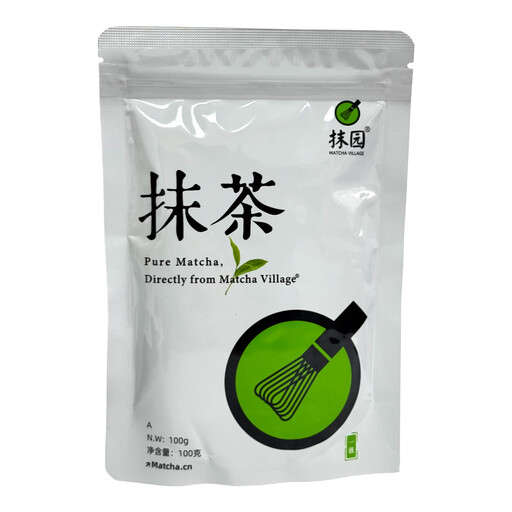 Image unavailable
Matcha Village matcha powder, 100 g
This 100 g pack may suit a household looking to buy less powder than in a 300 g pack. For an unsweetened cup with a stronger flavour, check the ingredients and the recommended amount on the packaging.
View on Joybuy
Frequently asked questions
How do I choose a powder for a stronger-tasting cup of matcha?
First, check that the ingredients match the drink you want, then adjust the amount according to the product instructions. A powder made entirely from matcha lets you control the amount, unlike a latte mix that already contains other ingredients. The word ‘strong’ doesn’t guarantee a measured level of intensity.
Can I use the same amount for all matcha powders?
No. Start with the instructions for the product you’ve bought. For example, the 110 GRAINES product listing from Auchan France recommends around 2 to 4 g of powder in 50 ml of water at 70 °C. This amount doesn’t apply to all powders.
Is a strong cup of matcha suitable for everyone in the household?
Not necessarily. Matcha contains caffeine, so it’s important to consider other sources consumed throughout the day. Anses notes that caffeine may affect sleep, among other things. So you shouldn’t assume the same preparation is suitable for everyone simply because they like the taste.


