When choosing a strong iced coffee for an older adult, don’t assume that a more intense flavour means more caffeine: according to Nespresso, the two don’t necessarily go hand in hand. Compare the sugars and other nutritional values per 100 ml, check whether it contains milk, and consider how much is actually served. If keeping track of caffeine is important, look for a stated amount per serving rather than relying on the word “strong”.
Who is this choice for?
Older adults keeping an eye on caffeine
You enjoy a strong flavour but want to know how much caffeine you’re consuming, particularly if sleep is a concern. The Anses notes that the effects of caffeine on sleep vary with age; the stated intensity doesn’t tell you how much caffeine a drink contains.
Carers comparing sugar content
You’re choosing a drink that’s easy to serve and want to know how much sugar is in the amount actually consumed. The sugar listed per 100 ml won’t necessarily reflect the amount in a whole bottle.
Shoppers checking for milk
You’re distinguishing between lactose intolerance and an allergy to milk proteins. A drink labelled “lactose-free” may still contain milk, so check the storage instructions after opening too.
What should you check before buying?
First, choose between a ready-to-drink beverage and coffee that you brew and chill yourself. If caffeine content matters to you, check that next. Then compare the nutrition information and ingredients in relation to the amount you’ll serve.
| Criteria |
What to check |
Who it matters to |
| Strong flavour and caffeine |
If you need to know the caffeine content, look for an amount in mg per serving; don’t try to infer it from the stated intensity. |
If I’m looking for a strong flavour while keeping an eye on my caffeine intake, intensity alone isn’t enough to help me choose. Around 39% of consumers would make this their top priority. |
| Sugars and serving size |
Compare the sugars and other nutritional values per 100 ml, then work out how they relate to the amount actually consumed. |
When I serve a milky coffee drink, I want to distinguish between the amount poured and the values shown per 100 ml. Nearly 38% of consumers would make this comparison their top priority. |
| Milk and storage |
Check the ingredients and allergens, then read the storage instructions for after opening, especially if you’re buying a larger pack. |
If milk is a concern or the bottle will be consumed over several servings, I check that it’s suitable for this use. This would be the main concern for around 23% of consumers. |
Common pitfalls to avoid
-
Assuming “intense” means “more caffeine”
According to Nespresso, intensity describes sensations such as how a coffee feels in the mouth, and doesn’t tell you the caffeine content on its own.
Choose a flavour profile that suits your taste. If caffeine is a deciding factor, look for the amount in mg per serving or ask the manufacturer for this information.
-
Treating a large bottle like a cup
Nutritional values are given per 100 ml. According to Auchan’s product information for Carte Noire cappuccino, its 8.8 g of sugars per 100 ml amounts to 66 g if you drink the entire 750 ml bottle.
Calculate the values for the amount actually served, rather than for the whole container or just 100 ml.
-
Confusing “lactose-free” with “dairy-free”
The Starbucks Caffè Latte with reduced sugars listed by Auchan contains 0.01 g of lactose per 100 ml, but it still contains milk.
Check the ingredients and allergens: avoiding lactose and having an allergy to milk proteins don’t call for the same choice.
-
Forgetting how long it keeps after opening
For its 75 cl Carte Noire cappuccino, Auchan advises keeping it in the fridge and consuming it within three days of opening.
If the drink will only be served occasionally, choose a pack size that suits the amount you expect to use, and follow the instructions on the container you buy.
With a large bottle, some of the drink may be left over once the stated time limit has passed.
Brands to consider
Carte Noire
The range includes a ready-to-drink coffee cappuccino, available in a 750 ml bottle, among other formats, according to Auchan.
- Auchan’s product information lists 3.5 g of protein and 8.8 g of sugars per 100 ml for the cappuccino reviewed.
- This drink contains milk. Even if it tastes strong, that doesn’t tell you how much caffeine it contains per serving.
Starbucks
The brand offers ready-to-drink iced Caffè Latte, including a reduced-sugar version listed by Auchan.
- For this version, Auchan lists 3.9 g of sugars and 0.01 g of lactose per 100 ml.
- The version reviewed still contains milk: “lactose-free” doesn’t mean “dairy-free”.
Coffee to brew and chill
These Carte Noire coffees are designed to be prepared at home before serving chilled. They aren’t a substitute for a ready-to-drink iced coffee: you’ll need to prepare, portion and chill them yourself.
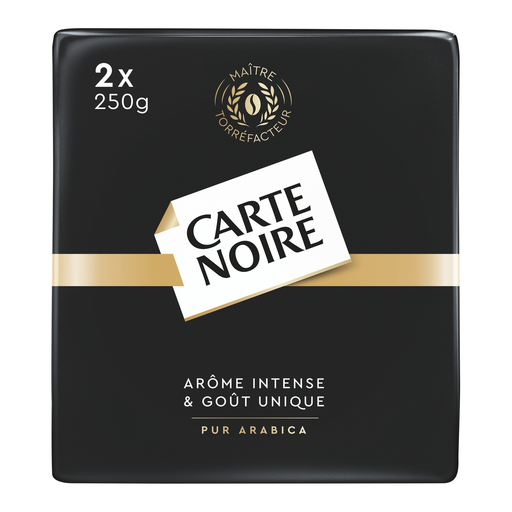 Image unavailable
Carte Noire Classic ground coffee, 2 × 250 g
You can adjust how much ground coffee you use when making coffee at home to chill. However, the resulting flavour won’t tell you how much caffeine is in each cup.
View on Joybuy
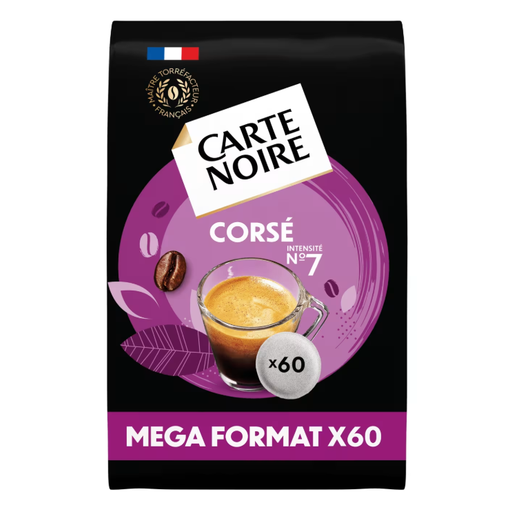 Image unavailable
Carte Noire Corsé N°7, 60 coffee pods
If you’re making a cup to chill, check that the pods are compatible with your machine, particularly if you use a Senseo. N°7 is the product’s intensity rating, not a caffeine amount in mg per cup.
View on Joybuy
Frequently asked questions
Does an “intense” iced coffee necessarily contain more caffeine?
No. According to Nespresso, flavour intensity doesn’t necessarily indicate caffeine content. To compare caffeine, you need a stated amount per serving rather than a description such as “strong” or “intense”.
Can iced coffee count towards an older adult’s fluid intake?
Yes. Manger Bouger lists coffee and milk as possible drinks for adults over 75. For a milky coffee drink, also consider its ingredients and how much is served. If there’s an individual recommendation on fluid intake, make sure to follow it.
How do you compare two pre-packaged iced coffees?
First compare their nutritional values on the same basis, per 100 ml, then calculate what they amount to for the serving you have in mind. The DGCCRF states that nutritional information is given per 100 g or 100 ml, and allergenic ingredients must be highlighted.
Does the 400 mg daily caffeine guideline apply to all older adults?
No. The EFSA gives this guideline for the general adult population, taking all sources into account; it isn’t an amount to apply automatically to someone with a medical condition or taking medication. If you have questions about an individual’s caffeine intake, ask a healthcare professional for advice.


