
Livraison le jour même ou le lendemain

Qualité garantie

Débloquez vos offres de bienvenue: Livraison GRATUITE | Jusqu'à -80 % | 30 jours d'essai gratuits à JoyPlus
Téléchargez l'application
A strong glue isn't necessarily suitable for every surface. A cyanoacrylate glue can quickly repair a small broken piece, while a wall adhesive needs to stay flexible enough to accommodate the movement of the substrate. Relying solely on labels like "super glue" or "all-purpose adhesive" can therefore lead to a weak repair, visible marks, or a tube that dries out after just a few uses.
Before you buy, check three things: compatibility with the materials, the application method, and the level of strength you need. That way, you'll be able to tell the difference between an instant glue meant for small repairs and a construction adhesive designed for a panel, skirting board, or decorative element.
A cyanoacrylate glue can bond in seconds. That doesn't mean the object can immediately bear a heavy load, withstand impacts, or come into contact with water. Maximum strength depends on the formula, the surface, and the curing time.
For a household repair, hold the pieces in place according to the manufacturer's instructions and let the glue cure fully before putting the assembly under stress. An instant glue is best suited to small, perfectly fitting surfaces with very little gap between the pieces.
This claim deserves a closer look. Many strong glues will bond to wood, metal, ceramic, rubber, or certain plastics, but they remain incompatible with polyethylene (PE), polypropylene (PP), and PTFE, also known as Teflon.
For gluing plastic, check the precise list of compatible materials. If the type of plastic isn't clearly identified, test the glue on an inconspicuous area first.
A liquid glue without a precision nozzle is likely to overflow on a small piece. Conversely, a 20 g tube isn't always the best choice for a one-off repair: its contents can dry out before the next use.
Single-dose formats, controlled-flow bottles, and pen applicators help reduce waste. For craft projects, a fine nozzle also makes it easier to apply glitter glue or create small decorative details.
Start by identifying the two surfaces you need to join:
The surface must be clean, dry, dust-free, and degreased. Light sanding can improve adhesion on some materials, but avoid damaging fragile surfaces.
A precision glue with a long nozzle is ideal for fine cracks, jewellery, models, and hard-to-reach areas. A liquid formula penetrates narrow gaps, while a gel glue holds better on a vertical surface.
For craft activities, choose a washable craft glue if needed. Water-based formulas designed for paper and cardboard are not intended to bear heavy loads or withstand prolonged immersion.
The label water-resistant glue doesn't necessarily mean the bond can be immersed immediately. Check whether this resistance is stated after full curing and whether the product is suitable for the dishwasher, damp environments, or outdoor use.
For a wall fixing, also check whether the element can be repositioned, the time to wait before applying a load, and the stated temperature range. A construction adhesive cartridge may need up to 24 hours to reach its final strength.
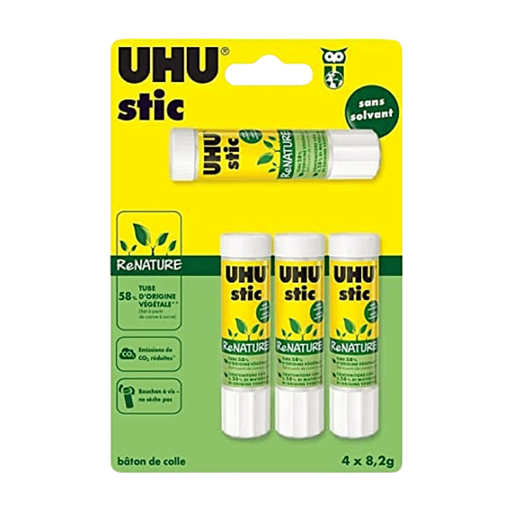
Why this choice suits this profile: this pack of four sticks is ideal for homework, the office, and craft activities on paper or cardboard. Its format is practical for regular use around the house.
The formula is clearly intended for porous surfaces and doesn't claim to be a universal fix. This stops you from using a school glue on metal or plastic.
Pack of 4 sticks of 8.2 g, solvent-free formula, washable in cold water, and made from 98 % naturally derived ingredients according to the product information.
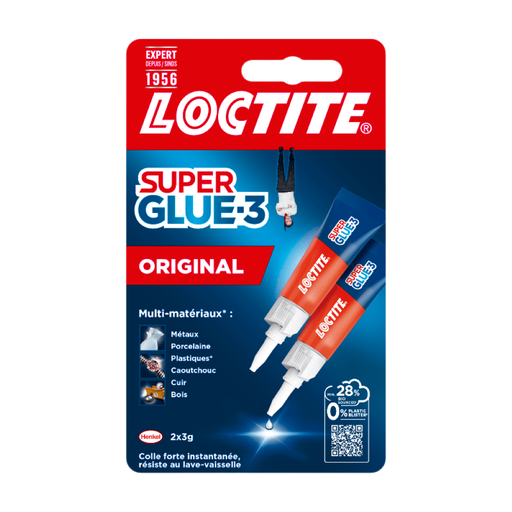
Why this choice suits this profile: the two 3 g tubes cover common household repairs: ceramic, porcelain, wood, rubber, leather, and certain plastics.
The product page clearly lists the incompatible materials: PE, PP, and PTFE. This information helps you avoid the classic mistake of believing an "all-purpose" glue is truly universal.
Clear finish, precise application, and water and heat resistance stated by the manufacturer after full curing.
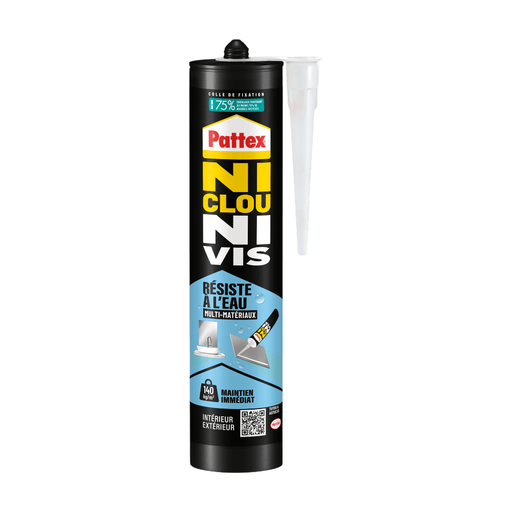
Why this choice suits this profile: this 450 g cartridge is designed for wall fixings, skirting boards, lightweight shelves, and decorative elements, both indoors and outdoors.
This is a flexible construction adhesive, not a small instant glue. The repositioning window and the stated 24-hour curing time are clearly indicated.
Solvent-free formula, stated resistance to moisture, water, and temperature variations from -30 °C to +80 °C. Application with a cartridge gun.
We've put together a comprehensive, real-time updated selection of products that meet these demanding criteria and comply with European safety regulations.
Start by identifying the type of plastic. A specialist glue may be needed for difficult surfaces. PE, PP, and PTFE are regularly excluded from standard cyanoacrylate glues. If the surface is unknown, do a discreet test and check the manufacturer's product page.
Some products state water resistance after full curing, but the level of protection varies depending on the formula. A clear glue intended for small repairs may not be suitable for the same uses as a moisture-resistant wall adhesive. Follow the recommended drying time before any contact with water.
Clean the nozzle, close the container immediately, and store it in a cool, dry place away from heat and direct light. To reduce waste, choose a small tube or individual doses if you only do occasional repairs.