What should you look for?
When shopping for a household that includes an older person, consider coffee’s place in their diet, the flavour they prefer, their caffeine tolerance and the format their machine can use.
| What matters |
What to check |
Who this applies to |
| Coffee’s place in the diet |
Check the ingredients and remember that a coffee pod is not a snack. Manger Bouger notes that the nutritional needs of people over 75 do not necessarily decrease. |
If I’m shopping for an older person whose food intake concerns me, I don’t want a strong cup of coffee to stand in for a meal or snack. Around 36% of consumers prioritise this distinction. |
| Flavour and compatibility |
Identify the machine system, then look for an explicit compatibility statement: Senseo, ESE and capsules are different formats. Then choose the flavour profile. |
I’d like a full-flavoured cup, but the pod must work with the household machine first; around 29% of consumers put this need first. |
| Caffeine tolerance |
Don’t infer caffeine content from an intensity rating. If you’re looking for an alternative, check for the word ‘decaffeinated’. If medication is involved, seek advice suited to the individual. |
If sleep or my sensitivity to caffeine affects my choice, I want to keep the coffee ritual without relying on the word ‘strong’. Caffeine tolerance is the priority for around 21% of consumers. |
| Pack size and packaging |
Compare the number of pods with how often they’re used, and check the packaging’s recycling instructions. Composting options depend on the material and local facilities. |
For regular shopping, I prefer a pack size that suits the household and recycling instructions I can follow; around 14% of consumers prioritise this practical consideration. |
Pods to consider on Joybuy
These options are for Senseo machines: three are described as strong or full-bodied, while the fourth is decaffeinated. Always check the compatibility of the product you choose; a full-bodied profile doesn’t tell you how much caffeine it contains.
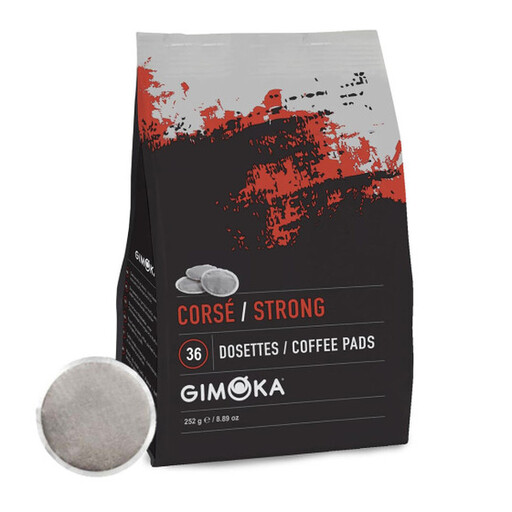 Image unavailable
GIMOKA Strong, compatible with Senseo, 36 pods, 252 g
Worth considering if you have a Senseo machine and are looking for coffee described as strong in flavour.
The pack contains 36 pods and weighs 252 g. A strong flavour description doesn’t tell you how much caffeine the coffee contains.
View on Joybuy
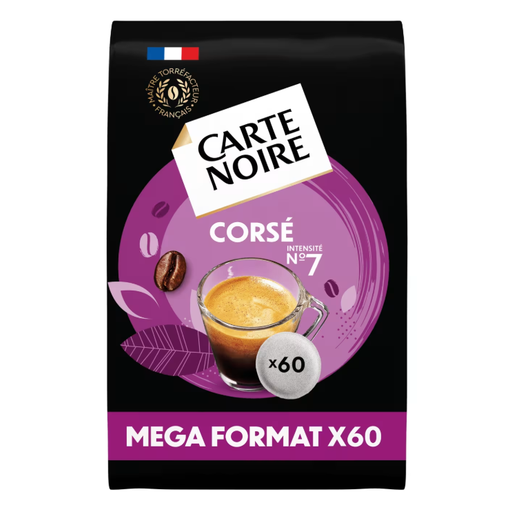 Image unavailable
Carte Noire Corsé N°7, 60 pods
For someone looking for the Corsé N°7 profile in a pack of 60 pods, provided they first check which system their machine accepts.
The intensity number indicates flavour, not caffeine content.
View on Joybuy
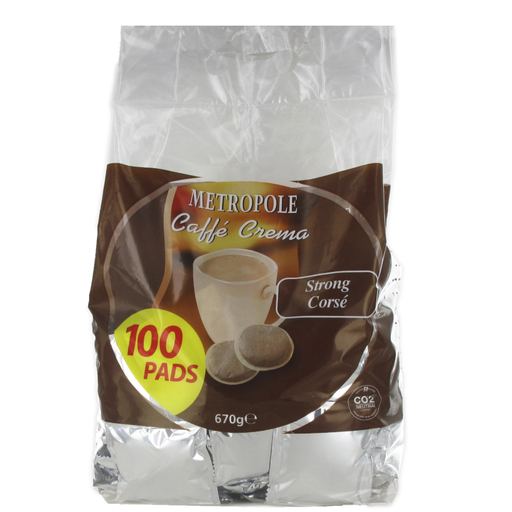 Image unavailable
METROPOLE Strong for Senseo, 100 pods
This pack size may suit a household with a Senseo machine that regularly uses pods described as strong in flavour.
The pack contains 100 pods. ‘Strong’ describes the flavour profile, not the amount of caffeine.
View on Joybuy
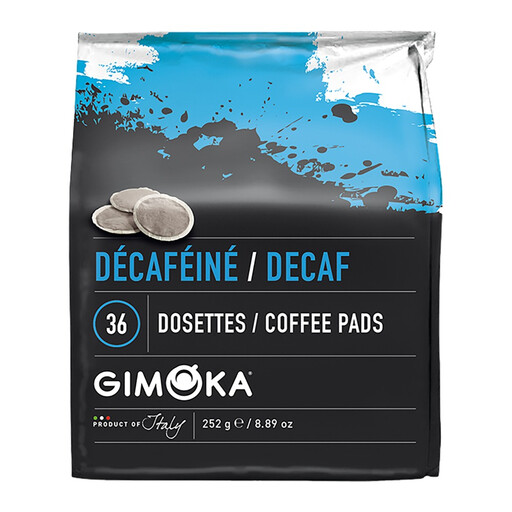 Image unavailable
GIMOKA Decaffeinated, compatible with Senseo, 36 pods, 252 g
This decaffeinated option may be worth considering for a household with a Senseo machine that wants to take caffeine into account; it isn’t described as a strong variety.
The pack contains 36 pods and weighs 252 g. If the amount of residual caffeine matters to you, check it before choosing.
View on Joybuy
Frequently asked questions
Does an extra-strong coffee pod always contain more caffeine?
No. ‘Extra strong’ describes the flavour profile, not the amount of caffeine. Carte Noire explains that intensity doesn’t indicate how likely the coffee is to keep you awake. If caffeine content determines your choice, look for information that measures it directly.
Can strong coffee replace a snack for an older person?
No. A cup of coffee isn’t a substitute for a suitable snack or meal. Manger Bouger notes that nutritional needs don’t necessarily decrease after the age of 75, and some may increase. If someone is finding it difficult to eat, discuss this separately with a healthcare professional.
What should you do if coffee seems to affect sleep or the person is taking medication?
Don’t rely on a pod’s intensity to judge its caffeine content. Anses says caffeine can delay falling asleep and reduce the length or quality of sleep. If medication or a medical condition is involved, ask a doctor or pharmacist for advice. Depending on the circumstances, a decaffeinated option may also be worth considering.
How can you tell a Senseo pod from an ESE pod?
Check the compatibility information on the pack and in the machine’s manual: ESE and Senseo are different formats. Carte Noire sells ESE pods, while Carrefour separately lists Carte Noire Corsé pods described as compatible with Senseo machines.
Can paper pods or capsules be composted?
It depends on the product and the collection options available. ADEME says that paper capsules can be composted at home or taken to a suitable local collection scheme where one exists. Check the recycling instructions on the specific pack before disposing of them.


