
Livraison le jour même ou le lendemain

Qualité garantie

Débloquez vos offres de bienvenue: Livraison GRATUITE | Jusqu'à -80 % | 30 jours d'essai gratuits à JoyPlus
Téléchargez l'application
A DIY project that ends in disaster, a precious object that breaks again right after being repaired… The culprit is often the same: the wrong strong adhesive. When faced with shelves promising the world with slogans like "instant grab" and "extreme strength," it's easy to make a mistake. As a product expert at Joybuy, my mission is to help you see more clearly and navigate the marketing traps to find THE adhesive solution you need.
The problem isn't always the quality of the glue, but its suitability for your project. Here are the two most common mistakes that lead to a failed bond:
To ensure you never make a mistake again, focus on three essential parameters that will determine the success of your bond.
Before even looking at strength, the question is: are the materials you want to join compatible with the adhesive?
Not all strong adhesives serve the same purpose.
The packaging is a practical criterion that should not be overlooked.
Also, pay attention to the setting time (the time before you can handle the object) and the full cure time (the time to reach maximum strength).
To help you find the right product for the right job, here are our recommendations, each tailored to a specific need.
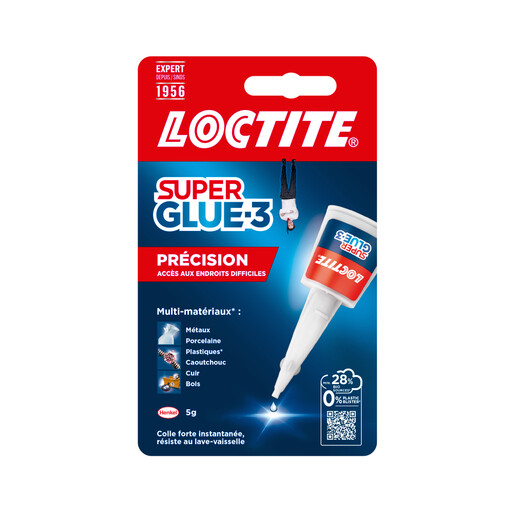
Why we chose it: For small, everyday repairs (broken mug, damaged toy, detached shoe sole). This is THE glue to always have in a drawer for a quick and effective fix on a multitude of common materials.
Its long, fine nozzle allows for drop-by-drop application, preventing overflows and waste—a common problem with classic tubes on small surfaces.
Resists water and is dishwasher-safe once cured, ensuring the durability of repairs on dishes or objects exposed to moisture.
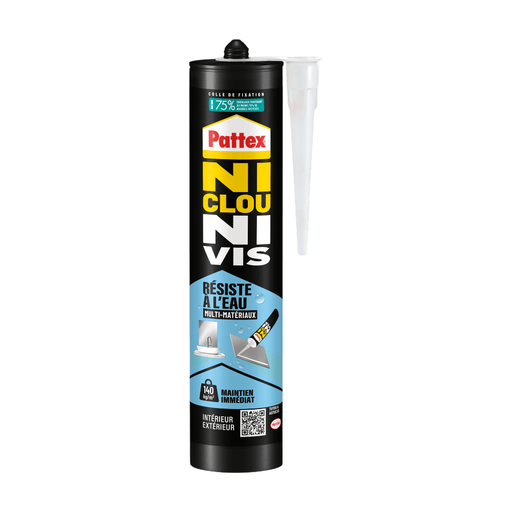
Why we chose it: Ideal for indoor and outdoor renovation projects: mounting skirting boards, battens, mailboxes, or heavy decorative elements. The cartridge format is economical for large surfaces.
Unlike an instant glue, its strong initial grab remains repositionable for 10 minutes. This helps prevent irreversible positioning errors on large-scale projects.
Its Flextec formula resists water, UV rays, and temperatures from -30°C to +80°C, ensuring a durable bond outdoors or in humid rooms like the bathroom.
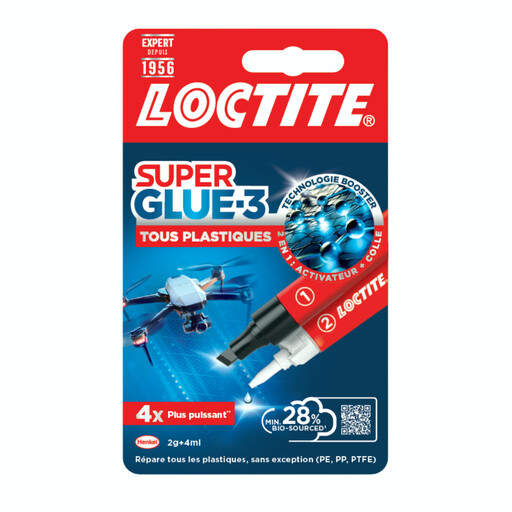
Why we chose it: This is the solution for repairing plastic objects that seem impossible to glue: car accessories, electronics, children's toys... It is specifically designed for engineered plastics.
It directly tackles the myth of the "universal" glue that fails on PE and PP plastics. The activator pen prepares the surface, allowing the cyanoacrylate adhesive to bond where others fail.
The 2-in-1 system (activator + glue) ensures a strong, transparent, and durable repair on all types of plastics, without exception, for a clean and nearly invisible result.
We have compiled a complete list of products that meet our demanding selection criteria.
Super glue (cyanoacrylate) is a single-component adhesive that cures very quickly upon contact with air moisture. It is perfect for fine, rapid bonds. Epoxy adhesive is a two-part system (resin and hardener) that, once mixed, creates an extremely robust structural bond. It is slower to cure but can fill large gaps, rebuild material, and offers superior mechanical and chemical resistance.
Yes, in many situations, drill-free mounting is a reliable solution, provided you follow certain rules. Mounting adhesives can support heavy loads, but it is crucial to check the maximum load indicated by the manufacturer and ensure the surfaces are clean, dry, and not crumbly. For non-porous surfaces or removable fixtures, specific double-sided tapes are very effective, but their load capacity is generally more limited.
For super glue on the skin, avoid pulling. Use warm, soapy water or a greasy substance (oil, butter) to soften the glue, then gently peel it off. On objects, acetone (found in some nail polish removers) is often effective, but test it on an inconspicuous area first as it can damage some plastics or varnishes. For mounting adhesives, fresh residue can be removed with a damp cloth. Once cured, it must generally be removed mechanically (with a scraper or cutter blade).