
Livraison le jour même ou le lendemain

Qualité garantie

Débloquez vos offres de bienvenue: Livraison GRATUITE | Jusqu'à -80 % | 30 jours d'essai gratuits à JoyPlus
Téléchargez l'application
A broken object? A baseboard coming loose? A DIY project to assemble? The first instinct is often the same: grab a tube of strong adhesive. Yet, when faced with shelves overflowing with promises of "extreme bonding" and "instant grab," it's easy to make a mistake. You walk away with an unsuitable product that will never live up to its claims.
As the Head of Product Recommendations at Joybuy, my mission is to help you see things more clearly. Let's break down the marketing traps and the essential criteria for making the right choice. Whether it's for a small everyday repair or a more ambitious mounting project, you'll know exactly which adhesive to buy.
Choosing an adhesive shouldn't be taken lightly. The wrong choice can lead to a failed repair, a damaged surface, and ultimately, a waste of time and money. Here are the most common pitfalls.
To make an informed choice, you need to take a closer look at the adhesive's technology and its intended use. Here are the three key parameters to check.
The term "strong adhesive" is a catch-all that covers several families of products with very distinct properties.
This is the number one criterion. Always check the packaging to ensure the adhesive is compatible with the materials you need to join. Be careful with plastics: many standard adhesives are ineffective on polyethylene (PE), polypropylene (PP), or PTFE (Teflon).
Will your bond be indoors or outdoors? Will it be exposed to moisture, temperature fluctuations, or vibrations?
Rather than searching for a miracle solution, it's better to choose an adhesive tailored to a specific need. Here are our recommendations for the most common situations.
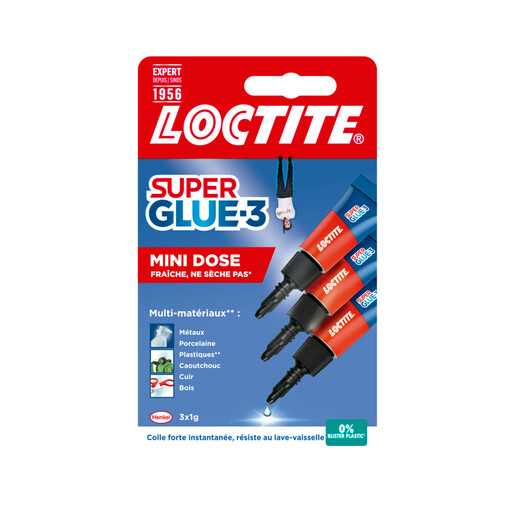
Why we chose it: The perfect solution for a broken mug handle or a rigid plastic toy that needs to be fixed on the spot. The single-use format solves a problem everyone is familiar with: the tube of super glue drying out after just one use.
This format prevents waste and guarantees a fresh, effective adhesive every time, unlike larger tubes that inevitably end up in the bin half-full.
Near-instant bond on many materials (porcelain, wood, leather, rubber). Good resistance to water and heat.
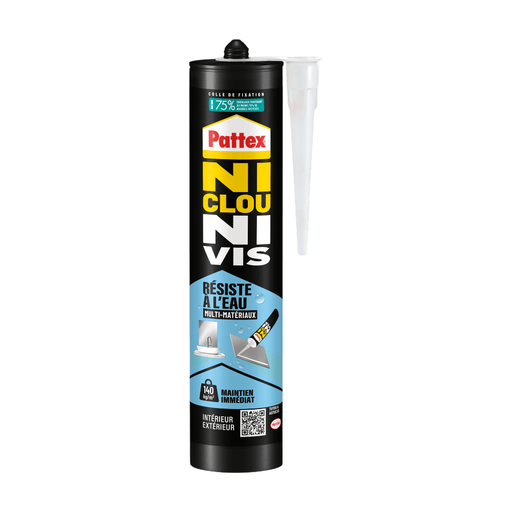
Why we chose it: For all DIYers who want to hang decorative items, a towel rack, or a small shelf without taking out the drill and wall plugs. Its water resistance makes it ideal for high-moisture areas like the bathroom or kitchen.
This adhesive is designed to bear weight and compensate for minor surface imperfections where a liquid glue would be ineffective. It remains repositionable for a few minutes, which helps prevent critical application errors.
Flextec technology for indoor/outdoor use. High initial grab and good resistance to moisture and UV rays.
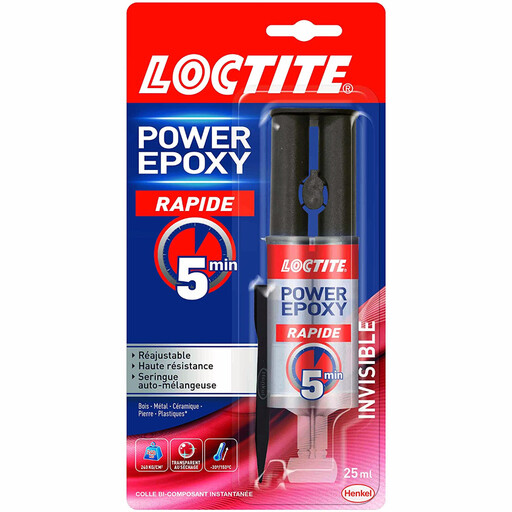
Why we chose it: For demanding repairs where strength is the top priority. Ideal for rebuilding a missing part, bonding metal to stone, or repairing an object with irregular surfaces. The self-mixing syringe greatly simplifies use.
This epoxy adhesive provides the structural strength and gap-filling power that a cyanoacrylate glue lacks, as the latter is too brittle and cannot fill voids.
Sets in 5 minutes, has a transparent finish, and once cured, it resists water, oil, and common solvents.
We have compiled a complete selection of products that meet our selection criteria and current regulations.
It all depends on the adhesive. A super glue reaches handling strength in a few minutes. Conversely, a construction adhesive or an epoxy may require 24 hours for a full cure and maximum strength, even if the initial grab is fast. The rule of thumb: always read the manufacturer's instructions to find out the full curing time.
For many indoor applications (baseboards, mouldings, frames, small decorative objects), a good construction adhesive is an excellent alternative that is cleaner and simpler than mechanical fastening. However, for heavy loads or critical fixtures (a suspended kitchen cabinet, for example), screws and wall plugs remain the only safe solution to consider.
For cyanoacrylate glue (super glue) on the skin, the simplest and safest method is to soak the area in warm, soapy water and gently peel it apart, never forcing it. Acetone (found in some nail polish removers) can also help, but use it with extreme caution. For other adhesives, it's best to clean up spills before they dry with a damp cloth or the solvent recommended by the manufacturer. Once the adhesive has cured, removal often becomes mechanical (scraping, sanding).