
Livraison le jour même ou le lendemain

Qualité garantie

Débloquez vos offres de bienvenue: Livraison GRATUITE | Jusqu'à -80 % | 30 jours d'essai gratuits à JoyPlus
Téléchargez l'application
Working out at home has become a go-to option for anyone looking to build strength and muscle mass. Say goodbye to restrictive gym hours, crowded spaces, and budget-draining memberships. But when faced with a jungle of available options, choosing the right strength training equipment can quickly become a headache.
This guide is here to help you make sense of it all. We'll break down the essential criteria to consider and present a selection of products suited for every profile, whether you have an entire garage or just a corner of your living room. Our goal: to give you all the keys to make the right choice and bring your home gym project to life.
Before you dive in, it's crucial to define your needs. Here are the key points to consider to find the fitness machine that's truly right for you.
First things first: get out the tape measure! Precisely measure the space you can dedicate to your equipment. A simple removable pull-up bar requires almost no floor space, while a complete power tower will demand significant floor space and ceiling height. Also, think about versatility: a machine that can target multiple muscle groups (back, chest, arms, legs) is often the smartest investment for a full-body workout.
Your personal goals will dictate the type of equipment you should prioritize. A beginner looking to get familiar with basic movements can start with simple equipment. Conversely, an advanced athlete aiming for mass gain will naturally lean towards a sturdy weight bench capable of handling heavy loads, or a power tower for more demanding bodyweight exercises.
When it comes to safety, there's no room for compromise. It's non-negotiable. Always check the maximum load capacity of the equipment, which must cover both your body weight and the weights you plan to lift. Ensure the structure is perfectly stable, made from durable materials like steel, and that the adjustment and locking mechanisms feel secure.
To move from theory to practice, here is our selection of three pieces of equipment that meet very different needs and space constraints.
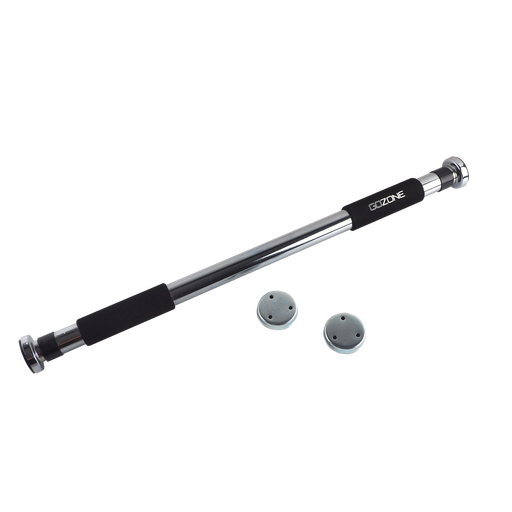
Why this model stands out: This pull-up bar shines with its simplicity and practicality. Its screw-free mounting system allows you to install and remove it in seconds on most standard door frames. It's the ideal solution for working your upper body without sacrificing a single square foot.
Pros:
Who is it for? Ideal for beginners, people living in apartments or rentals, and anyone looking for a budget-friendly and ultra-compact solution to build back and arm strength.
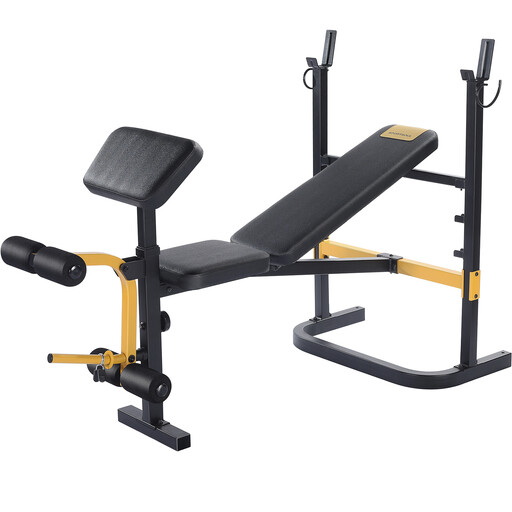
Why this model stands out: This 2-in-1 model combines a weight bench and a squat rack. Its sturdy alloy steel frame and high versatility make it a true mini home gym. It allows you to work the entire body with free weights (barbell and dumbbells not included).
Pros:
Who is it for? For intermediate to advanced users who have a dedicated space and want to get serious with heavy weights. The perfect tool for building overall strength and muscle mass.

Why this model stands out: This power tower, or dip station, is the Swiss Army knife of bodyweight training. It combines a multi-grip pull-up bar, dip bars, push-up handles, and a foldable bench into a single frame, offering a simply staggering variety of exercises.
Pros:
Who is it for? For fans of bodyweight training (calisthenics) and anyone looking for an ultra-comprehensive fitness machine for functional training, without the clutter of dozens of weights and dumbbells.
This selection is, of course, just a glimpse of the possibilities for equipping your home gym. Every athlete is unique, as are their needs, and the possible setups are nearly endless.
If you want to explore a wider range of equipment, such as dumbbells, kettlebells, or other types of bars, feel free to browse our complete category dedicated to training bars.
To get started, there's no need to empty your bank account for a professional setup. A door-frame pull-up bar, a few resistance bands, and, if your budget allows, a pair of adjustable dumbbells form a perfect foundation for mastering fundamental movements and starting to build strength.
Not necessarily. It all depends on the equipment you're considering. Solutions like door-frame bars or foldable benches are specifically designed for small spaces. The key step before any purchase: measure your available area and compare it to the product's dimensions (length, width, height).
A power tower isn't a mandatory step, but it's a fantastic progress accelerator. It centralizes numerous exercises into a single machine, thereby optimizing the time and efficiency of your sessions. For those who are serious about their home gym project, it's a very smart investment for long-term progress.