
Livraison le jour même ou le lendemain

Qualité garantie

Débloquez vos offres de bienvenue: Livraison GRATUITE | Jusqu'à -80 % | 30 jours d'essai gratuits à JoyPlus
Téléchargez l'application
By the Joybuy Editorial Team – Published July 14, 2026
A great picture catches the eye, but flawless sound captivates the audience. For any content creator, whether on Twitch, YouTube, or a podcast, audio quality is non-negotiable. Poor sound will make your audience tune out, no matter how engaging your content is.
With an overwhelming number of options available, finding the right streaming microphone can quickly become a headache. This guide is here to cut through the noise, offering clear benchmarks and concrete recommendations to help you find the perfect gear for your needs and budget—without drowning you in technical jargon.
Before diving into our top picks, let's review the key points that will guide your decision.
This is the first decision to make, and it depends entirely on your use case.
The polar pattern defines the microphone's area of sensitivity. For solo streaming and content creation, a cardioid (or even supercardioid) pattern is the most suitable. It focuses on the sound source directly in front of it (your voice!) while rejecting as much background noise from the sides and rear as possible. This is the secret to an effective PC mic with noise reduction: isolating your voice from keyboard clicks or room reverb.
Your needs will differ depending on whether you're a streamer, podcaster, or mobile videographer.
Now for our selection: three models that stand out from the crowd and cater to very different creator profiles.
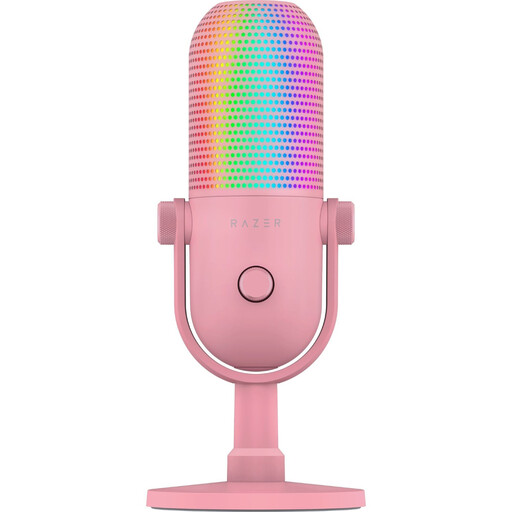
Why It Stands Out
The Razer Seiren V3 Chroma combines sleek aesthetics with top-tier audio performance. Its Quartz Pink finish and responsive RGB lighting make it a centrepiece that enhances any setup, while its technology ensures precise vocal capture, tailored for the demands of streaming.
Highlights
Who is it for?
For streamers and gamers who want a USB mic for their PC or Mac that is as stylish as it is powerful, and for whom setup aesthetics are non-negotiable.

Why It Stands Out
The DJI Mic 3 is a cutting-edge wireless solution designed for versatility and the most demanding setups. Its ability to manage multiple transmitters and receivers, along with its intelligent gain control, makes it a formidable tool for interviews, multi-person podcasts, or on-the-go shoots.
Highlights
Who is it for?
For content creators, whether solo or in a team, who require a flexible, scalable, and rock-solid wireless audio system for their professional productions.
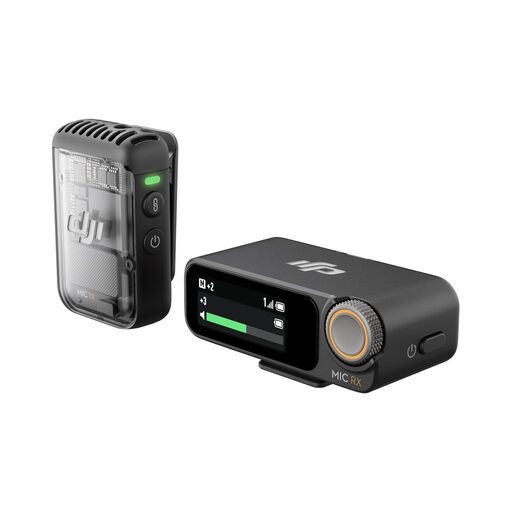
Why It Stands Out
The DJI Mic 2 is the epitome of the smart, compact wireless mic. Designed for mobility, it features effective noise reduction and a discreet magnetic attachment system, making it ideal for vlogs and on-the-fly interviews.
Highlights
Who is it for?
For vloggers, journalists, and on-the-go YouTube creators looking for a lavalier mic for a smartphone or camera that is discreet, high-performing, and incredibly simple to use in the field.
Our selection highlights a few gems, but the world of audio is vast. If you haven't found the right microphone for you or want to explore other types of equipment like boom arms, pop filters, or audio interfaces, feel free to browse our catalogue.
Discover our full range of microphone accessories and find the gear that will bring your projects to life.
A USB mic is an all-in-one device: it has its own built-in sound card and plugs directly into a USB port. It's simplicity itself—the famous plug-and-play. An XLR mic, on the other hand, must be connected to an external audio interface or a mixing desk. This is the professional solution, offering far greater flexibility and control, not to mention the ability to use very long cables.
Absolutely. Many gaming mic models offer audio quality that is more than sufficient for podcasting, especially if they have a cardioid polar pattern that effectively isolates the voice. Their live-oriented features, like an instantly accessible mute button, also prove very useful during recording.
Even with the best mic in the world, a few tricks can make all the difference. Placement is crucial: position the mic about 15-20 cm from your mouth and slightly to the side to avoid 'pops' (plosives). Adding a pop filter is also almost essential. Finally, don't neglect your room's acoustics. A simple rug, thick curtains, or a few acoustic panels can work wonders to reduce echo and reverb.