
Livraison le jour même ou le lendemain

Qualité garantie

Débloquez vos offres de bienvenue: Livraison GRATUITE | Jusqu'à -80 % | 30 jours d'essai gratuits à JoyPlus
Téléchargez l'application
Streak-free cleaning products tackle a familiar problem: cloudy windows after drying, stainless steel covered in fingerprints, crockery dotted with water droplets or surfaces that remain sticky after wiping. But a formula labelled ‘residue-free’ is not necessarily suitable for every material or situation.
Before buying, it is best to identify the dirt, the surface to be treated and the application method. A glass cleaner is not chosen in the same way as dishwasher rinse aid, while a multi-surface cleaner may prove too harsh for a ceramic hob or screen.
A surface may look spotless immediately after cleaning, only for marks to appear when the light changes. These residues are often caused by using too much product, a cloth that is too wet or incomplete drying. A quick-drying formula will generally reduce wiping time, but technique matters just as much.
The term ‘multi-surface’ does not mean that a product is suitable for every material. Stainless steel, glass, induction hobs and ceramic hobs may not react in the same way to degreasers, solvents or abrasive particles. Take the time to read the label and always test the product on an inconspicuous area.
Even an effective product can leave marks if it is too concentrated or applied to a dusty surface. For windows, a clean window microfibre cloth, washed without fabric softener, will often be more effective than a paper towel that leaves lint behind. In a professional dishwasher, the dispenser setting must also take into account water hardness and the selected cycle.
Start by identifying what you mainly want to clean:
A ready-to-use spray is convenient in a flat or for occasional cleaning. In a business, restaurant or institutional kitchen, a large container reduces the need for refills and simplifies stock management. The 5 l QUANTUM Professional container, for example, is designed for automatic dishwashers and specifies a dosage of 0.2 to 0.5 ml per litre of rinse water, depending on the machine and water hardness.
Never pour a professional product into an appliance that is not designed for this type of dosage. Follow the machine manufacturer’s instructions and do not mix different cleaning products.
To prevent streaks, spray the product onto the surface or cloth, according to the instructions on the packaging. Avoid soaking screens, seals and electrical components. Formulas containing surfactants, fragrance, alcohol or preservatives may irritate the skin or eyes: keep them out of children’s reach, ventilate the room and wear gloves or eye protection when recommended on the label.
For adhesive tile stickers, use a slightly damp cloth and a mild cleaner. The Art3d panels shown below are not designed for prolonged exposure to water, particularly inside a shower.
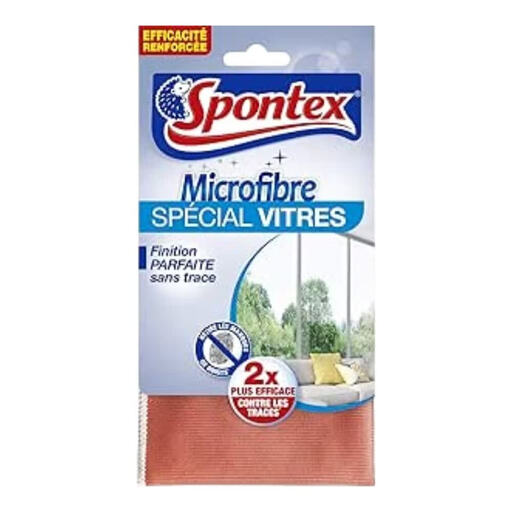
Why this choice suits this profile : This cloth can be used with water alone, so there is no need to buy a separate spray. Its 35 × 35 cm size is suitable for everyday windows, mirrors and glass surfaces.
It reduces the risk of over-application associated with spraying too generously. The manufacturer recommends machine washing at 60 °C and advises against using fabric softener.
Microfibre construction, water-only use, care at 60 °C and a design described as recyclable.
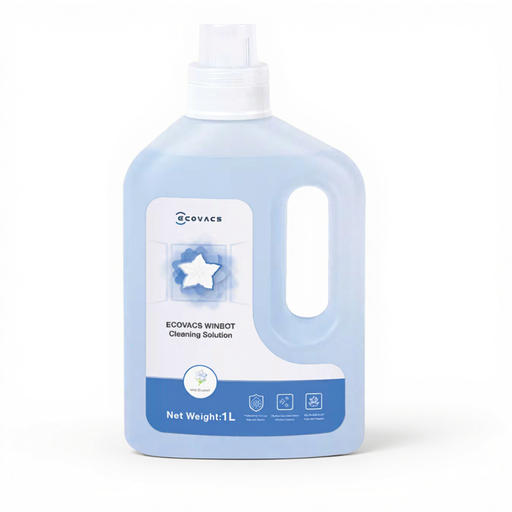
Why this choice suits this profile : This solution is intended for compatible WINBOT window-cleaning robots. It is aimed at those who want to automate the care of their glass surfaces.
Compatibility is clearly limited to the WINBOT W1 PRO, W2 and W2 OMNI models. Checking this prevents you from putting a liquid into the appliance that is not intended for it.
1 l capacity and a solution described as ready to use, with no dilution required.
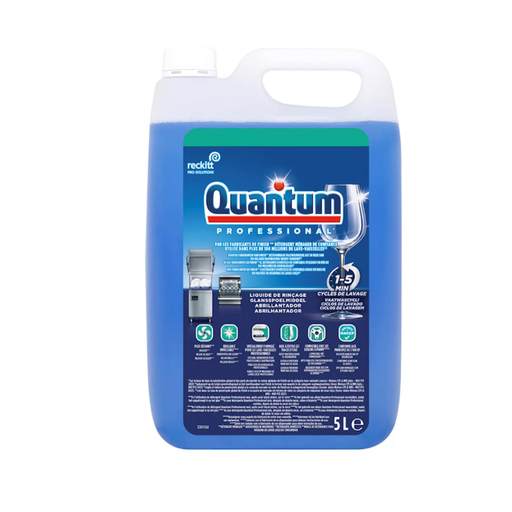
Why this choice suits this profile : Its pack size and stated dosage are aimed at hotels, restaurants and institutional kitchens equipped with a professional short-cycle dishwasher.
This product should not be poured directly onto the crockery: it must be placed in the reservoir or automatic dispenser provided by the machine.
5 l container, use with an automatic dispenser and adjustable dosage based on the water and the results achieved.
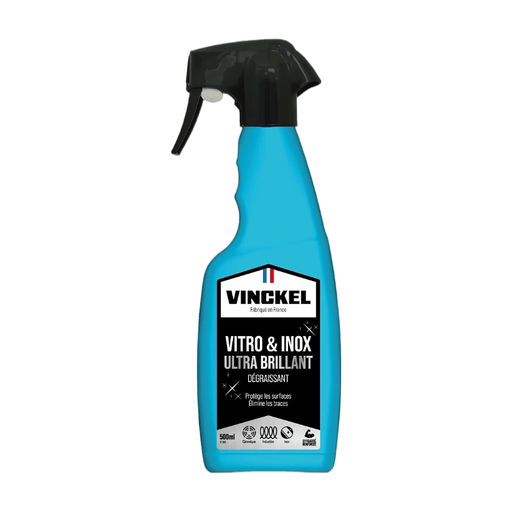
Why this choice suits this profile : It is designed for sinks, extractor hoods, taps, stainless steel appliances and ceramic or induction hobs – all surfaces that see heavy use in the kitchen.
Its product details specify the compatible surfaces and recommend using a soft cloth. However, it is still best to test it first on an inconspicuous area.
500 ml format, stated degreasing action and French manufacture with Origine France Garantie certification indicated.
A ready-to-use streak-free glass cleaner, used with a clean microfibre cloth, is generally suitable for windows and mirrors. Spray on a small amount, then wipe it off straight away. For a television or computer screen, check the manufacturer’s recommendations first.
It can help with drying and reduce water droplets on glasses and crockery, but it does not replace detergent. Its effectiveness depends on the dishwasher setting, water hardness and selected dosage. Using too much product may leave marks or affect the washing results.
Start by removing food residue, apply a product suitable for the surface, then wipe with a soft cloth. Avoid abrasive sponges and powders that are not designed for these materials. For adhesive tile stickers, wait until the stated setting time has elapsed before any wet cleaning and apply only light pressure.