Who are these formats for?

Pupils and students preparing one serving

A single-serve sachet can be handy when you’re making soup for yourself between lessons and activities. Carrefour, for example, lists Royco soup sachets that make 20 cl; check the preparation instructions for the recipe you choose.

Families stocking up for the new school year

A carton of ready-to-serve soup makes it easy to serve several portions without having to make the soup up first. Carrefour and Auchan list 1 L cartons; before opening one, think about how many people you’ll be serving and check the instructions for storing leftovers.

Households keeping an eye on ingredients

If a recipe needs to avoid certain ingredients or allergens, check each product rather than relying on its name. In France, the DGCCRF reminds shoppers that allergens in pre-packed foods must be highlighted on the label.

What should you compare?

Dried soup sachets

Choose these if: you usually prepare one serving and want to avoid opening a large container.

Bear in mind: preparation methods and serving sizes vary by sachet. Some need to be cooked rather than simply mixed with hot water.

Ready-to-serve soup in cartons

Choose this if: you want to heat soup for several people without having to make it up first.

Bear in mind: once opened, any remaining portions need to be stored and used according to the instructions on the carton.

What to consider What to check Who it matters to
Single serving Amount of soup prepared, number of sachets and preparation method. If I’m making soup for myself between activities, I want to measure out one portion without opening a large pack. Around 40% of consumers would put this need first.
Servings for the household Pack size, stated number of servings and instructions for after opening. When serving several people, I prefer to plan for the amount the household will use once the container is open. Around 30% of consumers would prioritise planning portions this way.
Recipe ingredients Ingredients, allergens and nutritional values per 100 ml of prepared soup, where these are provided on that basis. When choosing soup for a household keeping an eye on certain ingredients, the exact recipe matters more than the product name. Around 30% of consumers would make this their priority.

Mistakes to avoid

  • Assuming all store-cupboard soup comes in a tin

    Carrefour and Auchan also stock dried soups and ready-to-serve soups in cartons. They have different preparation methods and portioning requirements.

    First, check the packaging and preparation method, then compare recipes within the format that suits you.

  • Guessing the allergens from the soup’s name alone

    A recipe named after a vegetable may contain other ingredients too. The product information for a Royco pumpkin and crouton soup, for example, lists wheat, milk and celery.

    Check the ingredients list, highlighted allergens and any warnings about traces for each product you buy.

  • Relying on the printed date after opening

    The date on an unopened pack does not replace the instructions that apply once the soup has been opened. The DGCCRF says you should follow the storage conditions and time limits given for after opening.

    Check the instructions on the carton or sachet and plan to use any remaining portions accordingly.

Brands to know when comparing formats

Royco

The Royco dried soups listed by Carrefour include boxes of single-serve sachets, some of which make 20 cl of soup when prepared according to the recipe.

  • A sachet lets you prepare one serving without opening a whole carton.
  • Ingredients and allergens vary by recipe, so check the label for the exact product.

Carrefour Classic'

Carrefour lists Carrefour Classic' ready-to-serve soups in 1 L cartons, a format to consider when you’re planning several servings.

  • The 1 L carton makes it easier to plan how many portions to serve.
  • Ingredients vary by recipe; the product information for the pumpkin velouté checked lists cream and butter, among other ingredients.

Auchan

Auchan’s ready-to-serve soup range includes recipes in 1 L cartons and 2 × 30 cl packs.

  • These pack sizes give you the choice of one large carton or two smaller ones.
  • Check the recipe and the instructions for after opening for the format you choose.

Store-cupboard soups available on Joybuy

These are soups to prepare rather than ready-to-serve soups in cartons. For going back to school, check whether you’re choosing individual servings or a sachet that needs cooking for two.

ROYCO dried noodle soup with carrot and mushroom, 3 × 20 cl

ROYCO dried noodle soup with carrot and mushroom, 3 × 20 cl

The three single-serve sachets are a good choice if you want to make one soup at a time with hot water. Check the pack for the amount of water needed and preparation instructions. This recipe contains gluten, celery, milk and chicken, among other ingredients; also check the warnings about traces.

View on Joybuy

Knorr Thai Noodle Soup with Mushrooms, 2 Assorted, 69 g, 0,70 L

Knorr Thai Noodle Soup with Mushrooms, 2 Assorted, 69 g, 0,70 L

This sachet is a good choice if you’re planning to prepare two bowls together. It needs 700 ml of water and five minutes of simmering, so you’ll need to cook it rather than simply add hot water. The recipe contains gluten, eggs, soya, mustard and milk, among other ingredients; check the label for any other allergens listed.

View on Joybuy
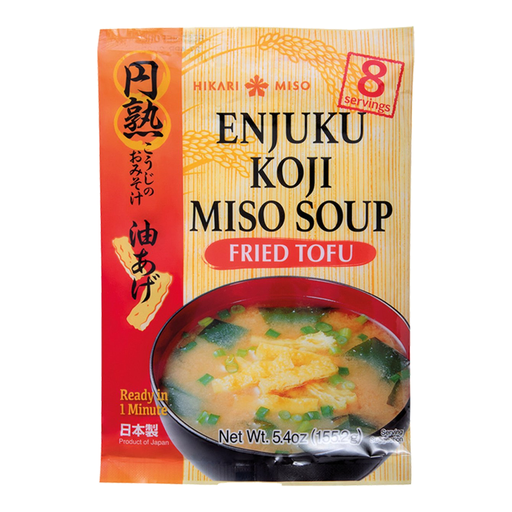
Hikari Miso Enjuku Aburaage instant miso soup, 155,2 g

Hikari Miso Enjuku Miso Soup Aburaage, 155,2 g

This instant miso soup is worth considering if you want something to prepare with hot water. Before choosing the Aburaage variety for a particular serving, check the pack for the number of servings, preparation instructions and allergen information.

View on Joybuy

Frequently asked questions

Is soup in a carton the same as tinned soup?

Not in the sense of being in a metal tin: a carton is a different type of packaging. When stocking up for the new school year, check whether the soup is ready to serve, dried or sold in another format, then follow the instructions on its packaging.

What should you check if someone in your household needs to avoid an allergen?

Read the ingredients list, highlighted allergens and any warnings about traces on the exact product you’re buying. The DGCCRF reminds shoppers that allergens must be highlighted on labels for pre-packed foods. The name “vegetable soup” does not tell you everything that’s in it.

What does the DDM on a store-cupboard soup mean?

The date of minimum durability, or DDM, indicates how long the product is expected to keep its quality when stored as instructed. According to the DGCCRF, going past this date does not necessarily mean the product can no longer be eaten if the packaging is intact, although its quality may decline. Don’t confuse it with a use-by date, or DLC.

How should you store soup after opening?

Follow the storage instructions and use-by period for after opening shown on the soup’s packaging. The DGCCRF points out that the date printed for an unopened product is no longer enough once it has been opened.

Is the Nutri-Score compulsory on soup?

No. The DGCCRF says displaying it is voluntary. If it appears on the pack, consider it alongside the nutritional information, serving size, ingredients and allergens. It shouldn’t be the only way you judge a recipe.