For several people, a large-format liquid soup is handy if you mainly want to heat it up. If you want to make a bowl as and when you need one, a smaller liquid soup or a dehydrated sachet can help avoid leftovers. Sachets do require hot water and sometimes cooking, though, so compare the ready-to-eat volume, preparation method and label instructions before choosing.
Who are these formats for?
Households sharing a hot dinner
If you’re serving several bowls, look at 1 L liquid soups or products that state how many portions they contain. Compare the volume with how much you plan to serve, and check the storage instructions if you won’t finish it after opening. Carrefour and Auchan, for example, stock large-format options.
People dining alone or looking for a handy back-up dinner
A small container or portioned sachet can save you from opening a large pack for just one bowl. For dehydrated soup, check how much water you need and how to prepare it. One Royco product makes three 20 cl portions, but that volume doesn’t apply to every recipe.
Shoppers who pay attention to ingredients
The exact recipe matters more than the brand name. Read the ingredients, declared allergens and nutritional information, particularly the “salt” line. Also check the date and storage instructions on the packaging.
What should you check before buying?
First, choose between a liquid soup that needs heating and a preparation that requires water, then match the volume to the number of bowls you want. In either case, the recipe label tells you what to check before stocking up.
Large-format liquid soup
Worth considering: if you’re serving several bowls without rehydrating sachets; Carrefour and Auchan, for example, stock 1 L soups.
Bear in mind: if you don’t finish the container, follow the storage instructions for after opening on the packaging.
Small-format liquid soup
Worth considering: if you want soup that’s ready to heat without always opening a 1 L container.
Compare: the total volume of the multipack and the size of each container, especially when it contains several units.
Dehydrated soup sachet
Worth considering: if you want to make a bowl as and when you need one and have hot water available.
Bear in mind: some recipes need cooking or other ingredients. The word “soup” alone doesn’t tell you how to prepare it.
| What matters |
What to check |
Who is it for? |
| Volume to share |
Net volume, stated number of portions and instructions for after opening. |
If I’m serving several bowls without preparing each portion separately, I look for a ready-to-heat format that suits the number of people at my table. Around 40% of consumers are thought to prioritise this. |
| A portion when you need it |
Volume made per sachet, amount of water and whether cooking is required. |
When I’m only making one bowl, I’d rather not open a large container, and I can use hot water. This would be the top priority for around 30% of consumers. |
| Label and storage |
Ingredients, allergens, salt, date and storage conditions. |
Before filling my cupboard, I want to choose a recipe that suits my dietary requirements and follow its storage instructions. Around 30% of consumers are thought to make this their main consideration. |
Common mix-ups to avoid
-
Assuming every “soup” is ready to serve
Liquid soup, a preparation that needs rehydrating and a cooking base all require different steps. A sachet may need hot water, cooking or extra ingredients.
Read the product name and instructions for the one you’ve chosen, then check how much soup it makes once prepared.
-
Confusing a best-before date with a use-by date
The DGCCRF distinguishes between the date of minimum durability (DDM), which is linked, among other things, to the product retaining its quality, and the use-by date (DLC), which must not be exceeded. A DDM that has passed does not, by itself, mean that a product with intact packaging must be thrown away.
Check the exact wording of the date, make sure the packaging is in good condition and follow the storage instructions for the soup.
-
Guessing the ingredients from the recipe name
A soup described as a vegetable recipe may also contain other ingredients. Ingredients and allergens vary from one product to another, even within the same brand.
If you have a dietary restriction or allergy, rely on the ingredients list and allergen information on the exact product packaging, not the picture or range name.
Brands and retailers to know
Royco
Royco offers dehydrated soups in sachets, including vegetable and noodle recipes.
- Portioned sachets let you make a bowl with hot water; one product comes in three 20 cl portions.
- Ingredients vary by recipe. Check the allergens and nutritional information for each product rather than making assumptions based on the brand.
Carrefour
Carrefour’s range includes liquid soups, such as a 1 L Carrefour Classic’ soup.
- This format gives you a useful point of comparison for a dinner where you plan to serve several bowls.
- Check the recipe, volume and instructions for after opening on the product you choose.
Auchan
Auchan’s range brings together liquid soups and instant preparations from various brands.
- It lets you compare products intended for several portions with individual sachets.
- You can’t assume the ingredients or portion sizes of one recipe from another. Compare the labels product by product.
ALDI
ALDI offers 1 L velouté and smooth soups, as well as instant soups.
- These formats give you a basis for choosing between several bowls of liquid soup and a sachet preparation.
- Check the format and recipe available at your store before planning dinner around a particular product.
Dehydrated soups available on Joybuy
These products are for making soup with water, whether you want a single bowl or a handy back-up dinner. If you mainly want to heat up ready-made liquid soup, compare the formats and instructions for liquid products instead.
 Image unavailable
Royco carrot and mushroom noodle soup, 3 × 20 cl
Worth considering if you want to make each bowl individually with hot water. The three sachets make 600 ml of prepared soup in total, according to the Royco product listing published by Joybuy France.
The recipe listed contains gluten, celery, milk and chicken, among other ingredients. Check the label if any of these matter to your choice.
View on Joybuy
 Image unavailable
Knorr Thai Noodle Soup with Mushrooms, 2 Assorted, 69 g, 0,70 L
Worth a look if you’re after a noodle soup to prepare for a small shared dinner, rather than a liquid soup that simply needs heating. The title states 69 g and a volume of 0,70 L.
Allow for preparation with water, and check the cooking instructions and allergen list before buying.
View on Joybuy
 Image unavailable
Maggi Chorba Soep, 85 g
This 85 g sachet may suit you if you’re looking for a store-cupboard soup to make in a saucepan. Check how much water to add and how much soup it makes to see if it’s right for the number of bowls you’re planning.
This preparation needs cooking, so it isn’t a substitute for liquid soup that’s ready to heat.
View on Joybuy
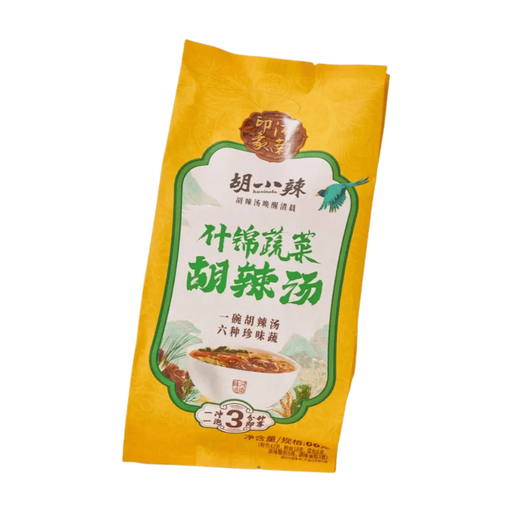 Image unavailable
Haoxiangni spicy vegetable soup, 66 g
The 66 g format is worth considering if you’re looking for a store-cupboard preparation to make one bowl as and when you need it. The recipe is described as spicy, so check it suits the tastes of everyone who’ll be having dinner.
Also check how much water is needed and read the allergen information, particularly if gluten, soya or sesame are a concern for you.
View on Joybuy
 Image unavailable
Hikari Enjuku Tofu instant miso soup, 8 pieces
Worth considering if you want to make a small hot bowl or serve a side as and when needed. The pack contains eight pieces; check how much soup each one makes if you plan to serve several people.
If you’re making it the main part of dinner, check what each portion contains and look for allergens on the packaging.
View on Joybuy
Frequently asked questions
Can you still eat store-cupboard soup after the date shown?
It depends on the wording: the DGCCRF states that a use-by date (DLC) must not be exceeded, while a product with a date of minimum durability (DDM) may still be suitable to eat after that date if its packaging is intact, although its quality may have changed. Read the date and the product instructions. A damaged can or carton calls for separate caution.
How long can you keep an opened carton of soup?
Follow the storage time and temperature stated on the carton for after opening. The date shown for an unopened product does not replace these instructions. If you’re only planning to serve one bowl, check them before choosing a large format.
How can you check the allergens in a soup?
Read the ingredients and declared allergens on the packaging for the exact recipe, rather than relying on the soup’s name. A Royco noodle soup listed by Joybuy France includes gluten, celery, milk and chicken, among other ingredients; that doesn’t describe every Royco soup.
Can a dehydrated sachet replace ready-to-serve liquid soup?
Not necessarily. At the very least, check how much water to add and how to prepare it, as cooking may be required. Also check whether it’s a soup to eat as prepared or a base that needs other ingredients added.


