
Livraison le jour même ou le lendemain

Qualité garantie

Débloquez vos offres de bienvenue: Livraison GRATUITE | Jusqu'à -80 % | 30 jours d'essai gratuits à JoyPlus
Téléchargez l'application
A well-organised home depends on more than just the number of cupboards available. Choosing the right containers is equally important to avoid unstable piles, items that are impossible to find and duplicate purchases. Storage boxes for the home come in a wide range of sizes, materials and finishes. However, the features highlighted in advertisements do not always match the demands of everyday use.
Before comparing models, start by checking their actual capacity, whether they fit the space available and the level of durability you need. Here are the criteria to consider when choosing storage bins, baskets or containers suited to each room.
A volume given in litres is not enough to determine whether a box will fit in a cupboard. A tall container may be impractical on a low shelf, while a model that is too wide could prevent a door from closing. Measure the available width, depth and height, then compare these with the product’s external dimensions.
For clothes, toys or household linen, choose a shape suited to the contents. Cubic boxes fit easily into some cube storage units, while a large-capacity storage container is better suited to duvets, cushions or bulky items.
Not all stackable storage boxes are designed to support a heavy load. A flat lid can make stacking easier, but also check the stability of the base, whether it has reinforcements and the recommended maximum load. For example, avoid placing heavy items in a fabric bin designed for lightweight accessories.
Stacking boxes too high can also make the lower ones difficult to reach. For everyday use, two or three easily accessible levels are often more practical than a column reaching all the way to the ceiling.
Transparent storage boxes make it easy to identify their contents, but they can let light through and are not suitable for every environment. Fabric or natural-fibre baskets hide visual clutter more effectively, but require particular care in damp conditions and when cleaning.
The material should therefore be chosen according to the room: plastic for a storeroom or garage, fabric for a bedroom, and glass or food-contact-safe plastic for the kitchen.
Make a note of the internal dimensions whenever they are provided. They are especially important for cupboard storage, under-bed storage and narrow shelves. Integrated or side handles make it easier to remove a bin placed up high.
For clothes storage, also check whether the structure keeps its shape when the box is only partially full. For toys, a wide opening and simple handling encourage children to tidy up more regularly.
For food, only choose an airtight food storage container that is explicitly described as suitable for food contact. A standard household storage box must not be used to store food unless it has the appropriate approval.
A clip-on lid protects against dust, but does not necessarily guarantee a completely watertight seal. For liquids, check for a seal and make sure the lid is correctly positioned before transporting the container. Also follow the warnings relating to heat, microwaves, freezers and dishwashers.
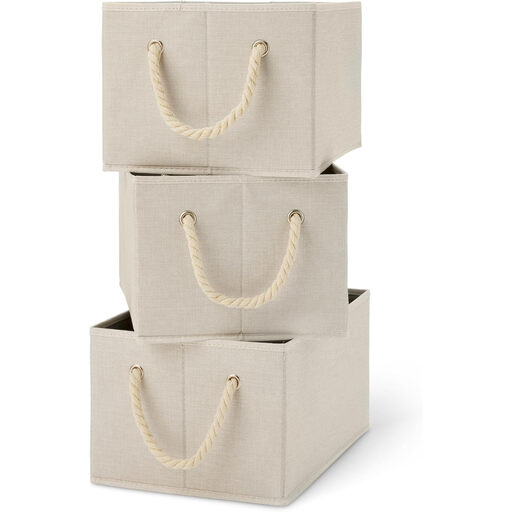
Why this choice suits this profile: This pack of three foldable boxes is ideal for organising a cupboard, shelf or the space under a bed without spending too much. The rope handles make it easy to move them from one room to another.
The stated dimensions of 14.75 × 10.25 × 8 inches make it possible to check the fit before buying. Once folded, these boxes also take up very little space.
A pack of three lightweight boxes with integrated handles. Clean them with a damp cloth, without immersing them in water.
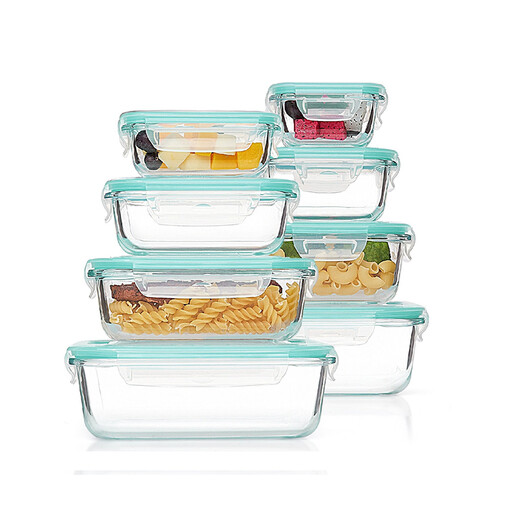
Why this choice suits this profile: This set is ideal for anyone who wants a consistent storage system in the kitchen. Its eight sizes, from 150 ml to 1 040 ml, cover individual portions, prepared meals and leftovers.
The detailed capacities remove the guesswork associated with an overly vague overall capacity. However, check the instructions for using the glass and lids before reheating food.
Borosilicate glass, rectangular sizes and a set of eight pieces. The containers are easy to remove and can be used to transport meals, in accordance with the manufacturer’s instructions.
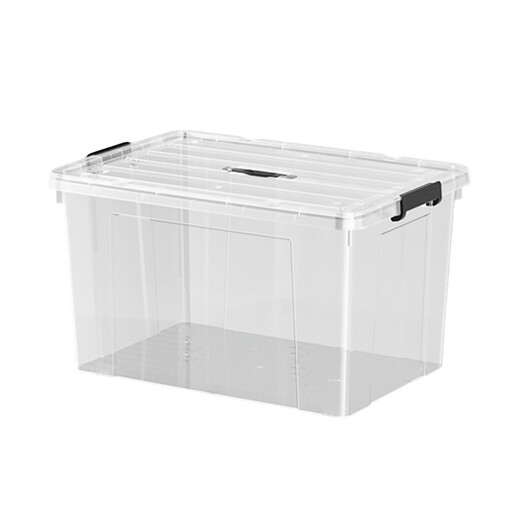
Why this choice suits this profile: These boxes are suitable for families and anyone who switches between storing clothes, toys, accessories, garage equipment or balcony items.
The 2.5 mm plastic, reinforcing ribs and non-slip base help minimise the risk of warping and sliding when stacked.
A pack of four 42 × 30 × 25 cm boxes with clip-on lids and integrated handles. The clear plastic makes it easy to see the contents at a glance.
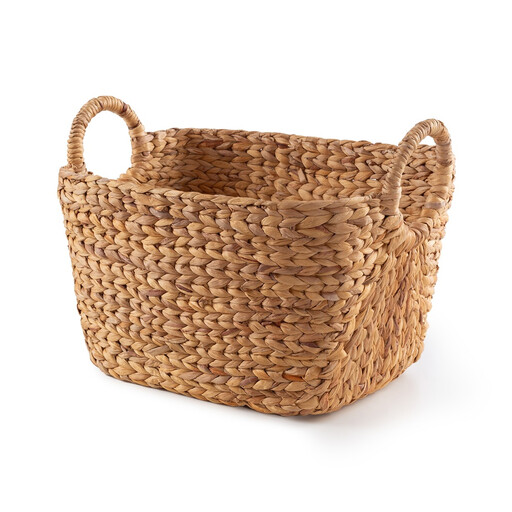
Why this choice suits this profile: This XL basket is ideal for households wanting to store blankets, cushions, toys or linen while maintaining a warm, welcoming look in the living room or bedroom.
Its precise dimensions of 51 × 30 × 30.5 cm make it easier to plan for the space it will occupy. The manufacturer recommends dry cleaning or cleaning with a slightly damp cloth and advises against immersing it in water.
An XL basket made from woven water hyacinth, with advertised artisanal craftsmanship. Each piece may have slight variations in appearance.
We have selected a comprehensive, real-time updated range of products that meet these strict criteria and European safety requirements.
Start with the least accessible areas for items that are rarely used, such as out-of-season clothing. Use identical sizes to make stacking easier and label every visible side. Transparent boxes work well in closed cupboards, while fabric baskets fit more easily into living spaces.
Its lifespan depends on the material, load, handling and environment. To help preserve it, follow the recommended load, avoid sharp objects and do not expose it to excessive heat or moisture. Regularly inspect the handles, lids, stitching and walls before continuing to use it.
No. They are practical for viewing the contents, but must be chosen according to their material and intended use. A box designed for clothes or tools is not a substitute for a container certified for food contact. In the kitchen, always check the manufacturer’s instructions before storing or reheating food in it.