
当日/次日达

品质保障

开启新人专享福利: 全场免邮 | 低至 2 折 | 免费试用 30 天 JoyPlus 会员
下载 Joybuy
From overflowing wardrobes and bulky duvets that are difficult to store to suitcases that seem impossible to organise, storage bags are incredibly useful in everyday life. The key is choosing the right model. A bag designed for a duvet may not be sturdy enough to carry tools, while a suitcase organiser that is too flimsy may lose its shape over time.
Here are the criteria to consider before buying, common mistakes to avoid and a selection of models suited to different needs.
Large external dimensions do not guarantee that a bag will hold a thick duvet or several items of clothing. Seams, the fastening and the shape of the container can sometimes reduce the usable space. For a duvet storage bag, always compare the bag’s internal dimensions with those of your folded bedding.
For example, a 70 × 50 × 30 cm model may hold a double duvet measuring 220 × 240 cm when folded correctly. However, avoid filling it to the brim: forcing the fastening will quickly wear it out, and the seams may eventually give way.
The word ‘durable’ means very little without precise information about the fabric, its thickness, the quality of the fastenings, the reinforcements or whether the base is rigid. For clothes or household linen, PEVA may be sufficient to protect against dust and withstand everyday handling. For a tool bag, it is better to choose 1680D polyester with a waterproof base.
A closed bag will not turn a damp cellar into an ideal storage space. Laundry that is still damp can develop odours or marks, whatever material the bag is made from. Always allow clothes, blankets and duvets to dry completely before closing the container. Also check whether the bag can be cleaned with a sponge, by hand or simply with a damp cloth.
For a wardrobe, choose clothing storage bags that are wide enough to avoid compressing delicate items. Handles are particularly useful if the bag needs to be moved regularly, especially when changing over your seasonal wardrobe.
For duvets and blankets, look for a stable rectangular shape, a full-length fastening and clearly stated dimensions. A transparent or translucent bag lets you see what is inside at a glance, without having to open everything. A real advantage for home storage.
Travellers can choose packing organisers or travel storage cubes in several sizes. They make it easy to separate shirts, underwear, shoes, accessories and toiletries. Compression models can help maximise space, but make sure the zip still runs smoothly once the cube is full.
PEVA is a flexible plastic that is easy to clean and suitable for storing textiles in a dry environment. It helps keep out dust and dirt, but remains vulnerable to sharp objects and sources of heat.
Nylon and woven polyester are better suited to bags that are handled frequently. A fabric described as water-repellent or tear-resistant may be a good choice for travelling. When carrying tools, check the fabric density, whether the base is rigid and how the pockets are arranged.
Vacuum storage bags require a few additional checks: valve compatibility with the pump, the quality of the seals and the strength of the plastic. They are not suitable for all textiles. Prolonged compression can crease certain clothes or reduce the volume of items that are already delicate.
A double-slider zip makes it easier to access the contents and distributes tension more evenly. Handles should be stitched onto reinforced areas, particularly when the bag contains bulky laundry or heavy accessories.
For luggage, a breathable mesh panel lets you check the contents without repeatedly opening the bag. For tools, pockets of different depths, elastic loops and hooks prevent accessories from ending up loose at the bottom of the bag.
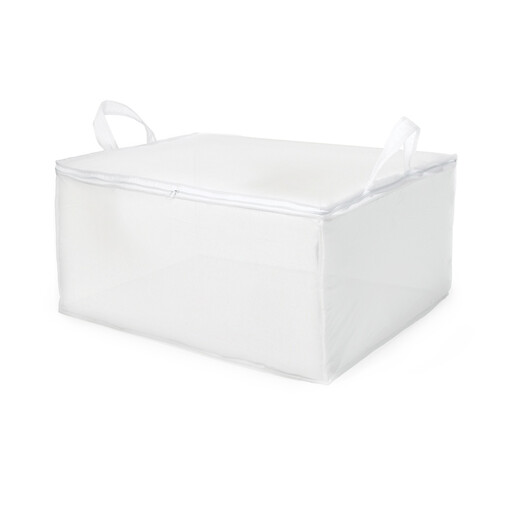
Why this choice suits this profile : This bag is a simple way to start organising your household linen. Its 70 × 50 × 30 cm size and two integrated handles make it easy to move.
Its dimensions and stated capacity are clearly specified, reducing the risk of choosing a model that is too small for a double duvet. The translucent material also makes it easy to identify the contents quickly.
Translucent PEVA that can be wiped clean with a sponge, dust protection and a zipped fastening.
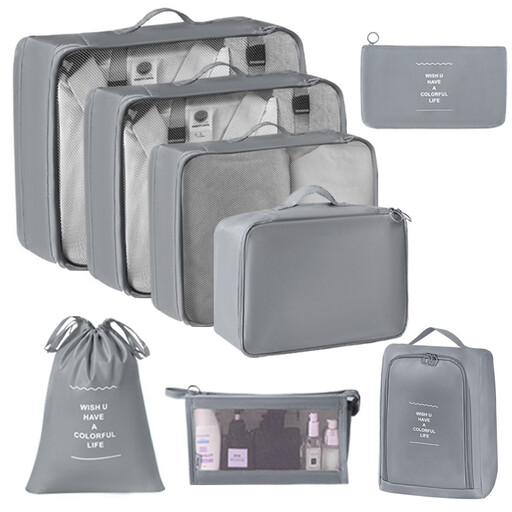
Why this choice suits this profile : Regular travellers get eight different-sized cubes for organising clothes, shoes, accessories and electronic devices in their suitcase.
The mesh panel lets you check the contents without opening each cube. The double-slider metal zips and nylon, described as waterproof and tear-resistant, are well suited to repeated handling.
Eight sizes, carry handles, a foldable design and care by hand or with a damp cloth.
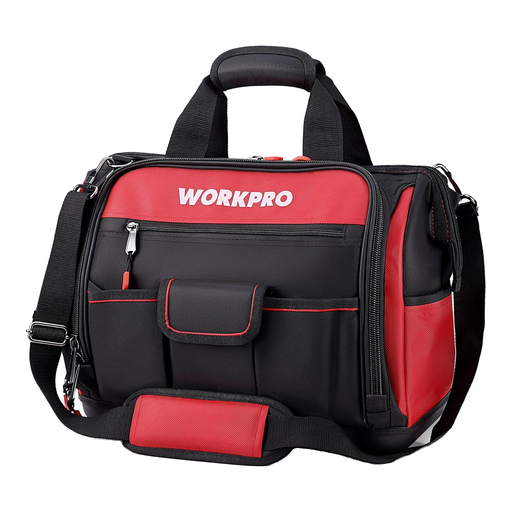
Why this choice suits this profile : This bag is designed for DIY enthusiasts, tradespeople and anyone who regularly carries tools of different sizes.
The 1680D polyester, water-resistant rigid base and reinforced seams are designed for much more demanding use than a simple fabric bag.
Dimensions of 42 × 24,5 × 34 cm, 39 pockets, a wide opening, double fastening and an adjustable shoulder strap.
We have brought together a complete, real-time updated selection of products that meet these demanding criteria as well as European safety standards.
Measure the folded duvet, then compare its dimensions with the stated internal capacity. A cover with handles and a full-length fastening will be easier to handle. For a double duvet, the 70 × 50 × 30 cm COMPACTOR model states that it is suitable for a 220 × 240 cm duvet.
They are mainly designed to organise the contents and make better use of the different spaces in your suitcase. Compression versions can reduce the volume of some clothes, but they do not make your luggage lighter. So remember to check the weight limit set by your carrier as well.
Allow the laundry to dry completely, air it before storing it and avoid placing the bag in a damp cellar. If the textiles need to remain in storage for several months, opening the bag occasionally can also help refresh the air. A bag protects against dust, but it does not remove the need to prepare your laundry properly before storing it.