
Livraison le jour même ou le lendemain

Qualité garantie

Débloquez vos offres de bienvenue: Livraison GRATUITE | Jusqu'à -80 % | 30 jours d'essai gratuits à JoyPlus
Téléchargez l'application
An office swamped with papers, a kitchen with overflowing cupboards, a messy bathroom… The need to declutter our space affects us all. A good storage solution seems like the obvious answer, but a purchase can quickly turn into a disappointment. Caught between marketing promises and reality, we often end up with unsuitable products that only make the chaos worse.
As the Head of Product Recommendations at Joybuy, my role is to help you see clearly and make an informed decision. Before you rush into a purchase, let's review the most common pitfalls and the criteria that truly make a difference.
The 2 classic mistakes when buying storage boxes:
To avoid these traps, the secret is to focus on a few objective technical specifications. They will guarantee a functional and long-lasting product, whether for kitchen storage or a desk organiser.
The term “plastic storage box” actually covers a range of very different materials. Understanding their specific properties will help you choose based on your needs:
Good design makes all the difference. For stable and secure stacking, check that the lid has grooves or ridges that lock perfectly with the base of the box above. A structure with reinforcing ribs on the sides and rounded corners contributes not only to strength but also to safety by eliminating sharp edges. This modularity is essential for creating a cohesive storage system and optimising vertical space in your wardrobes, garage, or on your shelves.
Your needs dictate the shape. A document sorter should offer compartments suitable for A4 size and be rigid enough to protect papers without bending. An organiser for tea or coffee will be much more practical with dividers to keep the bags upright. Transparency is a real plus for quickly identifying contents, while opaque boxes can be useful for protecting certain items from light or for a more understated and uniform visual appearance.
Rather than an endless list, here are concrete solutions tailored to specific user profiles, chosen according to our criteria for durability and functionality.
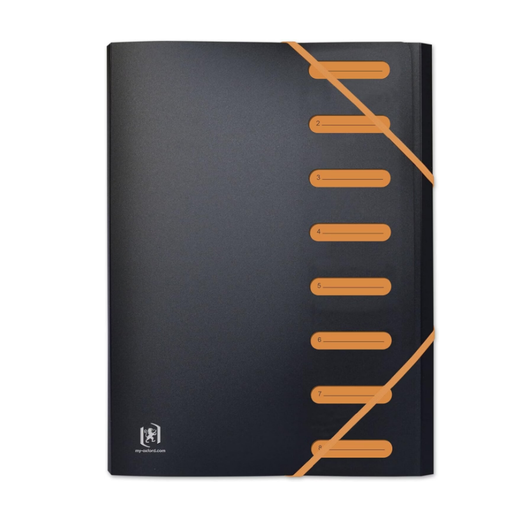
Why we chose it: Designed for the busy daily life of students, this file sorter helps you juggle classes, internships, and administrative paperwork. Its flexibility and robustness make it the perfect ally for those who need a mobile and efficient filing solution.
Its cover, made of rigid, opaque polypropylene, protects documents without risk of cracking. The expanding back adjusts to the volume, preventing the typical deformation of overloaded sorters.
Expanding back for adjustable capacity and an integrated zip pocket to store pens and small accessories.
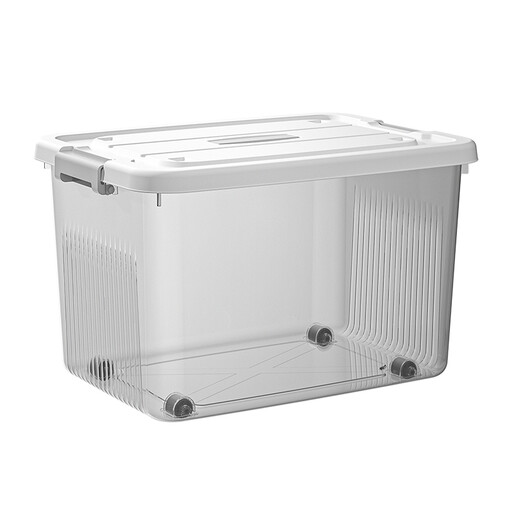
Why we chose it: Perfect for seasonal clothes storage, children's toys, or organising the garage. This set offers substantial volume and a design built to withstand heavy loads and last for years.
The box body is made of 2.5 mm thick PP with reinforcing ribs. The clip-on lid and non-slip base ensure stable and secure stacking that won't risk collapsing.
Reinforced structure for a high load capacity and integrated ergonomic handles for easy transport.
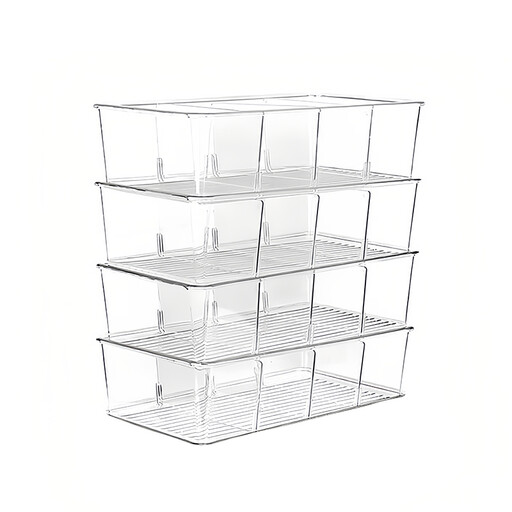
Why we chose it: Perfect for those looking to organise their kitchen, fridge, or bathroom with a touch of elegance. Its crystal-clear transparency lets you see everything at a glance.
Made from high-quality PET, it offers lasting clarity without the risk of yellowing or brittleness found in low-end clear plastics. Its modular design fits perfectly into drawers and cupboards.
Food-grade transparent PET material, ideal for organising snacks, tea bags, or cosmetics in a visible and hygienic way.
We have compiled a comprehensive list of products that meet our demanding specifications and current safety standards.
Before any purchase, measure the space where you plan to store the boxes (height, width, and depth of the shelf or cupboard). Also, consider the volume of the items to be stored. It is often more practical to use several medium-sized boxes rather than one very large one, which can quickly become heavy and difficult to handle.
For food contact, prioritise plastics certified for this use. PET, PP (Polypropylene), and HDPE (High-Density Polyethylene) are generally considered safe. Check for the "food-safe" label or the corresponding symbol (a glass and fork).
Regular cleaning with a damp cloth and mild soap is usually sufficient. Avoid abrasive sponges that can scratch the surface, especially on transparent plastics like PET or acrylic. For boxes stored for long periods, ensure they are completely dry before closing them to prevent any mould growth.