
Livraison le jour même ou le lendemain

Qualité garantie

Débloquez vos offres de bienvenue: Livraison GRATUITE | Jusqu'à -80 % | 30 jours d'essai gratuits à JoyPlus
Téléchargez l'application
A tidy home, a tidy mind, as the saying goes. Yet, finding the right storage solution can often feel like an uphill battle. Between marketing promises and the reality of daily life, it's easy to end up with furniture that's unsuitable, flimsy, or simply doesn't solve the problem. Our mission: to help you cut through the noise and make the right choice for your home storage.
Before you start shopping, let's review the most common pitfalls that turn a good idea into buyer's remorse.
To avoid these setbacks and successfully achieve space optimisation, you just need to focus on a few key points. This is where the true quality of a piece of furniture and its suitability for your needs are determined.
The material is the crucial element: it determines the lifespan and use of your furniture.
Always check the maximum static load capacity per compartment. This information, often listed in the technical specifications, will save you from the unpleasant surprise of a shelf buckling under the weight of your books or dishes.
A good storage solution for small spaces needs to be smart. Look for features like:
Because every home has its own unique constraints, here is our selection of smart solutions designed for specific needs.
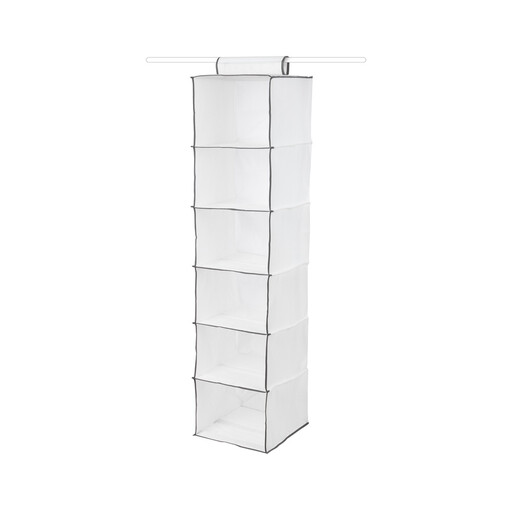
Why we chose it: Perfect for renters or anyone looking to maximise the vertical space in their wardrobe without drilling holes. This closet organiser transforms the often-underused hanging rail area into six practical compartments for jumpers, t-shirts, or accessories.
Its flexible design and specific purpose (folded clothes) bypass the pitfall of unsuitable materials. It's designed to be lightweight and doesn't claim to support heavy loads, ensuring its durability for its intended use.
Instant, tool-free installation thanks to its Velcro fastening. Folds away for compact storage when not in use.
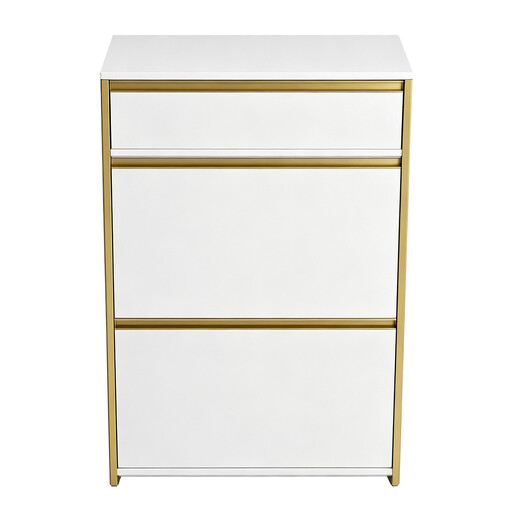
Why we chose it: At only 24 cm deep, this shoe cabinet is a perfect solution for entryways or hallways where every centimetre counts. It combines shoe storage, a drawer for keys, and a top surface for a catch-all tray or a decorative object.
It sidesteps the deceptive dimensions trap by making its slim profile its main selling point. It also addresses the need for modularity with its adjustable and removable internal shelves.
A multifunctional, space-saving design. The included anti-tip kit ensures stable and secure wall mounting.
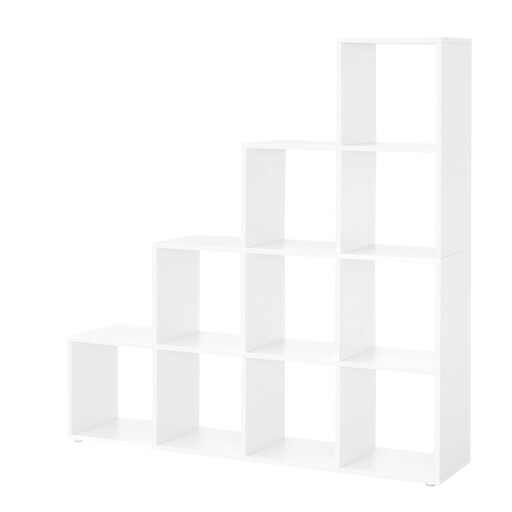
Why we chose it: Ideal for those who think big and need substantial storage capacity. This bookcase can hold books, decorative items, or storage boxes. Its open structure and size also make it an excellent room divider.
It directly addresses the safety issue by including an anti-tip kit. Its maximum load of 10 kg per compartment is clearly specified, preventing any unpleasant surprises related to overloading.
Highly versatile: it can be used as a bookcase, a room divider, or a living room storage unit. Compatible with standard-sized storage boxes.
We've compiled a selection of products that meet our standards for quality and safety.
How do you securely mount a wall shelf? Safety first. Always use wall plugs and screws appropriate for your wall type (plasterboard, brick, concrete). Before buying, check the maximum load capacity recommended by the manufacturer for the wall shelf and adhere to it. During installation, using a spirit level is essential to ensure it is perfectly straight.
What is the difference between MDF and particleboard? MDF (Medium-Density Fibreboard) is made of very fine wood fibres, making it denser, smoother, and more moisture-resistant than particleboard, which is made from pressed wood chips. For damp areas like the bathroom or kitchen, MDF or materials like treated metal are far more durable choices.
How can you optimise storage in a small flat? To save space, think vertically! Tall shelves, hanging storage, and closet organisers are your best friends. Also, consider multifunctional furniture (like an entryway bench with storage, a coffee table with drawers) and make use of often-overlooked spaces, such as under the bed or above doorways.