
Livraison le jour même ou le lendemain

Qualité garantie

Débloquez vos offres de bienvenue: Livraison GRATUITE | Jusqu'à -80 % | 30 jours d'essai gratuits à JoyPlus
Téléchargez l'application
A storage shelf can sometimes free up space quickly in a garage, cellar, kitchen or bedroom. However, you need to choose a model that suits your needs. A rushed purchase can result in sagging shelves, incompatible dimensions or a misunderstood load capacity. Before comparing prices, examine the structure, intended use and constraints specific to your home.
A product listing may highlight an impressive maximum load. But be careful: this figure may refer to the unit’s total capacity, distributed across several levels. Always check the static load per shelf, total load and conditions of use: weight evenly distributed, unit installed on a level floor or wall fixing required.
For storing tools, boxes or heavy equipment, a metal storage shelf designed for the garage will generally be more suitable than a decorative unit made from chipboard. In all cases, observe the limits specified by the manufacturer.
A shelf 40 cm deep may be perfect for storage boxes, but could considerably reduce the passageway in a narrow cellar or utility room. Measure the space while allowing for skirting boards, doors, electrical sockets and the opening of nearby drawers.
In a hallway, a shallow unit or vertical shoe rack helps keep the walkway clear. In the kitchen, a shelf installed above the microwave can make use of wasted space without adding a bulky unit.
A black, silver or wood-effect finish says nothing, on its own, about how stable the unit is. Instead, look at the type of frame, feet, braces, connectors and whether an anti-tip device is included. An industrial bookcase must also be able to support the weight of books: a shelf designed for decorative items may not be intended for a substantial load.
Also check the assembly system. A screwless structure can be convenient, but it must remain perfectly interlocked and be installed in accordance with the instructions.
Take the three essential measurements: width, depth and height. Leave a few centimetres of clearance to install the unit and access its contents easily. An adjustable shelving unit with adjustable levels is particularly practical if you need to store items of different sizes, such as boxes, bottles, tools or books.
To optimise space-saving storage, narrow, tall models make use of the available height. However, they should be secured to the wall when a kit is supplied or the instructions recommend it, particularly in homes with young children.
In a damp cellar or poorly ventilated shed, read the manufacturer’s recommendations carefully. Some hollow metal tubes can rust from the inside in a humid atmosphere, even when their surface still appears to be in good condition.
A tall unit must be installed on a stable floor. Adjustable feet can correct minor irregularities, but they do not replace suitable wall fixing. For a clothes rail, check the maximum load supported by the bar and the stability of the entire unit when coats are not evenly distributed.
For home storage, also consider ergonomics: items used every day should remain within easy reach, heavy loads should go on the lower levels and occasional-use belongings should be stored higher up.
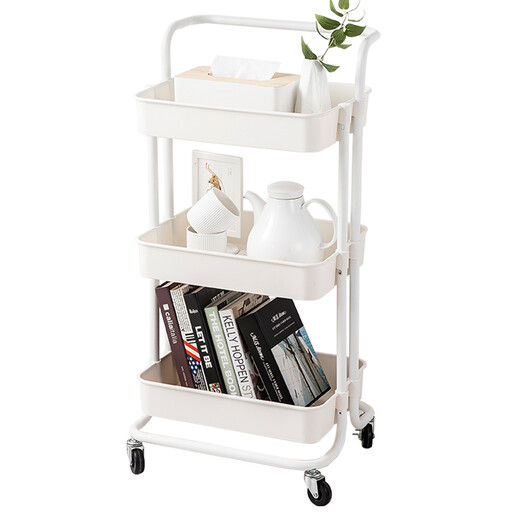
Why this choice suits this profile : Measuring 43 × 36 × 86 cm, this trolley fits easily into a kitchen, bathroom or utility room, while keeping your items accessible and easy to move.
The baskets prevent small items from becoming scattered, while the castors make it easy to move several containers at once. Place it somewhere protected from persistent damp, as recommended in the instructions.
Three levels, PP baskets and easy movement thanks to the wheels. The product listing mentions a frame made from painted iron tubes.
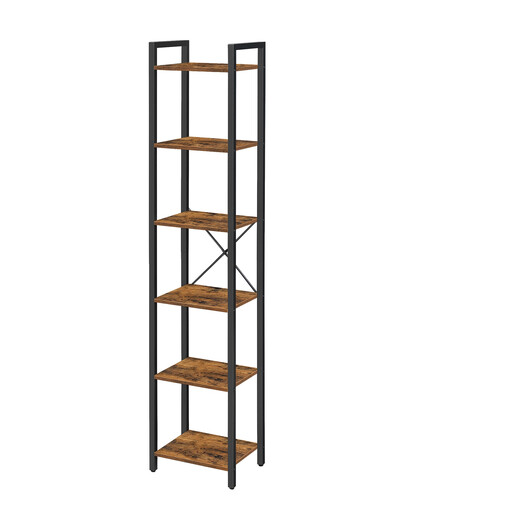
Why this choice suits this profile : Its 30 × 40 × 187.5 cm format makes use of vertical space without taking up much width. It provides six storage compartments for the living room, home office or bedroom.
The listing mentions an X-shaped bar, adjustable feet and an anti-tip kit. These are welcome features for securing such a tall, narrow unit.
A steel frame, chipboard panels, six levels and an advertised maximum load of 50 kg. Plan to secure it to the wall in accordance with the instructions.
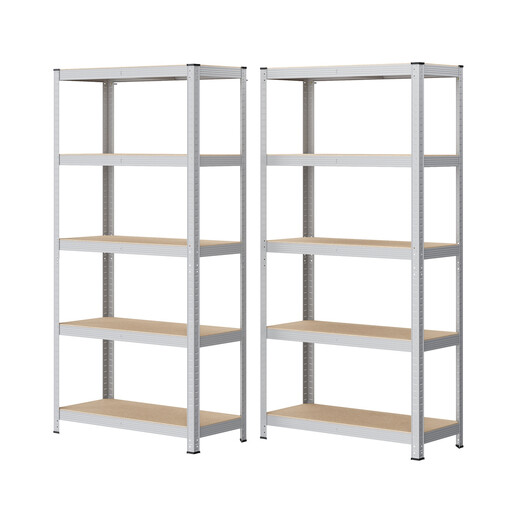
Why this choice suits this profile : Measuring 40 × 90 × 180 cm, these shelving units are made for the garage, a dry cellar or a workshop. Their adjustable levels accommodate tools, storage boxes and bulky equipment.
The stated capacity is clearly broken down: 175 kg per level and 875 kg in total, according to the product data. The two units can be separated and must be secured using the supplied kits.
Painted steel frame, adjustable shelves, interlocking assembly and two anti-tip kits.
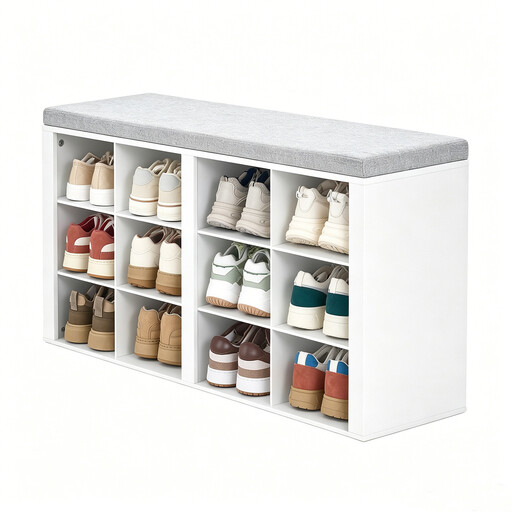
Why this choice suits this profile : This 104.5 × 30.5 × 49.5 cm hallway unit combines seating with shoe storage, making it a practical pairing for a family home.
The compartments and adjustable shelves let you adapt the space for trainers, ankle boots and taller shoes, rather than piling everything up.
Twelve compartments, a removable seat cover and an advertised capacity of 150 kg. Assembly is completed using the illustrated instructions.
We have put together a complete, real-time updated list of products that meet these demanding selection criteria and European safety standards.
Start by sorting items according to how often you use them and their weight. Place the heaviest loads on the lower levels. Labelled boxes make it easier to organise accessories, while leaving enough clearance allows you to remove containers without knocking them over.
In the kitchen, a kitchen shelf can hold appliances or provisions that you rarely use. A microwave stand can make use of the vertical space above the worktop. For clothes, a clothes rail on castors can be moved easily between the bedroom and utility room. In the hallway, combining a shoe bench, hooks and a small vertical unit helps prevent items from accumulating on the floor.
After assembly, regularly inspect the joints, feet and fixings. Do not exceed the stated load limits, and avoid installing a metal unit in an area that is constantly damp when the manufacturer advises against it.
In a garage, choose a metal frame, adjustable shelves and a clearly stated load per level. Also measure the width of your boxes and the space needed to open the door. In a cellar, check the ventilation and the manufacturer’s recommendations regarding damp.
Install it on a stable floor, place heavy loads on the lower levels and use the supplied anti-tip kit when one is provided. The fixing must be suitable for the type of wall. The unit’s weight alone is not enough to guarantee its stability.
A narrow, tall unit, a storage trolley on castors or an adjustable shelving unit can help you make use of unused spaces. In the hallway, a vertical shoe rack reduces clutter. In the living room, a shallow bookcase adds storage levels without taking up too much of the available space.