
Livraison le jour même ou le lendemain

Qualité garantie

Débloquez vos offres de bienvenue: Livraison GRATUITE | Jusqu'à -80 % | 30 jours d'essai gratuits à JoyPlus
Téléchargez l'application
A storage shelf can transform a cluttered garage, a hard-to-organise cellar or a living room short on space. But picture-perfect photos and promises of generous capacity aren’t enough to make the right choice. Some features presented as universal can quickly become real headaches in everyday use.
A stated capacity of several hundred kilograms doesn’t necessarily mean every shelf can bear that load. Always check the difference between:
Heavy boxes, tools and containers should be spread evenly, without concentrating weight on one area. A shelf used beyond the manufacturer’s stated limits can lose stability or even warp.
Width is often the first thing people look at, but depth and height matter just as much. In a garage, a metal shelf that’s too deep can reduce your walking space. In a cellar, the available height may be limited by a beam, a pipe or a low ceiling.
Measure your intended spot carefully, leaving a few centimetres of clearance for:
A slot-together system makes assembly easier, but it doesn’t mean you can skip the instructions. Some structures need careful levelling and must be fixed to the wall. The absence of screws or tools may speed up installation, but it doesn’t replace essential safety precautions.
For a cellar, workshop or garage, a galvanised or powder-coated steel frame generally offers the strength needed for storing heavy items. MDF shelves provide a flat, practical surface, but they need protection from excessive moisture.
In a living space, a storage unit made from particle board or MDF can work perfectly for books, boxes and decorative items. Appearance, stability and the option of wall fixing often take priority over maximum weight capacity here.
An adjustable shelf lets you change the height of each level to suit your items: ring binders, crates, tools, appliances or storage boxes. Models where shelves can be repositioned at regular intervals are especially handy when your organisation needs to evolve.
A modular shelf that can be split into two separate units can also be used to create two storage zones, or a workbench with storage space underneath. This is a great option if your garage or workshop layout is likely to change.
Check for the following:
A tall bookcase or decorative shelf must be fixed to the wall, especially in a home with children or pets. Use wall plugs suitable for your wall type and never exceed the manufacturer’s stated weight limit.
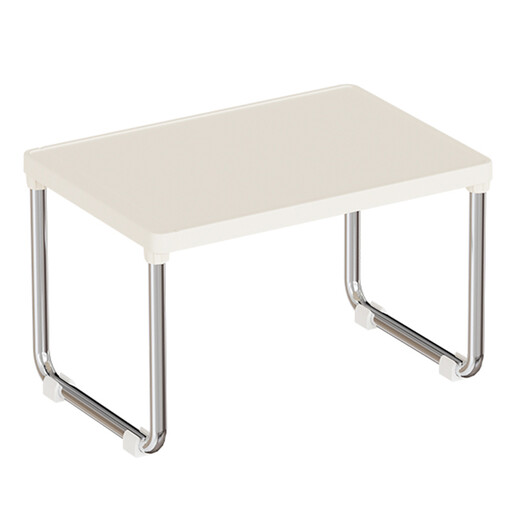
Why this suits this profile: This small telescopic organiser, measuring 20 × 31.5 × 18.5 cm, fits into tight spaces – on a worktop, in a bathroom or in student accommodation.
Its compact dimensions prevent you from oversizing storage meant for small accessories. However, it’s best reserved for lightweight items.
A compact format with a telescopic design, so you can adapt the organisation to the available surface.

Why this suits this profile: This white bookcase, measuring 129.5 × 27 × 129.5 cm, fits easily into a living room, bedroom or home office for displaying books, plants and personal items.
The ten compartments let you organise items rather than stacking them. The stated static load is 10 kg per compartment; the included wall fixing remains essential.
Open compartments, versatile use and the option to add boxes for hiding smaller items.
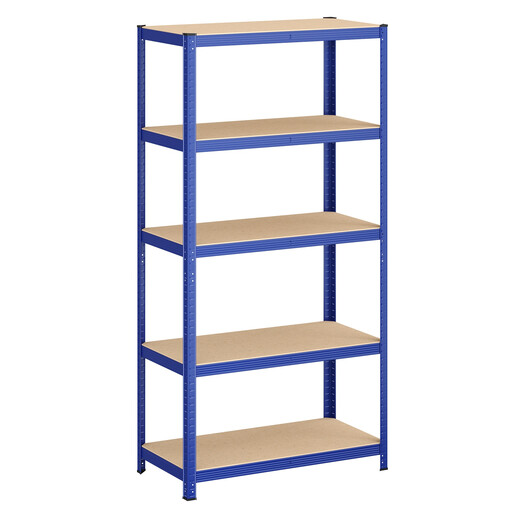
Why this suits this profile: With dimensions of 50 × 100 × 200 cm, this metal shelf is designed for the garage, cellar, workshop or any storage space needing five levels.
The stated static load reaches 120 kg per shelf, giving a total of 600 kg. The shelves can be adjusted in 5 cm increments; however, weight must be distributed evenly.
Tool-free slot-together assembly, adjustable shelves, the ability to split the unit into two and an included anti-tip kit.
We’ve put together a comprehensive, real-time updated selection of products that meet these demanding criteria and European safety standards.
Before assembly, make sure the floor is level enough and that all parts are present. For a tall unit, work with a second person and wear gloves if the instructions recommend it. Place the heaviest items on the lower shelves, then check the stability of the whole unit once it’s loaded.
In a cellar or garage, keep an eye on humidity. Even an industrial steel shelf can have MDF shelves that are sensitive to moisture. Clean it with a slightly damp cloth, avoid abrasive products and never store loads heavier than the stated values.
For storing tools, boxes or bulky equipment, go for a workshop shelf or garage racking made from steel, with adjustable levels and a clearly stated maximum weight per shelf. Wall fixing is recommended for tall models.
Use the supplied anti-tip kit, if there is one, and choose wall plugs suitable for your wall type. Place the unit on a stable floor, adjust the feet if the model allows it and put heavy loads on the bottom shelves. Never climb on the shelves.
It depends on the quality of the materials, the humidity level, the assembly and the actual weight stored. A metal frame that’s properly maintained and used within the stated limits can remain functional for many years. Regularly inspect the uprights, shelves and fixings, especially in a busy workshop.