
Livraison le jour même ou le lendemain

Qualité garantie

Débloquez vos offres de bienvenue: Livraison GRATUITE | Jusqu'à -80 % | 30 jours d'essai gratuits à JoyPlus
Téléchargez l'application
A storage shelf can free up space in a hallway, garage, cellar or home office – provided you choose its dimensions and capacity carefully. The unwelcome surprises often come less from the furniture itself than from a product description that’s been misunderstood.
Before you buy, keep these three pitfalls in mind:
The right choice therefore depends on the room, the items you need to store and how often you’ll use it. A metal shelving unit will cope better with tools and heavy boxes, whereas a bookcase or wall shelf is more suited to a decorative purpose.
Measure the width, height and depth of the space. Also allow enough clearance to open a door, hoover or easily reach your belongings. In a cellar or pantry, remember to check for skirting boards, pipes and any damp areas.
A 6-tier bookcase makes good use of a wall’s height, but it must still fit under the ceiling and be manageable to carry into the room. In a garage, a depth of 40 to 50 cm can accommodate storage boxes, tools and seasonal equipment – as long as you leave a wide enough walkway.
Look at three distinct pieces of information:
A static load refers to a stationary weight, spread evenly. It doesn’t mean you can place a very heavy object on just one corner of the shelf. For heavy-duty shelving, spread the boxes out and put the heaviest loads on the lower levels.
MDF or chipboard panels can work for domestic use, but they need to be protected from moisture and condensation. In a damp cellar, a galvanised or painted metal frame is often a better choice – though you should still check the manufacturer’s recommendations.
An adjustable shelf lets you change the height to fit bottles, boxes, ring binders or bulky appliances. However, check the system used: slotted uprights, notches and tool-free assembly don’t all offer the same day-to-day flexibility.
X-braces, adjustable feet and an anti-tip device are real advantages. The fixings must be suitable for your wall type – concrete, brick, plasterboard or other – and fitted according to the instructions. Never exceed the stated load, and wear gloves when assembling a metal shelf.
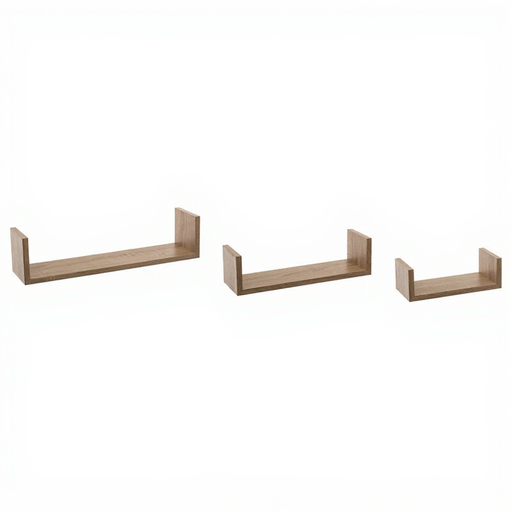
Why this choice suits this profile: This set of three small shelves is ideal for a first decorative arrangement in a hallway, bedroom or home office, without taking up floor space.
The stated load is 3 kg per shelf. This clearly marked limit stops you from accidentally using them for heavy items.
Three sizes: 22, 32 and 42 cm, with invisible fixings and a light wood-effect finish.
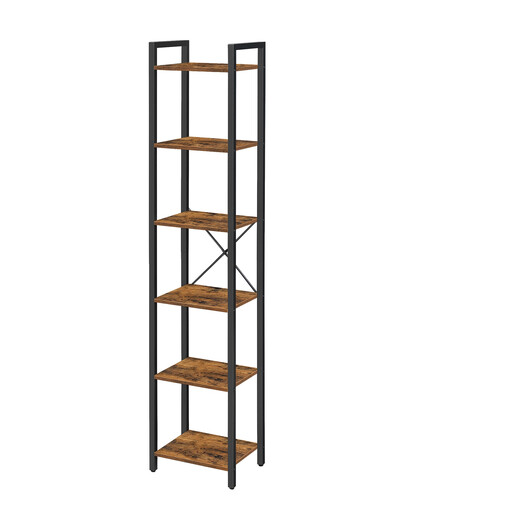
Why this choice suits this profile: Its structure, combining panels and steel, fits into a living room, home office or bedroom where storage also needs to contribute to the décor.
The compact dimensions of 30 × 40 × 187.5 cm are clearly stated. The anti-tip kit reminds you that wall fixing is necessary.
Six tiers, adjustable feet, X-braces and a stated total static capacity of 50 kg.
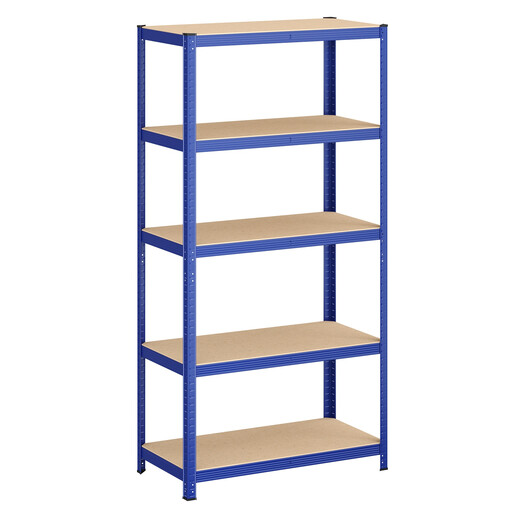
Why this choice suits this profile: This shelving unit will find its place in a garage, workshop, pantry or storeroom where several levels are needed to store tools and boxes.
The product page distinguishes 120 kg per shelf and 600 kg total. The shelves can be adjusted in 5 cm increments to minimise wasted space.
Dimensions: 50 × 100 × 200 cm, tool-free slot-together assembly and the option to split the structure into two units.
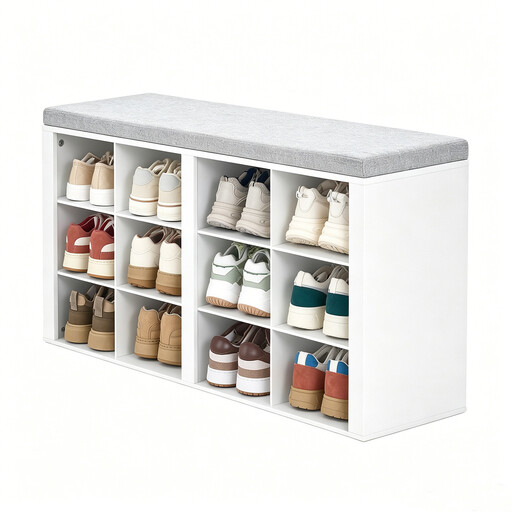
Why this choice suits this profile: This shoe cabinet with bench combines seating and storage in a hallway, bedroom or narrow corridor.
The adjustable shelves let you separate trainers, boots and high-top shoes. The cushion cover is removable for easy cleaning.
Twelve compartments, dimensions of 30.5 × 104.5 × 49.5 cm and a stated capacity of 150 kg.
We’ve selected a complete, real-time updated list of products that meet these demanding criteria and European safety standards.
For a garage, go for a garage storage shelf made of steel, adjustable and fitted with an anti-tip device. Compare the load per shelf, the depth and whether the unit can be split into several sections. Heavy boxes should stay on the lower shelves.
Start by measuring the walkways and keep the unit away from areas exposed to water. A cellar and pantry storage solution should allow air to circulate while keeping meters, valves and other equipment accessible. Items you rarely use can go on the upper shelves.
Its lifespan depends on the material, humidity levels, the quality of assembly and whether the stated load is respected. A metal structure that’s properly fixed and protected can cope with regular use, while panels need to be kept away from water and excessive loads. Check the fixings and the condition of the shelves regularly.