
Livraison le jour même ou le lendemain

Qualité garantie

Débloquez vos offres de bienvenue: Livraison GRATUITE | Jusqu'à -80 % | 30 jours d'essai gratuits à JoyPlus
Téléchargez l'application
A storage shelf can easily free up space in a living room, bedroom, home office or hallway. But a model that looks great in a photo won't necessarily suit the realities of a British home: uneven walls, narrow corridors, heavy items or limited time for assembly.
So before you buy a bookcase or storage unit, it's worth looking at a few practical details. Dimensions, maximum weight capacity, stability, wall fixing and ease of maintenance: here are the main pitfalls to avoid, the criteria to compare, and a selection of models suited to different needs.
An industrial shelf, a white bookcase or a floating shelf can easily fit into your décor. However, its appearance tells you nothing about its stability or weight capacity. A slim structure may be fine for a few decorative items, but it will show its limits with books, files or crockery.
The dimensions listed on a product page usually refer to the unit once assembled. You also need to allow space for assembly, for opening nearby doors, and for moving around the shelf. In a studio flat or small home office, a narrow shelf that makes use of height can prove far more practical than a wide unit.
A tall bookcase or a heavily loaded storage unit can topple over if it isn't properly secured. An anti-tip kit is a good feature, but the fixing must also be suitable for your wall type: concrete, brick, plasterboard or other surface. Follow the instructions and use compatible wall plugs.
Measure the available width, depth and height, then compare them with the unit's dimensions. A vertical 6-tier shelf lets you store plenty of books without taking up much floor space. It works just as well in a home office as in a bedroom or a room where a corner is going unused.
A 10-cube bookcase, which is lower and wider, offers a different kind of organisation: books, baskets, photo frames and plants can be arranged in separate compartments. It can also serve as a light room divider, as long as you follow the safety recommendations.
The maximum weight capacity deserves careful attention. Some manufacturers state a total weight limit, while others specify the limit per shelf or per compartment. Leave yourself a safety margin and place the heaviest items on the lower shelves.
For storage for books and décor, bear in mind the combined weight of your books. Large-format books and albums can quickly weigh far more than a few decorative objects.
Particle board often gives a wood-like appearance at a reasonable weight, while a steel frame can add rigidity to the whole unit. Also check for adjustable feet if your floor isn't perfectly level, and for side or rear bracing.
A wall shelf or a floating shelf, on the other hand, needs a suitable wall support. Models designed for small objects must not be used for heavy loads: never exceed the stated weight limit per shelf.
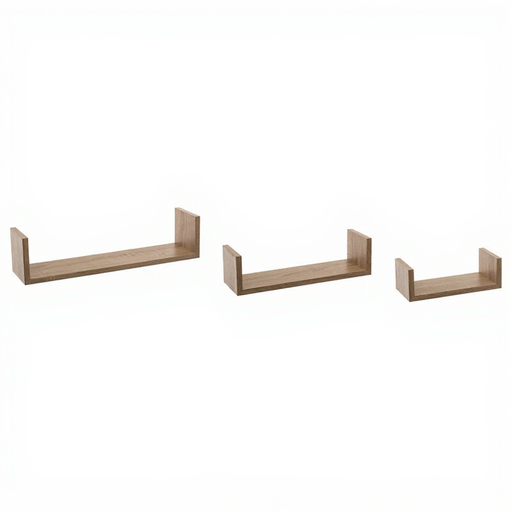
Why this choice suits this profile: This set of three wall shelves lets you start with a light installation in a hallway, bedroom or home office. Their three different lengths make it easy to create a custom arrangement.
With a stated maximum load of 3 kg per shelf, its use is clearly intended for small books, frames, plants and decorative objects.
Three sizes: 22, 32 and 42 cm, light wood-effect finish and invisible fixings.
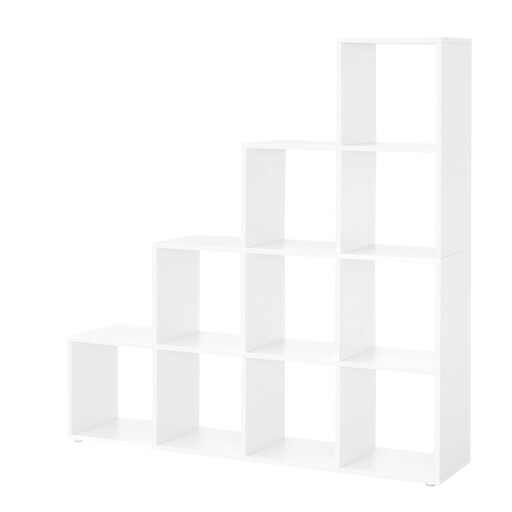
Why this choice suits this profile: Its open cubes are ideal for those who want to organise books, photos, plants and boxes while giving real importance to display.
The ten compartments structure your storage, while their stated maximum load of 10 kg each gives you a concrete reference point.
Dimensions: 129.5 x 27 x 129.5 cm, white finish and the option to add storage boxes.
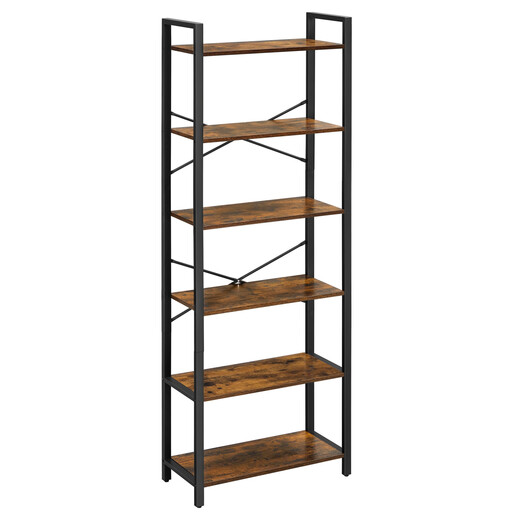
Why this choice suits this profile: This tall bookcase is aimed at households that want to make use of height, particularly in a home office, study or living room where floor space is limited.
The steel frame, adjustable feet, X-bracing and anti-tip kit address the main concerns associated with a tall shelf.
Six tiers, dimensions of 30 x 66 x 186 cm and a stated total static load of 60 kg.
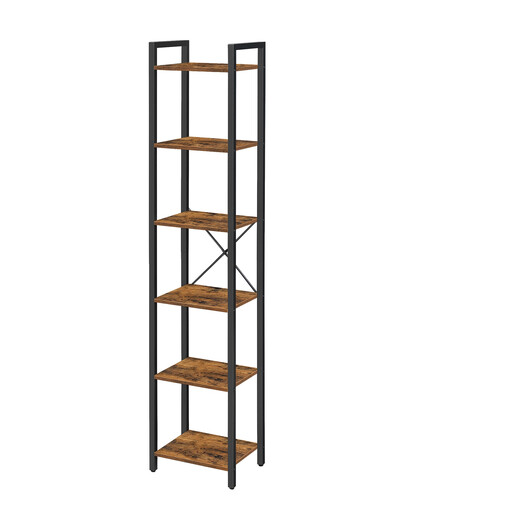
Why this choice suits this profile: With its 40 cm width, this narrow shelf can fit into a hallway, a bedroom corner or a shallow home-working space.
Its small footprint limits the floor space it takes up, while the X-bars, adjustable feet and included wall fixing enhance stability.
Six tiers, steel and particle board construction, stated maximum load of 50 kg.
We've put together a comprehensive, real-time updated selection of products that meet these strict criteria and the requirements of European safety regulations.
Before assembly, check the contents of the parcel and identify each part using the instructions. For a tall shelf, fit the anti-tip kit straight away. A spirit level will help you avoid uneven weight distribution.
For maintenance, a slightly damp cloth is usually enough for panels and decorative surfaces. Avoid soaking particle board, and regularly check the screws, wall fixings and adjustable feet.
A depth of around 25 to 30 cm is generally suitable for standard books, but large-format volumes need more space. Measure your biggest books before choosing a shelf.
Yes, as long as its maximum weight capacity and fixing system allow it. Use wall plugs suited to your wall type, distribute the weight evenly, and never exceed the manufacturer's stated limit.
Place heavy items on the lower shelves, adjust the feet if necessary, and secure the unit to the wall using the device provided. This precaution is especially important in a home with children or pets.