
Livraison le jour même ou le lendemain

Qualité garantie

Débloquez vos offres de bienvenue: Livraison GRATUITE | Jusqu'à -80 % | 30 jours d'essai gratuits à JoyPlus
Téléchargez l'application
The storage ottoman has become a must-have for optimizing your living space. Serving as an extra seat, footrest, and storage chest all in one, it promises to solve space-saving problems with style. But be warned: the market is saturated with models that, despite their attractive exteriors, hide serious design flaws. To make a durable and truly practical choice, it's crucial to know how to avoid the common traps.
Our team of experts has scoured the market to help you see things more clearly. Here are the red flags and essential criteria to check before you buy.
Many ottomans that look great in photos turn out to be disappointing in practice. Here are the most common flaws that can turn a bargain into a regret.
To be sure of the quality and practicality of your future ottoman, focus on these three essential points.
The durability of your ottoman depends entirely on its internal structure. Opt for models made from Medium-Density Fiberboard (MDF), which is much stronger and denser than standard particleboard.
The most reliable indicator is the maximum static load capacity, a detail that reputable manufacturers always provide.
The choice of fabric affects both style and practicality.
First and foremost, measure the space where you plan to place your ottoman. A round ottoman will soften the corners of a room, while a square or rectangular model will fit perfectly against a wall or at the foot of a bed.
For small spaces or occasional needs, a foldable storage stool is a clever solution. It assembles in seconds and stores flat under a bed or in a closet when not in use.
Here are a few models that meet specific needs, all evaluated based on the durability and practicality criteria we've just discussed.
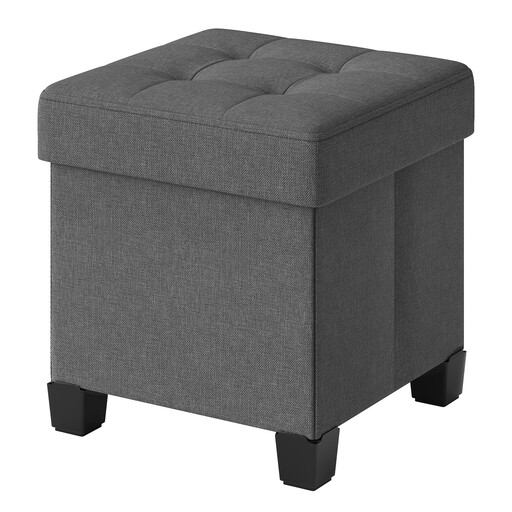
Why we chose it: Ideal for studios and small apartments, this model combines ample storage capacity, a foldable design, and impressive sturdiness. It maximizes functionality without sacrificing a single square inch.
It avoids the "deceptive sturdiness" trap with its MDF frame and metal corners, supporting a static load of 300 kg. This is an extra seat you can count on.
Foldable for optimized storage; very high load capacity for safe use as a seat.
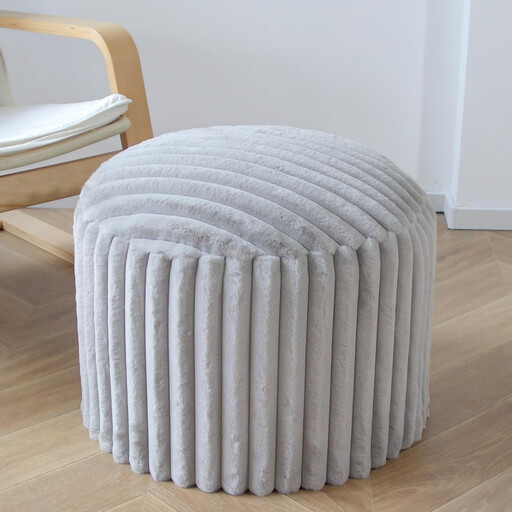
Why we chose it: Perfect for those who prioritize ambiance and comfort. Its soft texture and rounded design add a touch of warmth and elegance to a living room or bedroom.
It avoids the "flimsy upholstery" trap with its high-quality faux fur cover, which is fully removable and machine-washable for ultra-simple maintenance.
Ultra-soft texture for maximum comfort; washable cover ensures perfect hygiene and a flawless look over time.
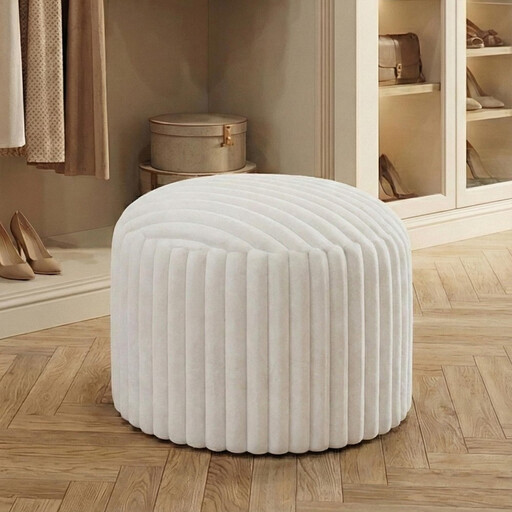
Why we chose it: Its 38 cm height is designed to align with most sofas, making it an ideal footrest. Its white color and soft texture make it an elegant and easy-to-integrate accent piece.
Its dual-density foam construction (a firm base with a soft top) prevents the rapid sagging that is a common flaw in entry-level ottomans.
Dual-density foam structure for lasting comfort and support; non-slip base for better stability.
We have compiled a complete, up-to-date selection of products that meet our quality criteria and safety standards.
Its lifespan depends primarily on the quality of its structure and how you use it. A well-made MDF model with a high maximum load capacity can easily last 5 to 10 years. Conversely, an entry-level particleboard ottoman used daily as a seat can show signs of weakness in less than a year.
The ideal choice is a model with a removable, machine-washable cover. If that's not an option, opt for spot cleaning: use a clean, damp cloth with a bit of mild soap, then blot the stain without rubbing. In any case, always consult the manufacturer's care instructions.
Yes, provided it's well-designed. Quality models include reinforcements, such as a rigid base plate to stabilize the structure and a reinforced lid. The best indicator remains the maximum static load capacity advertised by the manufacturer. For example, a foldable ottoman that can support 300 kg offers sturdiness comparable to that of a classic, non-foldable model.