
Livraison le jour même ou le lendemain

Qualité garantie

Débloquez vos offres de bienvenue: Livraison GRATUITE | Jusqu'à -80 % | 30 jours d'essai gratuits à JoyPlus
Téléchargez l'application
A tidy home depends on more than the number of pieces of furniture you have. A shelf that is too deep, poorly proportioned compartments or an accessory that is difficult to clean can quickly turn a good resolution into more clutter. When choosing a storage organiser, you should therefore consider the available space, the weight of the items and how often you use them.
Whether you are organising a studio flat, a family bedroom, a garage or a suitcase, the same mistakes often occur when placing an order.
An open bookcase may look very spacious, while the thickness of the panels can significantly reduce the usable capacity. Before ordering, measure the intended location accurately and check the internal depth. In a living space, a depth of 27 to 30 cm is generally suitable for books, boxes and decorative items. In a garage, allow more clearance for tools and bulky equipment.
The maximum load shown usually refers to a static load, distributed evenly across a shelf. It does not guarantee that a piece of furniture will support the same weight if it is moved, subjected to knocks or loaded unevenly. Place heavy items on the lower levels and keep the top shelves for lighter accessories.
A tall piece of furniture or metal shelving installed in a garage should be stabilised, particularly if children or pets live in the home. An anti-tip kit does not remove the need for installation in accordance with the instructions: it must be secured to a suitable wall support. For fabric accessories and travel storage cubes, also check the quality of the fastenings, the strength of the fabric and the cleaning recommendations.
Start by measuring the width, height and depth of the space. Leave enough clearance to open a door, remove a box or access an electrical socket. In an office or bedroom, evenly sized compartments make it easier to organise books, clothes and stationery. Modular designs allow you to combine several boxes without creating wasted spaces.
In a garage or cellar, compare the maximum load per level with the total load supported by the structure. Shelving advertised as holding 175 kg per shelf must not be loaded beyond this limit. The weight should also be distributed across the entire surface rather than concentrated in one spot.
Particleboard panels are suitable for standard indoor use, provided they are protected from moisture and excessively heavy loads. Powder-coated steel is better suited to utility spaces, where tools, cardboard boxes and bulky equipment are often stored. For travel accessories, water-resistant nylon makes it easier to organise a suitcase, but it does not make its contents completely waterproof.
An open bookcase provides immediate access and can even act as a lightweight divider between two spaces. Closed compartments and boxes, meanwhile, make it easier to conceal clutter. For jewellery, a transparent lid combined with a removable tray lets you quickly identify each item while protecting it from dust.
Finally, remember to check the instructions, detailed dimensions, package contents and information supplied by the manufacturer. In France, every product sold must be accompanied by the information needed for safe and appropriate use.
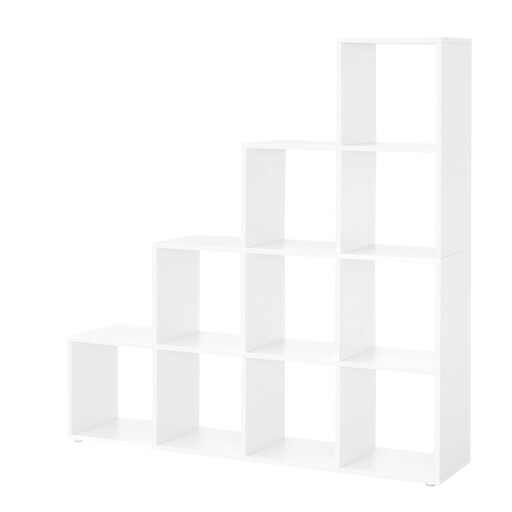
Why this choice suits this type of user : Its ten compartments offer a simple way to get started with organising a living room, bedroom or home-working space. The unit can hold books, plants, photographs or boxes.
The stated dimensions of 129.5 × 27 × 129.5 cm and the static load of 10 kg per compartment make it easier to plan for the available space and storage needs. An anti-tip kit is included.
Ten open cubes, a white finish and the option to add boxes to conceal smaller items.
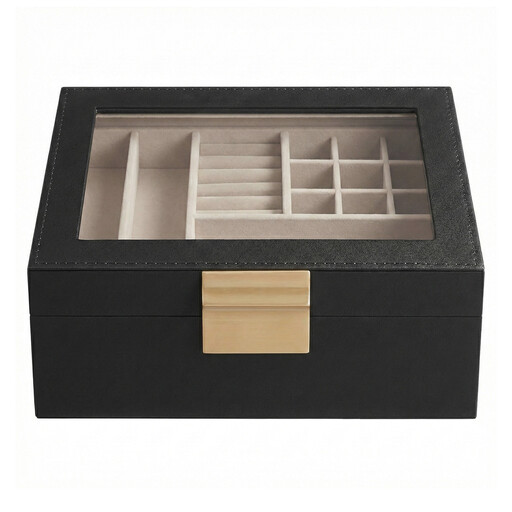
Why this choice suits this type of user : This box is designed for anyone who wants to display their jewellery while keeping rings, earrings and necklaces organised separately.
Its dimensions of 18.5 × 23 × 8.5 cm are clearly stated, helping to avoid unpleasant surprises when setting it up. The glass lid lets you see the contents while protecting them from dust.
Two levels, a removable upper tray and a design combining MDF, faux leather, velvet and glass.
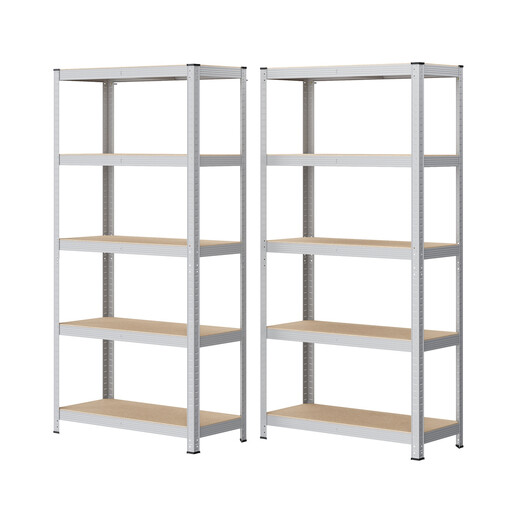
Why this choice suits this type of user : This set is designed for garages, cellars, workshops or garden sheds, where boxes, tools and heavy equipment require a metal structure with adjustable levels.
The specifications state 175 kg per level and 875 kg in total under static conditions. The two units can be separated and must be secured to the wall using the supplied kits.
A powder-coated steel structure, five adjustable levels and dimensions of 40 × 90 × 180 cm per unit.
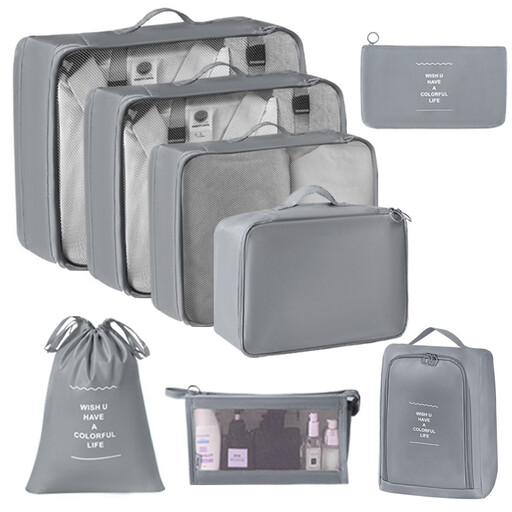
Why this choice suits this type of user : These eight cubes let you separate clothes, shoes, accessories and toiletries in a suitcase or family bag.
The different sizes prevent you from filling a large compartment with just a handful of small items. The mesh panel makes it easy to identify the contents, while the handles make the cubes simple to remove.
Nylon advertised as water- and tear-resistant, double metal zips and hand washing recommended.
We have put together a complete, real-time updated list of products that fully meet these strict selection criteria and European safety regulations.
Start by sorting items according to how often you use them. Keep everyday essentials at eye level and reserve the upper levels for seasonal belongings. An open shelf can separate a sleeping area from a workspace, while matching boxes help reduce the visual sense of clutter.
This depends on the material, the weight it supports and the environment. Keep wood-based panels away from moisture, never exceed the stated load for metal shelving and follow the cleaning instructions for textiles. Wall mounting and regular checks of the joints also help preserve the stability of the whole unit.
Yes. They can be used to separate clothes in a suitcase, but also to organise laundry, sports accessories or cables at home. Choose sizes that suit your wardrobe and check that the fastenings remain easy to access once the cube is full.